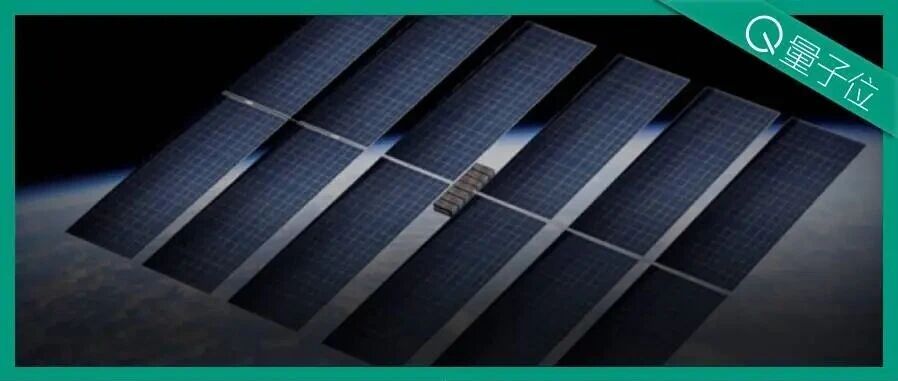
三体星座计算卫星

Search documents
万卡集群要上天?中国硬核企业打造太空超算!
量子位· 2025-11-29 01:00
Core Viewpoint - The concept of "space supercomputing" is transitioning from a science fiction idea to an engineering reality, with significant advancements in computational infrastructure occurring in space [5]. Group 1: Developments in Space Computing - The successful launch of the Starcloud-1 satellite equipped with NVIDIA H100 by SpaceX marks a critical step in building "space supercomputing" [2]. - Google has announced its "Project Suncatcher," which involves deploying a satellite cluster equipped with TPU [3]. - Chinese research institutions have been exploring space intelligent computing since 2019, with significant projects like the "Three-Body Constellation" satellite launched by Zhijiang Laboratory [7]. Group 2: Chinese Initiatives in Space Computing - The Chinese Academy of Sciences has been a pioneer in space-based computing, developing advanced satellite computing payloads and intelligent models [9]. - Zhongke Tiansuan, a commercial space enterprise, is also actively involved in this field, aiming to establish a robust space computing ecosystem [8][11]. - The "Tiansuan Plan" aims to create a true "space supercomputer" in low Earth orbit, establishing a "second brain" for humanity in extreme conditions [13]. Group 3: New Paradigms in Space Computing - The traditional "ground computing" model is facing physical limitations, necessitating a shift to "space computing" where processing occurs closer to data sources [14]. - The development of a space internet application ecosystem is anticipated, similar to the evolution of terrestrial internet from 1G to 4G [16][18]. - The application of space computing can significantly enhance decision-making processes in various sectors, such as fisheries, by providing real-time data and insights [20]. Group 4: Technical Challenges and Solutions - The transition of supercomputing capabilities to space involves overcoming significant physical challenges, including radiation protection and thermal management [25][26]. - Zhongke Tiansuan is addressing these challenges by developing advanced cooling systems and utilizing semiconductor physics to enhance chip resilience in space [30][38]. - The proposed hybrid active-passive cooling architecture aims to efficiently dissipate heat generated by high-performance chips in the vacuum of space [39]. Group 5: Future Implications of Space Supercomputing - The establishment of space supercomputing infrastructure is crucial for humanity's future endeavors in space exploration and utilization [41]. - Space computing centers can provide robust support for remote areas and critical applications, enhancing capabilities in autonomous driving and low-altitude economies [42]. - As space computing networks develop, they are expected to become the primary battleground for computational and networking capabilities, surpassing terrestrial systems [43].