
太空互联网

Search documents
星链用户破千万,地球装不下马斯克了,马上要去太空开热点!
Sou Hu Cai Jing· 2026-02-16 15:10
Core Viewpoint - The article discusses the rapid growth and potential of SpaceX's Starlink project, highlighting its ability to provide internet access globally and even beyond Earth, as envisioned by Elon Musk [3][11]. Group 1: Starlink Overview - Starlink is a satellite internet project developed by SpaceX, aiming to provide internet access in areas where traditional infrastructure is lacking, such as remote forests, deserts, and high altitudes [5]. - The project utilizes thousands of small satellites in low Earth orbit to create a vast "satellite constellation," enabling internet connectivity in virtually any location on Earth [5]. Group 2: User Growth and Milestones - As of now, Starlink has surpassed 10 million active users, covering over 160 countries and regions [5]. - The user base grew from approximately 145,000 in December 2021 to 1 million in 2022, marking a significant validation of its business model [8]. - By February 2025, the user count reached 5 million, and by December 2025, it surged to 9 million, achieving 1 million new users in just 47 days, indicating a rapid acceptance and demand for the service [8][9]. Group 3: Future Aspirations - The achievement of 10 million users signifies that Starlink has established a solid foundation to pursue Musk's broader vision of extending internet connectivity into deep space [11]. - The project is not only about providing internet access but also about preparing for future human exploration beyond Earth, potentially creating a communication network that extends throughout the solar system [11].


马斯克名下SpaceX与人工智能企业xAI合并
Xin Hua Wang· 2026-02-03 00:42
Group 1 - The core point of the article is that SpaceX has acquired xAI, an artificial intelligence startup also owned by Elon Musk, to integrate innovative resources across AI, rocket technology, and space internet [1] Group 2 - The acquisition aims to enhance the synergy between SpaceX's existing technologies and the capabilities of xAI [1] - This move reflects Musk's strategy to consolidate his ventures in cutting-edge technology sectors [1]
马斯克宣布SpaceX合并xAI!1.25万亿美元火箭AI巨兽诞生
量子位· 2026-02-03 00:37
Core Viewpoint - The merger of SpaceX and xAI aims to create a highly integrated innovation engine that spans artificial intelligence, rocket technology, and space internet, with a long-term vision of deploying data centers in space to enhance AI capabilities and support human advancement into a multi-planetary species [4][9][13]. Group 1: Merger Details - SpaceX has officially acquired xAI, with the new company expected to have an initial public offering (IPO) share price of $526.59, leading to an overall valuation of $1.25 trillion [3]. - Following the acquisition, xAI will become a wholly-owned subsidiary of SpaceX, allowing it to operate with more financial stability and less pressure to seek external funding [15][16]. Group 2: Strategic Vision - Elon Musk envisions that the deployment of artificial intelligence in space will be the only viable path for scalable development, with plans to launch one million satellites to create orbital data centers [9][14]. - The estimated AI computing power from these satellites could reach 100 gigawatts (GW) annually, with a long-term goal of achieving one terawatt (TW) of additional computing power each year [11][12]. Group 3: Financial Implications - xAI has previously raised $20 billion at a valuation of $230 billion, indicating significant financial backing prior to the merger [5]. - The merger allows xAI to focus on its development without the constant need for funding, as it can now rely on SpaceX's successful revenue-generating operations [17][19]. Group 4: Market Reactions and Future Outlook - There are mixed opinions regarding the rationale behind the merger, with some skepticism about the feasibility of Musk's ambitious plans [20]. - The market is expected to closely monitor SpaceX's IPO process following this significant merger [23].

数字政通:目前在全国已拥有100余个无人机场
Mei Ri Jing Ji Xin Wen· 2025-12-15 03:47
Core Viewpoint - The company, Digital政通 (300075.SZ), is actively expanding its GIS software applications into satellite navigation and space internet sectors through its "Star Plan" initiative, which aims to create a comprehensive urban spatial data operation model [1] Group 1: Company Initiatives - In 2023, the company launched the "Star Plan" to innovate a multi-purpose urban spatial data operation model [1] - The company has established a "1+5+2" system service platform that integrates various data collection methods including satellites, drones, and vehicles [1] - Currently, the company operates over 100 unmanned airports nationwide, focusing on addressing urban governance challenges [1] Group 2: Service Offerings - The company provides comprehensive services for complex urban management scenarios, including water management, ecological protection, transportation, and emergency rescue [1] - Future applications will be expanded based on market demand and technological advancements [1]

震撼资本市场!SpaceX拟1.5万亿美元估值上市,或创史上最大IPO
Sou Hu Cai Jing· 2025-12-12 05:26
Core Viewpoint - SpaceX is planning to go public in 2026, aiming to raise over $30 billion, potentially setting a new record for the largest IPO in commercial space history with a valuation exceeding $800 billion [1][3]. Group 1: IPO Plans and Valuation - SpaceX's IPO timeline is accelerating, with management aiming for a mid to late 2026 launch, although the exact timing may be adjusted based on market conditions [3]. - The company has recently completed a key internal round of stock sales, setting the share price at approximately $420, which raises its valuation above $800 billion [3]. - If SpaceX sells 5% of its shares, it could raise around $40 billion, surpassing Saudi Aramco's $29 billion IPO record from 2019 [1]. Group 2: Financial Performance and Growth - SpaceX's valuation of $1.5 trillion is supported by strong financial performance, with projected revenues of $15 billion in 2025 and $22 to $24 billion in 2026 [5]. - The rapid growth is largely attributed to the success of the Starlink satellite internet service and advancements in the Starship rocket development for lunar and Mars missions [5]. Group 3: Investment Focus and Strategic Plans - A portion of the funds raised from the IPO will be directed towards developing space-based data centers, which offer advantages over terrestrial data centers [7]. - SpaceX plans to launch two prototype orbital data center nodes by the end of 2025 to validate core technologies [7]. Group 4: Market Sentiment and Industry Impact - Despite challenges, such as technical setbacks with the Starship project, the market remains optimistic about SpaceX's potential and its impact on the broader aerospace industry [9]. - The anticipated IPO has already positively influenced the stock prices of related companies, indicating strong investor sentiment towards the space sector [12].
万卡集群要上天?中国硬核企业打造太空超算!
量子位· 2025-11-29 01:00
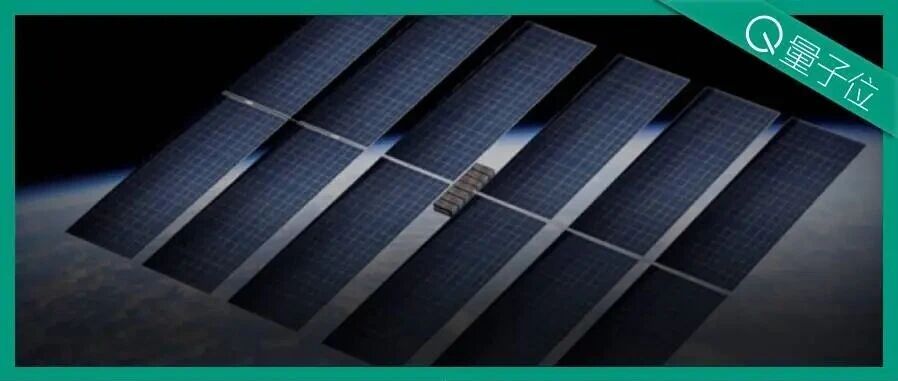
Core Viewpoint - The concept of "space supercomputing" is transitioning from a science fiction idea to an engineering reality, with significant advancements in computational infrastructure occurring in space [5]. Group 1: Developments in Space Computing - The successful launch of the Starcloud-1 satellite equipped with NVIDIA H100 by SpaceX marks a critical step in building "space supercomputing" [2]. - Google has announced its "Project Suncatcher," which involves deploying a satellite cluster equipped with TPU [3]. - Chinese research institutions have been exploring space intelligent computing since 2019, with significant projects like the "Three-Body Constellation" satellite launched by Zhijiang Laboratory [7]. Group 2: Chinese Initiatives in Space Computing - The Chinese Academy of Sciences has been a pioneer in space-based computing, developing advanced satellite computing payloads and intelligent models [9]. - Zhongke Tiansuan, a commercial space enterprise, is also actively involved in this field, aiming to establish a robust space computing ecosystem [8][11]. - The "Tiansuan Plan" aims to create a true "space supercomputer" in low Earth orbit, establishing a "second brain" for humanity in extreme conditions [13]. Group 3: New Paradigms in Space Computing - The traditional "ground computing" model is facing physical limitations, necessitating a shift to "space computing" where processing occurs closer to data sources [14]. - The development of a space internet application ecosystem is anticipated, similar to the evolution of terrestrial internet from 1G to 4G [16][18]. - The application of space computing can significantly enhance decision-making processes in various sectors, such as fisheries, by providing real-time data and insights [20]. Group 4: Technical Challenges and Solutions - The transition of supercomputing capabilities to space involves overcoming significant physical challenges, including radiation protection and thermal management [25][26]. - Zhongke Tiansuan is addressing these challenges by developing advanced cooling systems and utilizing semiconductor physics to enhance chip resilience in space [30][38]. - The proposed hybrid active-passive cooling architecture aims to efficiently dissipate heat generated by high-performance chips in the vacuum of space [39]. Group 5: Future Implications of Space Supercomputing - The establishment of space supercomputing infrastructure is crucial for humanity's future endeavors in space exploration and utilization [41]. - Space computing centers can provide robust support for remote areas and critical applications, enhancing capabilities in autonomous driving and low-altitude economies [42]. - As space computing networks develop, they are expected to become the primary battleground for computational and networking capabilities, surpassing terrestrial systems [43].
卫星互联网牌照发放在即,谁将引领中国“太空互联网”新篇章?
Sou Hu Cai Jing· 2025-08-28 06:06
Core Insights - The issuance of satellite internet licenses marks a significant step towards the commercialization and standardization of satellite communication services in China [1][2][3] - The licenses will allow companies to legally provide satellite internet services, securing access to scarce spectrum and orbital resources, similar to mobile communication operator licenses [1][2] Industry Overview - The satellite internet license falls under the A13 category of the Basic Telecommunications Business Operating License, covering both satellite mobile and fixed communication services [1] - The high entry barriers for obtaining the license include a minimum state-owned share of 51% and a registered capital requirement between 100 million to 1 billion RMB [1] Competitive Landscape - Major candidates for the first batch of license holders include China Telecom, China Mobile, China Unicom, China Star Network, and Shanghai Yuanxin [2] - China Telecom operates the Tian Tong satellite system, while China Mobile is exploring 5G integration with its low-orbit satellite [2] Strategic Implications - The license issuance is seen as a strategic move to enhance China's position in the global space resource competition, especially against established players like SpaceX [2][3] - The initiative aims to transition satellite internet from a defense and research focus to a more general public service [3] Technological Development - The GW constellation, led by China Star Network, has successfully launched multiple satellites, increasing launch frequency significantly [3][5] - However, there remains a technological gap compared to SpaceX's Starlink, particularly in satellite capacity and core technologies [3][5] Future Outlook - The GW constellation plans to deploy 12,992 satellites by 2029, with a 10% deployment target to secure spectrum resources [5] - The development of a rich application ecosystem based on satellite internet services is crucial for creating value in the market [5]
SpaceX将超车NASA! “钢铁侠”重回商业航天正轨
Di Yi Cai Jing· 2025-06-04 14:28
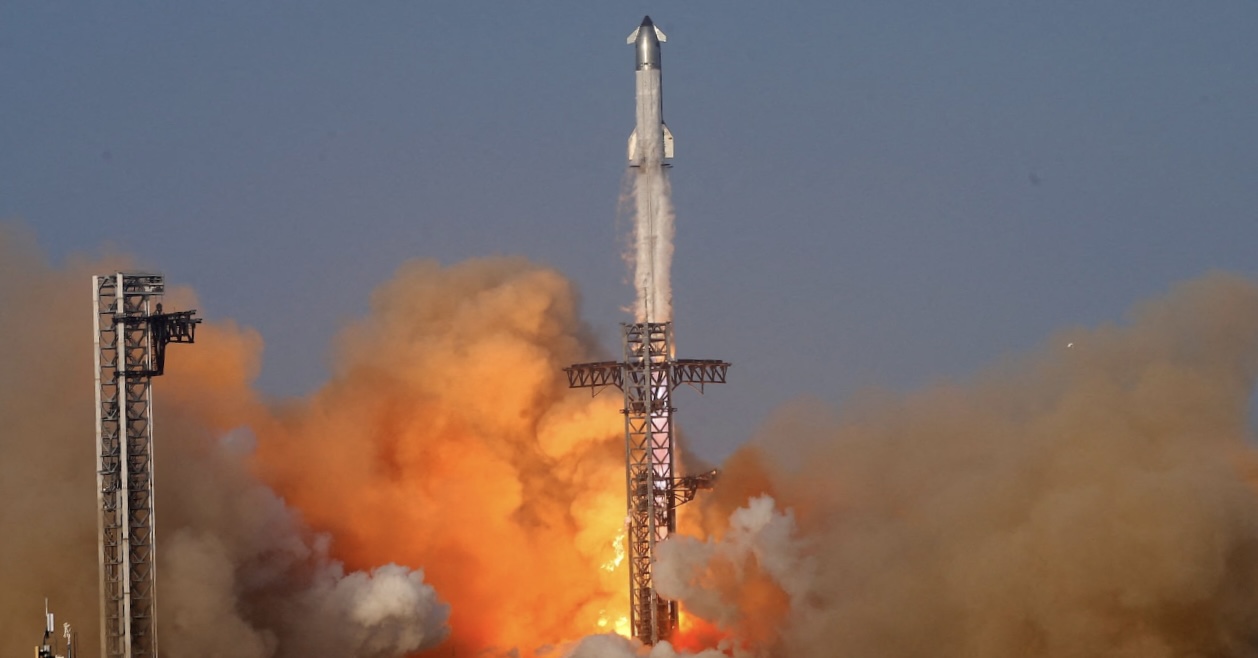
Core Insights - Elon Musk announced that SpaceX's revenue for this year is expected to reach approximately $15.5 billion, a significant increase from $4.6 billion in 2022, indicating a growth of more than twofold in three years [1] - SpaceX is projected to generate $1.1 billion more in commercial space revenue than NASA's overall budget, highlighting its growing dominance in the commercial space sector [1] - Musk aims to produce 1,000 Starships annually, with an average of three ships produced daily, supported by a mega assembly facility [2] Financial Performance - SpaceX's revenue for 2023 is estimated at $15.5 billion, compared to $4.6 billion in 2022, marking a growth of over 237% [1] - The company has secured over $15 billion in contracts from NASA, solidifying its position as a key supplier [6] - Starlink, SpaceX's satellite internet service, is projected to generate $12.3 billion in revenue by 2024, accounting for nearly 80% of SpaceX's total revenue [11] Operational Developments - SpaceX plans to launch its third-generation Super Heavy rocket and Starship by the end of this year, with a 50% chance of a Mars launch by 2026 [5] - The company aims to break its record of 134 launches in 2024, targeting 170 launches by the end of the year, averaging a launch every two days [4] - The Falcon 9 and Falcon Heavy rockets have significantly reduced commercial launch costs, allowing SpaceX to capture a large share of the global satellite launch market [4] Competitive Landscape - Blue Origin, founded by Jeff Bezos, is emerging as a competitor, having completed the first test flight of its New Glenn rocket [9] - Blue Origin plans to deploy over 3,200 satellites for its Kuiper project, competing directly with SpaceX's Starlink [10] - SpaceX currently operates around 6,000 satellites in orbit as part of its Starlink initiative, aiming to replace terrestrial communication infrastructure with a total of 42,000 satellites [10] Future Plans - Musk's long-term vision includes establishing a base on Mars by 2028 and launching 500 Starship landers by 2033 to mine Martian resources [1][5] - SpaceX is also planning to build a lunar base named "Alpha" in the future [5] - The company is focused on rapidly iterating its technology through frequent testing, accepting failures as part of the development process [7]
对标Starlink!亚马逊(AMZN.US)发射首批Kuiper互联网卫星
智通财经网· 2025-04-29 08:08
Core Points - Amazon launched its first batch of 27 Kuiper broadband internet satellites, marking the beginning of its long-delayed space internet network deployment, which aims to compete with SpaceX's Starlink [1] - The Kuiper project, initiated in 2019 with a budget of $10 billion, plans to deploy a total of 3,236 satellites to provide broadband internet services globally, particularly targeting underserved rural areas [1][2] - Amazon's Project Kuiper is seen as a significant gamble for the company, as it enters a market dominated by SpaceX and other telecom providers like AT&T and T-Mobile [1][2] Launch and Deployment - The launch of the first satellites was delayed by over a year, with Amazon aiming to deploy half of its satellite constellation (1,618 satellites) by mid-2026, as mandated by the FCC [2] - Amazon expects to establish initial contact with the satellites shortly after launch and plans to start offering services to customers later this year [2] - ULA's CEO indicated that there could be five more Kuiper missions this year, with Amazon's service coverage expanding as more satellites are launched [2] Competitive Landscape - SpaceX has a significant head start, having launched over 8,000 Starlink satellites since 2019, and conducts missions at an accelerated pace, deploying around 24 satellites per launch [3] - SpaceX has attracted over 5 million internet users across 125 countries, disrupting the global satellite communications market [3] - Amazon's executives believe that Kuiper can leverage the company's extensive consumer product experience and established cloud computing business as competitive advantages against Starlink [2][3] Equipment and Technology - Amazon has tested two prototype satellites in 2023 and plans to produce consumer terminals for Kuiper, including a larger antenna and a smaller device comparable to a Kindle, with production costs expected to be below $400 each [3] - In 2022, Amazon secured a record 83 rocket launches from ULA, Arianespace, and Blue Origin to support the Kuiper deployment [4]

传亚马逊(AMZN.US)太空互联网计划遇阻,柯伊伯项目面临延期挑战
智通财经网· 2025-04-23 13:53
Core Insights - Amazon's Project Kuiper faces significant challenges due to severe delays in satellite production, potentially requiring a request for an extension from the Federal Communications Commission [1] - The initial launch of 27 satellites has been postponed, with the first launch now scheduled for April 28, 2024, due to weather issues [1] - Despite these setbacks, Amazon remains committed to its space ambitions, having successfully launched two prototype satellites and tested laser link networks between them [2] Group 1 - Amazon's satellite assembly is far below the planned deployment scale, with only a few dozen satellites completed [1] - The project aims to provide broadband services to 400-500 million unconnected households, but production delays and frequent rocket launch postponements are hindering progress [1] - Amazon has invested billions in long-term agreements with multiple launch service providers, including Arianespace, Blue Origin, and even competitor SpaceX [1] Group 2 - CEO Andy Jassy emphasized in a recent shareholder letter that despite the high initial investment, the Kuiper project is expected to evolve into a strategically significant business with substantial revenue contributions [2] - The plan involves deploying approximately 3,200 satellites in low Earth orbit to establish a global high-speed internet network [2]