三连璧

Search documents
华北早期现代人演化有了关键实证
Xin Lang Cai Jing· 2026-02-06 23:02
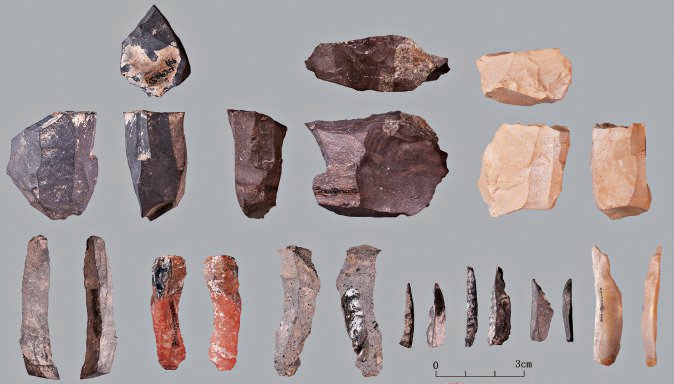
Core Insights - The article highlights the significant archaeological discoveries at two sites in Zhangjiakou, Hebei, which have been recognized for their contributions to understanding early human evolution and the origins of civilization in China [5][8]. Group 1: New Cultural Discoveries - The Xinhaozhuang site has revealed various stone tool technologies, providing crucial evidence for the evolution of early modern humans in North China and the transition from the Old Stone Age to the New Stone Age [5][6]. - The site has confirmed a cultural sequence spanning from 120,000 to 13,000 years ago, showcasing the earliest Mousterian technology in North China and the earliest microblade technology in East Asia [5][6]. Group 2: Archaeological Significance - The Zhengjiagou site has filled a gap in the archaeological record of the Hongshan culture in northwestern Hebei, with over 200 archaeological features and more than 600 artifacts, including jade and pottery [7][8]. - The discovery of a painted bear-head clay sculpture at Zhengjiagou supports the connection between this site and the Hongshan culture, further establishing the area's historical significance [7]. Group 3: Historical Context - The findings from both sites illustrate a continuous narrative from the evolution of early modern humans to the emergence of civilization, emphasizing Zhangjiakou's role as a cultural crossroads [8]. - The simultaneous recognition of these sites as national archaeological achievements underscores their importance in the study of early human evolution and the formation of Chinese civilization [8].

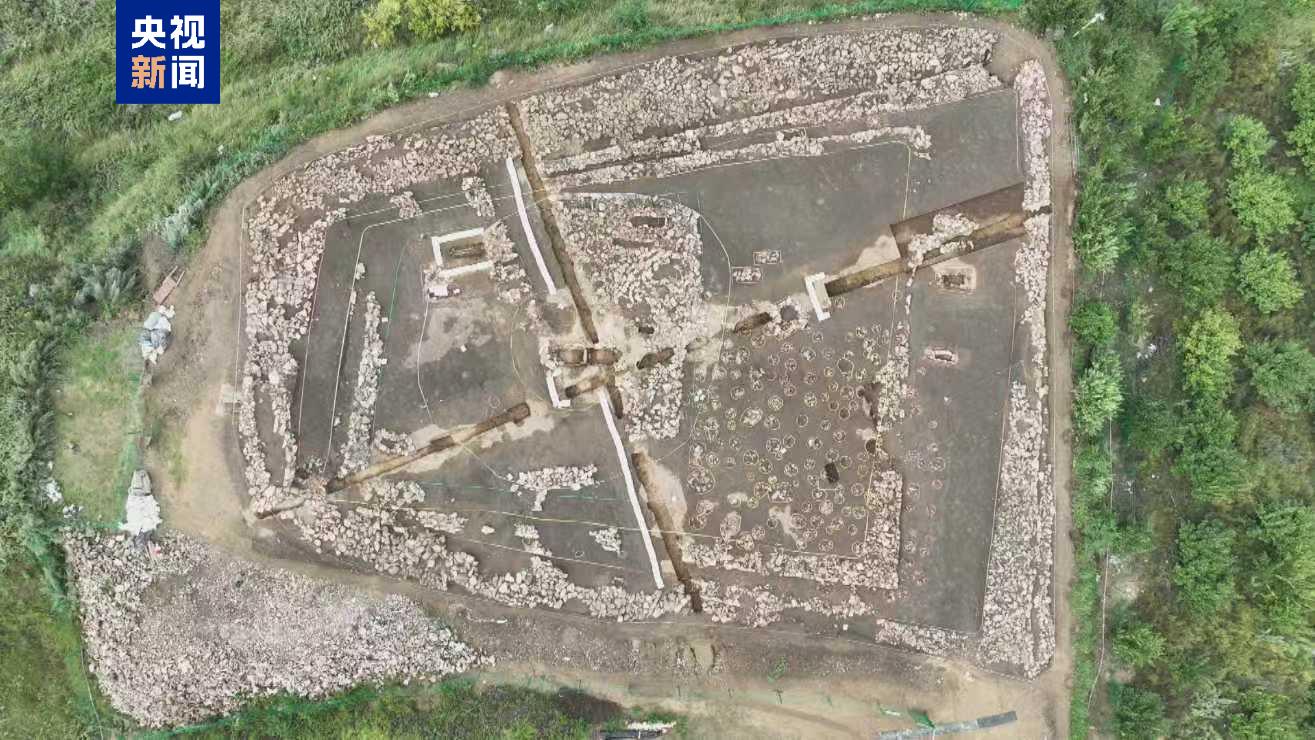
冀西北地区考古新发现 探索红山文化再添重要线索
Yang Shi Xin Wen· 2025-08-29 04:15
Core Insights - The Zhengjiagou site in Zhangjiakou, Hebei Province, is part of a major archaeological project focused on the "Red Mountain Society Civilization Process" [3] - Since the excavation began in 2022, over 200 relics have been discovered, including stone walls, stone coffin tombs, and sacrificial pits, along with more than 400 artifacts such as jade and pottery [3][6] - The carbon dating results indicate that the No. 1 stone tomb dates back to the late Red Mountain culture, marking a significant find outside the core area of this culture [6] Group 1 - The Zhengjiagou site is a key archaeological project aimed at understanding the Red Mountain culture [3] - Important discoveries include over 200 relics and 400 artifacts, showcasing typical characteristics of the Red Mountain culture [3][6] - The findings provide new materials for studying the distribution of the Red Mountain culture and its burial and sacrificial customs [6] Group 2 - The site is significant for understanding prehistoric cultural exchanges between the Liaoxi and Hebei Northwest regions [6] - The discoveries at Zhengjiagou offer crucial clues for further exploration of the Red Mountain culture's trajectory [6]