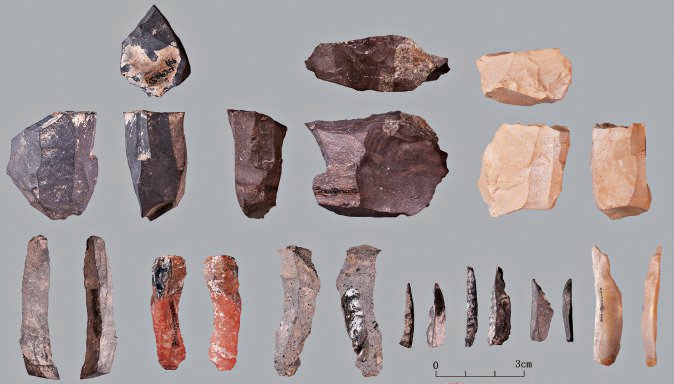
彩绘熊首泥塑

Search documents
郑家沟遗址发现红山文化遗存 有望为中华文明探源研究开新篇
Huan Qiu Wang· 2026-02-07 13:55
Core Viewpoint - The recent archaeological discoveries at the Zhengjiagou site in Zhangjiakou, Hebei Province, reveal significant findings related to the Hongshan culture, including the excavation of nine stone tombs and over 600 artifacts, which provide new insights into the origins of Chinese civilization [1][17]. Archaeological Findings - The Zhengjiagou site features a large stone tomb with an area of approximately 1,500 square meters, surrounded by 90 tombs and over 180 sacrificial pits, indicating a complex burial structure [1][9]. - The excavation of the first stone tomb has uncovered a unique "Jade Pig Dragon," a typical artifact of the Hongshan culture, which was previously believed to be confined to the Liao West region [3][17]. - A notable discovery includes a "painted bear head clay sculpture," which was created using local materials and techniques, showcasing the artistic practices of the time [7][9]. Cultural Exchange and Influence - Artifacts from the Zhengjiagou site exhibit characteristics of both the Hongshan culture and the Yangshao culture, indicating a fusion of diverse cultural influences in the region [9][16]. - The site has been identified as a regional center for the late Hongshan culture, suggesting that it played a significant role in the cultural exchanges during that period [9][17]. Historical Context - The Hongshan culture is believed to date back approximately 6,500 to 5,000 years, with the Zhengjiagou findings extending its timeline by 200 years, indicating a broader geographical influence into Hebei Province [17]. - Genetic analysis of human remains from the site shows a strong genetic link between the Zhengjiagou population and the Hongshan culture population from the West Liao River basin, suggesting continuity in cultural identity [19]. Excavation Techniques - The excavation team employed modern techniques such as "box extraction" to preserve the integrity of the tombs while transporting them to the laboratory for detailed analysis [19][21]. - The process involves careful measurement and construction of a protective box around the tomb, followed by a methodical replacement of the soil to maintain the archaeological context [21][25].

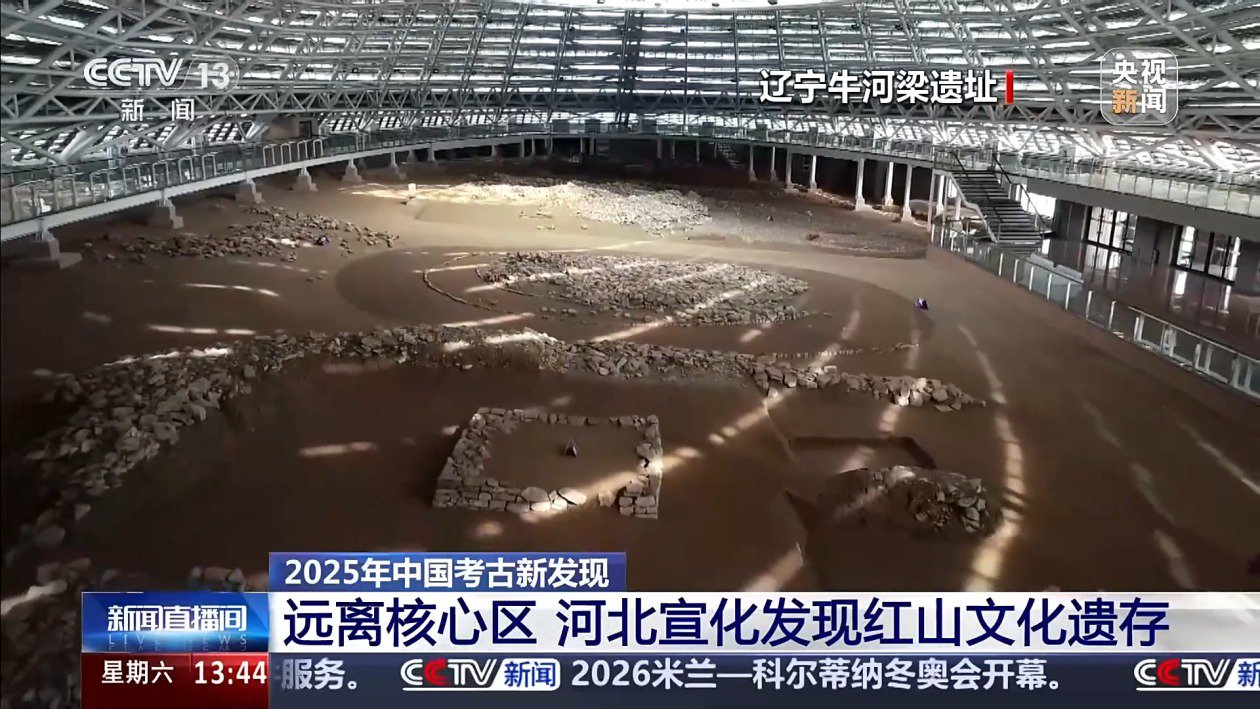
华北早期现代人演化有了关键实证
Xin Lang Cai Jing· 2026-02-06 23:02
Core Insights - The article highlights the significant archaeological discoveries at two sites in Zhangjiakou, Hebei, which have been recognized for their contributions to understanding early human evolution and the origins of civilization in China [5][8]. Group 1: New Cultural Discoveries - The Xinhaozhuang site has revealed various stone tool technologies, providing crucial evidence for the evolution of early modern humans in North China and the transition from the Old Stone Age to the New Stone Age [5][6]. - The site has confirmed a cultural sequence spanning from 120,000 to 13,000 years ago, showcasing the earliest Mousterian technology in North China and the earliest microblade technology in East Asia [5][6]. Group 2: Archaeological Significance - The Zhengjiagou site has filled a gap in the archaeological record of the Hongshan culture in northwestern Hebei, with over 200 archaeological features and more than 600 artifacts, including jade and pottery [7][8]. - The discovery of a painted bear-head clay sculpture at Zhengjiagou supports the connection between this site and the Hongshan culture, further establishing the area's historical significance [7]. Group 3: Historical Context - The findings from both sites illustrate a continuous narrative from the evolution of early modern humans to the emergence of civilization, emphasizing Zhangjiakou's role as a cultural crossroads [8]. - The simultaneous recognition of these sites as national archaeological achievements underscores their importance in the study of early human evolution and the formation of Chinese civilization [8].