专业无人机

Search documents
四川交出亮眼“平安答卷”
Xin Lang Cai Jing· 2026-01-20 19:54
Core Insights - The article highlights the significant improvements in disaster management and safety measures in Sichuan Province, aiming for a reduction in production safety accidents and disaster-related fatalities by 2025 [4][5]. Group 1: Safety Management Improvements - By 2025, Sichuan aims to reduce production safety accidents and fatalities by 15.0% and 14.5% respectively, surpassing the national average [4]. - The province has identified 25,318 issues and 5,350 major hazards through expert inspections in key industries, laying a solid foundation for safety [5]. Group 2: Community Involvement and Reporting - Sichuan is extending safety hazard reporting rewards to internal company structures, with 300,700 enterprises establishing internal reporting systems, leading to over 487,000 reported hazards and rewards totaling 27.176 million yuan [5]. Group 3: Technological Integration in Disaster Management - The province has implemented nine demonstration projects focusing on key areas like mountain floods and forest fires, utilizing advanced technologies such as satellite remote sensing and drones for disaster monitoring and response [6][7]. - Real-time data capabilities have been established, allowing for rapid assessment and response to disasters within 30 minutes of reporting [6]. Group 4: Strengthening Grassroots Emergency Response - Sichuan has formed over 34,000 emergency response teams, ensuring a quick response time of within one hour at the county level and half an hour at the town level during disasters [7]. - The integration of "smart emergency" technologies has improved efficiency in disaster management, with specialized drones enhancing monitoring capabilities [7][8]. Group 5: Communication Infrastructure for Emergency Response - The establishment of 219 emergency communication teams has ensured coverage across 183 counties, with satellite communication capabilities enhancing grassroots emergency response [8].


四川多措并举提升基层应急管理能力 激活应急管理神经末梢
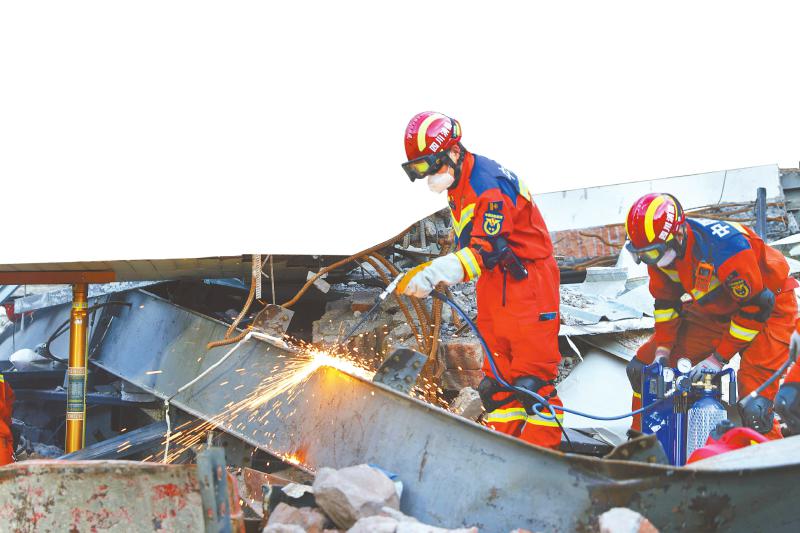
Si Chuan Ri Bao· 2025-08-28 00:28
Core Viewpoint - The "Emergency Mission 2025" exercise highlights the improvements in disaster prevention and response capabilities in Sichuan, showcasing the establishment of a robust emergency management framework and the integration of technology in enhancing communication and rescue operations [4][10][12]. Group 1: Emergency Management Structure - Sichuan has formed over 34,000 emergency response teams composed of central town fire rescue stations, township emergency teams, and community emergency squads [6]. - The provincial government has issued implementation opinions to enhance grassroots emergency management capabilities, aiming for a well-organized, adequately staffed, and efficient emergency management system [4][12]. - The establishment of standardized emergency command centers connected to municipal emergency management platforms is underway in various towns [5]. Group 2: Training and Capacity Building - Regular emergency drills are conducted to improve the response capabilities of the emergency teams, ensuring a one-hour response time at the county level and a half-hour response time at the township level [6]. - A three-tier training system has been developed, focusing on county-level training, practical equipment training at the township level, and self-rescue training at the village level [7]. Group 3: Risk Assessment and Safety Management - Grassroots emergency management agencies are tasked with safety risk inspections, and there is a push for enhanced training and guidance for local enforcement teams [8]. - The integration of expert committees to assist in safety risk diagnosis has been implemented, with over 5,000 enterprises assessed for safety risks [8]. Group 4: Technology Integration - Sichuan is advancing technology-driven initiatives to enhance disaster response, including the deployment of drones and satellite communication systems in high-risk areas [10][11]. - The establishment of 219 emergency communication support teams across 183 counties has improved communication capabilities during extreme conditions [11]. Group 5: Resource Management - Emergency resource management is being optimized through the establishment of public warehouses for emergency supplies, allowing for efficient allocation and management of resources [9]. - A comprehensive inventory of over 890,000 emergency supplies has been created, facilitating quick access and deployment during emergencies [9].