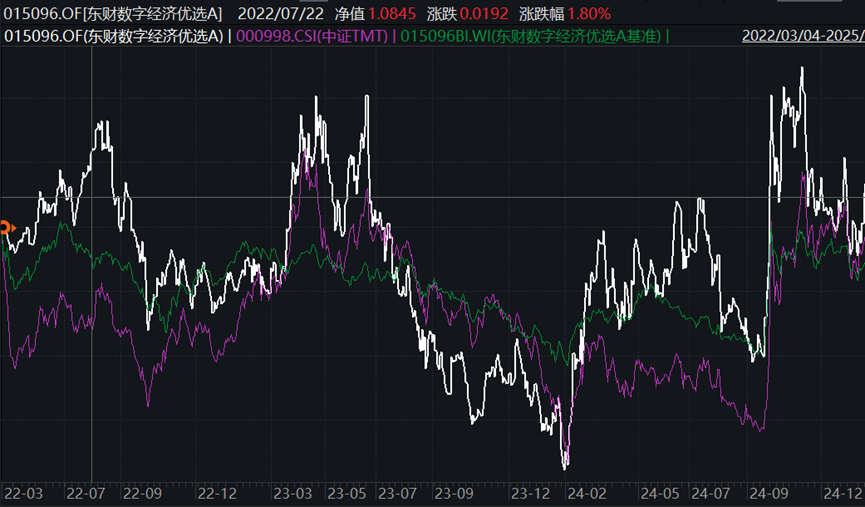
东财时代优选基金

Search documents
年内30余只基金“黯然退场”
Xin Lang Cai Jing· 2026-02-27 15:22
Group 1 - Over 30 funds have entered the liquidation process since 2026, primarily due to insufficient scale, with many initiated funds triggering termination clauses after failing to reach a net asset value of 200 million RMB within three years [1][2] - As of February 25, 2026, 31 funds have completed liquidation, with most facing scale challenges that led to the activation of termination clauses [2][3] - Mixed funds account for the majority of liquidated funds, totaling 15, followed by 9 bond funds, 2 equity funds, and 5 fund of funds (FOF) [3] Group 2 - Initiated funds face a "three-year test," where if their scale is below 200 million RMB after three years, they automatically enter liquidation without the need for a shareholder meeting [4][5] - Among the 31 liquidated funds, 24 are initiated funds, representing over 70% of the total, including several pension-targeted FOF products [4] - As of February 25, 2026, there are 4,560 initiated funds in the market, with 2,260 (nearly half) having a scale below 200 million RMB [4] Group 3 - The A-share market has seen increased style rotation in 2026, with significant disparities between industries; some sectors have risen over 30%, while others, like banking, have declined nearly 7% [6][7] - Certain thematic funds, such as those focused on automotive and dividends, are struggling, with some triggering liquidation clauses due to low asset values [6][7] - The market sentiment for 2026 is expected to remain positive, with a potential for more diverse opportunities, despite the pronounced differentiation among sectors [7]
半年净值翻倍,解密罗擎的布局秘籍
Sou Hu Cai Jing· 2026-01-26 13:39
Core Viewpoint - The article highlights the rise of Luo Qing, a new star at the Wanguo Fund, who has achieved significant returns through a focused investment strategy in technology sectors, particularly in semiconductors, AI applications, and renewable energy electronics [1][5]. Group 1: Background and Experience - Luo Qing has a strong academic background with a bachelor's degree in software engineering from Wuhan University and a master's degree in finance from Fudan University, positioning him well for his current role [3][4]. - He has eight years of experience in the securities industry, primarily focusing on technology research and investment, and joined Dongcai Fund in 2020 [4][5]. - In 2022, he managed several funds at Dongcai, achieving notable performance before moving to Wanguo Fund in 2025 [5]. Group 2: Investment Strategy and Performance - Luo Qing's investment strategy is characterized by precise stock selection, particularly in AI computing and overseas computing power, which has significantly driven fund value growth [7][8]. - Since taking over the Wanguo Innovation Technology Fund in July 2024, the fund has achieved a cumulative return of 106.13%, outperforming the benchmark by 22.04% [7][8]. - His focus on sectors nearing technological "singularities" has led to successful investments in emerging fields like autonomous driving and AI, capturing high-growth opportunities [9][12]. Group 3: Methodology and Approach - Luo Qing employs a rigorous investment research system that includes global industry tracking, on-site verification, and hard indicator screening to identify technological trends and opportunities [12][13]. - He emphasizes the importance of verifying technology through direct engagement with companies, ensuring that investments are backed by solid performance metrics [12][13]. - His approach is likened to that of an "industry hunter," strategically positioning investments at critical moments of technological change [14]. Group 4: Future Prospects and Market Focus - Luo Qing is set to manage the Wanguo Digital Economy Mixed Fund, which is expected to leverage his technology discovery skills in the rapidly evolving digital economy [16][21]. - The fund will likely focus on both "hard technology" and "soft applications," capitalizing on the ongoing data revolution and the integration of AI and cloud computing into traditional industries [16][17]. - His investment strategy will involve a dual-market approach, targeting both A-shares and Hong Kong stocks to capture the full value of the AI industry [18][21].