
东风一号

Search documents
今天这一幕,钱老您一定看得到!
Huan Qiu Wang Zi Xun· 2025-10-31 00:03
Core Viewpoint - The launch of Shenzhou 21 is a significant event for China's space program, coinciding with the 16th anniversary of the death of Qian Xuesen, a foundational figure in Chinese aerospace history [1][16]. Group 1: Historical Context - Qian Xuesen, upon learning of the founding of the People's Republic of China in 1949, began planning his return from the United States, where he was a prominent figure at the California Institute of Technology [3]. - Despite facing significant obstacles from the U.S. government, including wrongful imprisonment, Qian Xuesen remained determined to return to China, ultimately succeeding in 1955 [5][6]. Group 2: Contributions to Aerospace - After returning to China, Qian Xuesen played a crucial role in establishing and planning the country's rocket and space programs, significantly contributing to the development of aerospace talent in China [8]. - He was instrumental in the successful launch of China's first missile, Dongfeng-1, in 1960, marking the beginning of China's missile program [11]. - Qian Xuesen introduced the term "aerospace" in 1967, standardizing the terminology for China's space exploration activities [11][12]. Group 3: Legacy and Recognition - The successful launch of Shenzhou 5 in 2003, which carried China's first astronaut Yang Liwei, was a milestone that Qian Xuesen had anticipated, as he was honored by astronauts upon their return [13][14]. - The Shenzhou missions continue to honor Qian Xuesen's legacy, with each returning astronaut visiting his home to report their success, reflecting the ongoing impact of his contributions to China's space endeavors [16].


70年前的今天,钱学森回国!
Huan Qiu Wang Zi Xun· 2025-10-08 08:37
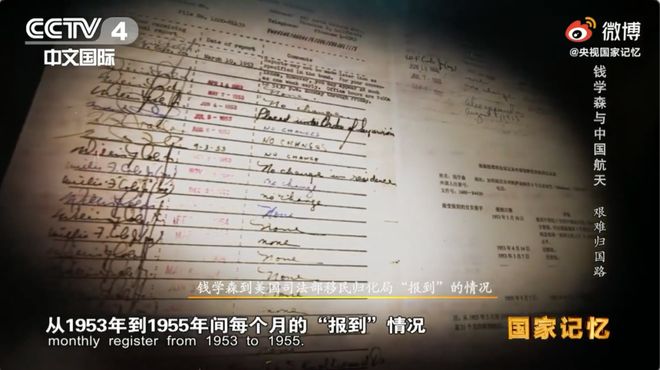
Core Viewpoint - The article commemorates the 70th anniversary of Qian Xuesen's return to China, highlighting his significant contributions to China's aerospace industry and his unwavering determination to return to his homeland despite facing severe challenges and restrictions during his time in the United States [1][4][6]. Group 1: Qian Xuesen's Journey - Qian Xuesen was detained in the U.S. for five years under false accusations, during which he faced inhumane treatment but remained resolute in his desire to return to China [1][4]. - His letter written on cigarette paper in 1955 expressed his longing to return and contribute to China's development, which eventually reached Premier Zhou Enlai [4][6]. - Qian Xuesen returned to China on October 8, 1955, after extensive diplomatic efforts [4]. Group 2: Contributions to Aerospace - After returning, Qian Xuesen played a crucial role in establishing and planning China's rocket and space programs, utilizing his expertise in aerodynamics and rocket engines [6][8]. - Under his leadership, China's first missile, Dongfeng-1, was successfully launched on November 5, 1960, marking the beginning of China's missile program [8]. - By 1966, China successfully conducted the "two bombs and one satellite" tests, becoming the fifth country capable of delivering nuclear weapons via its own missiles [8]. Group 3: Legacy in Manned Spaceflight - Qian Xuesen's pivotal input led to the initiation of the manned space program, known as the "921 Project," which officially started in September 1992 [9]. - The successful launch of Shenzhou 5 in 2003 marked a significant milestone, with Yang Liwei becoming the first Chinese astronaut in space [9][11]. - Qian Xuesen continued to be a source of inspiration for astronauts, with each returning astronaut visiting him to share their achievements [11][12]. Group 4: Lasting Impact - The article emphasizes that the success of China's aerospace endeavors is rooted in Qian Xuesen's long-standing dedication and contributions, which opened new horizons for the nation's space exploration [14].
“不仅是事迹,更是中国科学界的精神坐标系”
Ke Ji Ri Bao· 2025-07-30 01:06
Core Viewpoint - The publication of "Stories of the Work Style and Academic Style of One Hundred Famous Scientists" aims to inspire and guide current and future generations of scientific workers by sharing the exemplary stories and spirits of renowned Chinese scientists [1][3]. Group 1: Importance of Scientific Spirit - The book emphasizes the need to pass on the spirit of older generations of scientists to contemporary young scientific workers, highlighting the significance of integrity and rigor in scientific research [1][3]. - The stories within the book serve as a moral compass for the Chinese scientific community, encouraging a commitment to excellence and dedication in research endeavors [1][3]. Group 2: Exemplary Stories of Scientists - The narrative includes notable accounts such as Qian Xuesen's meticulous calculations for missile trajectories without modern computing tools, showcasing the dedication and precision that underpinned China's early aerospace achievements [1][2]. - Wang Shouguan's self-funded development of the Large Sky Area Multi-Object Fiber Spectroscopic Telescope (LAMOST) illustrates the spirit of resourcefulness and commitment to scientific advancement despite financial constraints [2][3]. Group 3: Call to Action for Current Researchers - The book aims to motivate young researchers to adopt a rigorous and honest approach to their work, resist the temptation of superficial success, and focus on addressing national scientific needs [3]. - It encourages a culture of selflessness and dedication among scientists, urging them to prioritize collective achievements over personal gain [3].