中国REITs指数之不动产资本化率调研报告

Search documents
2025年不动产资本化率调研:投资偏好分化 抗风险资产成焦点
Xin Hua Cai Jing· 2026-01-15 14:48
Core Insights - The report by CBRE highlights the evolving landscape of China's real estate investment market, focusing on capitalization rates and investor preferences for 2025 [1] Group 1: City Investment Preferences - First-tier cities like Beijing and Shanghai remain the top investment choices, reflecting strong investor confidence [2] - Non-first-tier cities such as Hangzhou, Chengdu, Suzhou, the Greater Bay Area (excluding Guangzhou and Shenzhen), and Nanjing are emerging as new focal points for investment due to economic growth and higher investment returns [2] Group 2: Asset Type Preferences - Long-term rental apartments and serviced apartments are gaining traction, with investment interest in Beijing and Shanghai at 61% and 64% respectively, significantly higher than in Guangzhou and Shenzhen [3] - Retail properties are seeing a resurgence in interest, particularly shopping centers, outlets, and community commercial spaces, driven by standardized operations and strong liquidity [3] - Industrial assets show a clear structural differentiation, with data centers and industrial plants gaining popularity, while warehouse logistics are experiencing a decline in interest [4] Group 3: Investment Strategies and Capitalization Rates - Different types of institutions exhibit varied strategy preferences, with private equity funds favoring high-risk, high-reward strategies, while insurance funds prefer stable investments [5] - Capitalization rates for most asset types are on the rise, indicating changing market risk expectations, with prime office capitalization rates in Beijing and Shanghai at 5.0%-6.0% [5] - Investors are cautious about future capitalization rate trends, anticipating an upward trajectory, but recognize the resilience of retail properties and long-term rental apartments [5] Group 4: Public REITs Market - As of December 2025, there are 78 publicly offered REITs in mainland China, totaling 210 billion yuan, making it the largest in Asia and second globally [6] - Investors prioritize operational management capabilities, policy direction, and secondary market liquidity when evaluating REITs [6] - The dynamic changes in capitalization rates are seen as a core pricing indicator for the real estate market, reflecting industry confidence and investment logic [6][7]
戴德梁行:以资产管理激活房地产发展新动能
Xin Hua Cai Jing· 2026-01-12 17:45
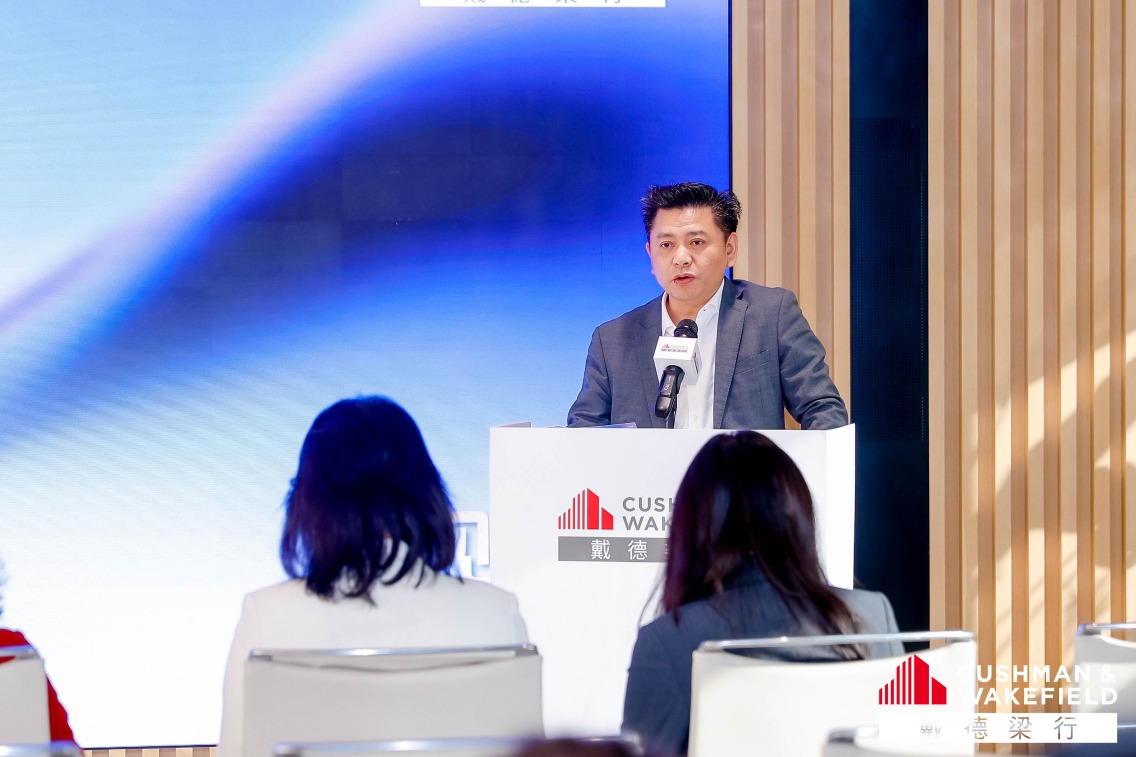
Core Insights - The event hosted by CBRE focused on the latest trends in the real estate market, with discussions on office buildings, commercial trends, bulk transactions, REITs, and asset management, aiming to provide insights into market dynamics and potential pathways for breakthroughs [1][4] Group 1: Real Estate Market Trends - The expansion of the public REITs pilot program to include office buildings and hotels marks a new phase in the financialization of real estate in China, providing standardized exit channels for existing assets and diverse investment options for institutional investors [1] - The future growth of the real estate industry will increasingly rely on the refined operation of existing assets, quality upgrades in property services, and the regulated development of the leasing market, rather than solely on new developments [1][4] Group 2: Office Market Outlook - The Beijing office market is expected to face multiple challenges in 2026, with a focus on enhancing core competitiveness and achieving breakthroughs in a competitive environment [4] - The projected scale of bulk transactions in Beijing's real estate market for 2025 is estimated at 15 billion yuan, indicating a phase of decline, with a shift in buyer structure towards self-use demand from enterprises [6] Group 3: Commercial Market Developments - In 2025, the Beijing retail market will see the opening of 13 quality projects, adding over 1.1 million square meters of premium retail space, alongside the renovation of several older commercial projects [5] - The retail market is characterized by a transformation from single consumption spaces to "urban living rooms," a shift in cultural and IP operations towards global and matrix layouts, and a transition in commercial operation philosophy from "traffic-oriented" to "long-termism" [5] Group 4: Asset Management Strategies - The core strategy of asset management at CBRE emphasizes "long-term resilience," with REITs evolving from single asset products to sustainable value operation platforms, connecting capital with the real economy [6] - The discussions highlighted the importance of capital layout and operational optimization in navigating market fluctuations and cycles [6]