
中尺寸OLED面板

Search documents
电视面板涨价,LCD与中尺寸OLED有望引领需求向好
Orient Securities· 2026-01-08 06:14
Investment Rating - The industry investment rating is "Positive (Maintain)" [5] Core Viewpoints - The price of TV panels is expected to rise, with LCD and mid-size OLED likely to lead demand recovery. This is supported by the anticipated increase in demand due to upcoming sports events and government policies promoting trade-in programs for energy-efficient TVs [3][7] - The LCD market is expected to see a rebound in demand, driven by major manufacturers controlling production to improve supply-demand dynamics. The upcoming FIFA World Cup and continued government incentives are expected to boost demand [7] - Mid-size OLED is projected to penetrate the market more rapidly, enhancing demand for OLED technology in personal computers and other devices. The production efficiency and cost reduction in OLED manufacturing are expected to drive this trend [7] Summary by Sections Investment Suggestions and Targets - The report suggests investing in panel manufacturers such as TCL Technology, BOE Technology Group, and others, as well as panel material manufacturers like Lite-On Optoelectronics and others [3][8] Market Dynamics - According to TrendForce, TV panel prices are expected to rise across all sizes in January 2026, with specific increases noted for various dimensions [11] - The report highlights the successful early activation of BOE's 8.6 generation AMOLED production line, indicating strong market confidence among leading manufacturers [12]


技术迭代引爆中尺寸OLED需求
Zheng Quan Shi Bao Wang· 2025-11-03 02:46
Core Insights - The global display panel industry is shifting its competitive focus towards medium-sized OLED panels, with significant investments from major players like TCL, BOE, and Visionox [1][9] Group 1: Industry Developments - TCL's T8 project, the world's first large-scale production line for 8.6-generation printed OLED, has commenced in Guangzhou with a total investment of 29.5 billion yuan and a designed monthly capacity of 22,500 glass substrates [1][5] - The combined investment in 8.6-generation OLED production lines by Samsung Display, BOE, Visionox, and TCL has reached nearly 170 billion yuan, indicating a collective push in the medium-sized OLED market [6][9] Group 2: Technological Advancements - The T8 project is expected to provide over 15% cost advantage compared to other OLED technologies due to its high material utilization rate of 90% and elimination of expensive vacuum processes [4][5] - The T8 line will integrate AI and smart manufacturing technologies, enhancing production efficiency and reducing defect rates significantly [5][10] Group 3: Market Trends - The medium-sized OLED market is projected to experience substantial growth, with compound annual growth rates of 33% for laptop OLED panels and 27% for automotive displays by 2030 [7][9] - The penetration rate of OLED in medium-sized applications is expected to rise sharply, driven by new product launches from major brands like Apple and Samsung [7][8] Group 4: Competitive Landscape - BOE and Visionox are also advancing their own 8.6-generation OLED projects, with BOE investing 63 billion yuan and Visionox focusing on its proprietary ViP technology [6][9] - The collective efforts of these companies are reshaping the global competitive landscape, moving China from a "follower" to a "leader" in the medium-sized OLED sector [1][9] Group 5: Future Outlook - The medium-sized OLED industry is expected to undergo significant transformations, with a focus on quality improvement and technological innovation over mere scale expansion [11] - The T8 project is anticipated to play a crucial role in establishing a complete domestic supply chain, enhancing the localization of materials and equipment [10][11]


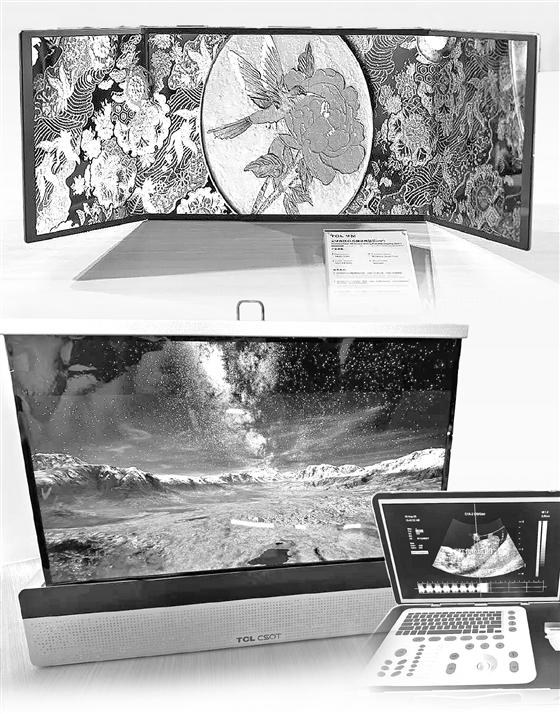
技术迭代引爆中尺寸OLED需求国内显示面板企业竞相扩产力争上游
Zheng Quan Shi Bao· 2025-11-02 18:09
Core Insights - The global display panel industry is shifting its competitive focus towards medium-sized OLED panels, with significant investments from major players like TCL, BOE, and Visionox [1][5][7] Group 1: TCL Huaxing's T8 Project - TCL Huaxing's T8 project, the world's first large-scale production line for 8.6-generation printed OLED, has commenced construction in Guangzhou with a total investment of 29.5 billion yuan and a designed monthly capacity of 22,500 glass substrates [1][2] - The T8 project is expected to achieve mass production by the second half of 2027, with the first consumer electronic products set to ship in the first half of 2026, targeting medium-sized applications such as monitors and laptops [3][4] - The T8 project will integrate AI and smart manufacturing technologies, aiming for a 50% localization rate for equipment and significant energy savings compared to traditional methods [3][8] Group 2: Competitive Landscape - BOE and Visionox have also initiated their own 8.6-generation OLED projects, creating a competitive environment among the three companies [4][6] - BOE has invested 63 billion yuan in its project, which is set to begin mass production in the fourth quarter of 2026, focusing on the reliability of its technology [4][5] - Visionox is pursuing its proprietary ViP technology, which combines the advantages of both traditional and printed OLED methods [4][5] Group 3: Market Dynamics - The medium-sized OLED market is projected to experience significant growth, with compound annual growth rates of 33% for laptop OLED panels and 27% for automotive displays by 2030 [5][7] - The shift from LCD to OLED in high-end IT products, such as Apple's iPad Pro, is expected to drive demand for medium-sized OLED panels [7][9] - The collective efforts of TCL, BOE, and Visionox are seen as a strategic move to break the overseas monopoly in the mid-to-high-end display market, with a focus on technological innovation and supply chain independence [7][9]
技术迭代引爆中尺寸OLED需求 国内显示面板企业竞相扩产力争上游
Zheng Quan Shi Bao· 2025-11-02 18:05
Core Insights - The global display panel industry is shifting its competitive focus towards medium-sized OLED panels, with significant investments from major players like TCL, BOE, and Visionox [1][5][7] Group 1: TCL Huaxing's T8 Project - TCL Huaxing's T8 project, the world's first large-scale production line for 8.6-generation printed OLED, has commenced construction in Guangzhou with a total investment of 29.5 billion yuan and a designed monthly capacity of 22,500 glass substrates [1][2] - The T8 project is seen as a critical breakthrough for China's display industry, marking a transition from a "follower" to a "leader" in the medium-sized OLED sector, with expected cost advantages of over 15% compared to other OLED technologies [2][3] - The T8 project aims to integrate AI and smart manufacturing technologies, significantly enhancing production efficiency and reducing defect rates [3][8] Group 2: Competitive Landscape - BOE and Visionox have also initiated their own 8.6-generation OLED projects, creating a competitive environment among the three companies [4][6] - BOE has invested 63 billion yuan in its project, which is set to begin mass production in Q4 2026, focusing on ensuring product stability and technological upgrades [4][5] - Visionox is pursuing its proprietary ViP technology, which combines the advantages of both evaporation and printing methods, targeting the medium to large-sized market [4][5] Group 3: Market Dynamics - The medium-sized OLED market is projected to experience significant growth, with compound annual growth rates of 33% for laptop OLED panels and 27% for automotive displays by 2030 [5][7] - The shift from LCD to OLED in high-end IT products, such as Apple's iPad Pro, is expected to drive demand for medium-sized OLED panels [7][8] - The collective efforts of TCL, BOE, and Visionox are reshaping the global competitive landscape, breaking the long-standing dominance of companies like Samsung and LGD in the high-end display market [7][9] Group 4: Future Outlook - The Chinese medium-sized OLED industry is poised for a collective breakthrough, with a focus on technological innovation and supply chain collaboration [9] - The next 3 to 5 years are expected to see a diversification of production routes and a convergence of production rhythms, with multiple lines entering mass production [9]