中老年服饰

Search documents
京东消费观察看“流动的年货”:异地年货订单同比增长近2倍,合肥、济南、东莞等地收到更多外省包裹
Zhong Jin Zai Xian· 2026-02-11 09:22
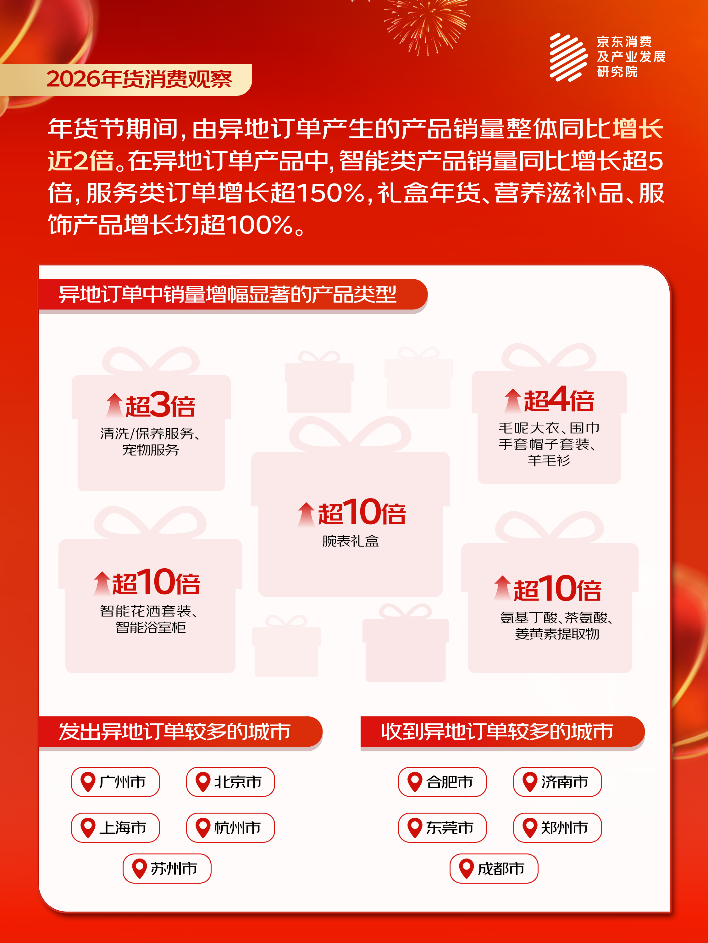
Core Insights - The article highlights the significant increase in cross-regional orders for traditional Chinese New Year goods, with overall sales growth of nearly 200% since the start of the festival season [4][6] - The trend reflects a shift in consumer behavior, where younger generations are sending not only traditional foods but also modern products and services to their families, indicating a blend of cultural heritage and contemporary lifestyle [2][8] Group 1: Cross-Regional Order Trends - Cross-regional orders have seen a nearly 200% increase in product sales, with specific regions like Tibet, Xinjiang, and Yunnan experiencing over 300% growth in order volume [4][6] - Major cities such as Guangzhou, Beijing, and Shanghai are the primary sources of these orders, while cities like Hefei, Jinan, and Zhengzhou are the main recipients [6][9] Group 2: Product Categories and Consumer Preferences - The diversity of products in cross-regional orders has expanded from traditional foods to include smart products and health supplements, with smart toilets and watch gift boxes seeing sales growth exceeding 1000% [2][8] - Local specialties have also gained traction, with overall sales growth of over 140%, particularly in Zhejiang, which saw a 571% increase [9][12] Group 3: Consumer Motivations and Cultural Significance - Consumers prioritize unique flavors and authenticity when selecting local specialties, with 56.6% emphasizing the importance of "authentic taste" [3][11] - The emotional connection to traditional foods and the desire to share these experiences with family are significant motivators for purchasing [15]


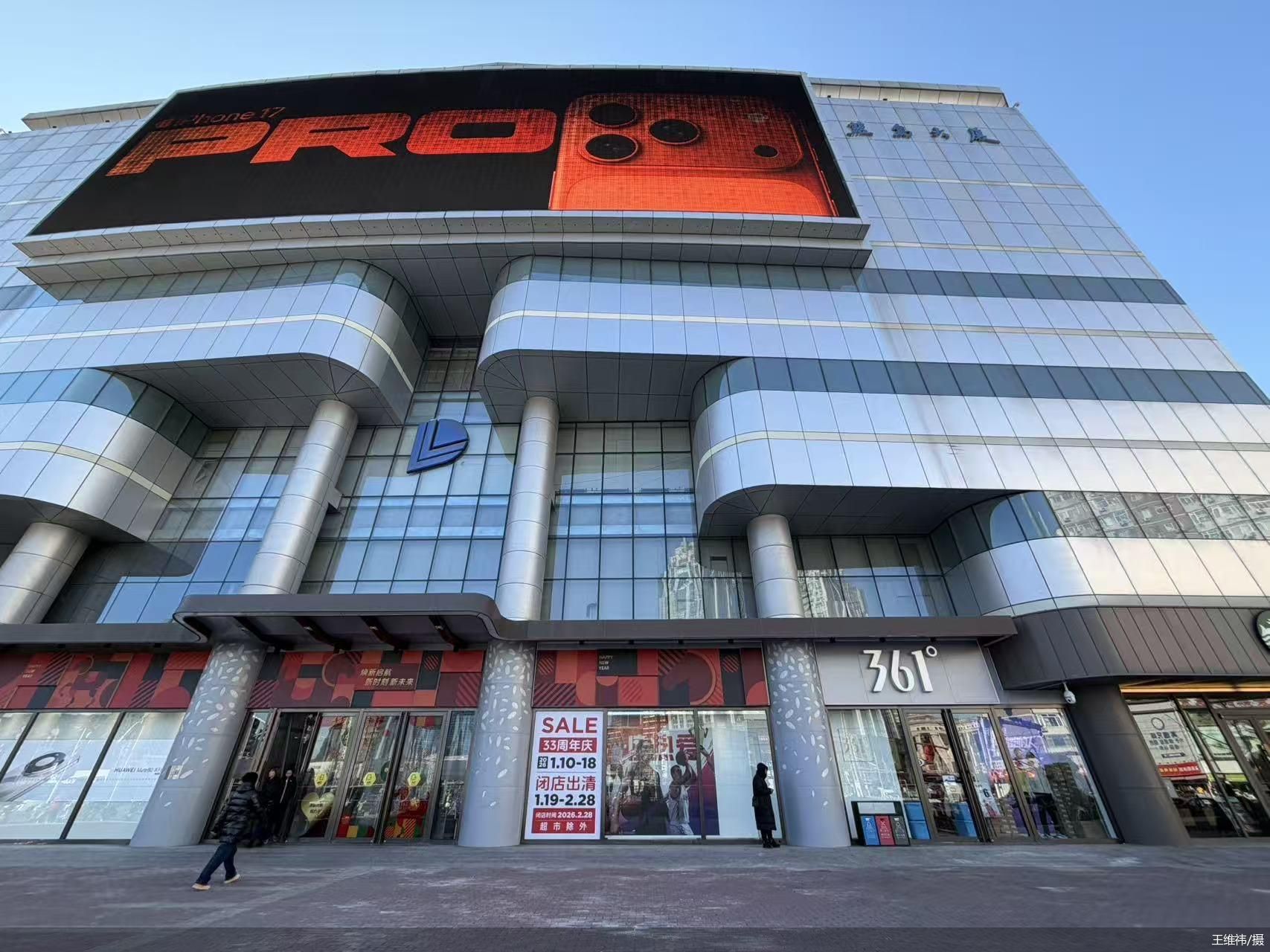
蓝岛闭店、安贞华联转型大健康 老牌百货多路径转型
Bei Jing Shang Bao· 2026-01-21 11:07
Core Viewpoint - The closure of the iconic Blue Island Building in Beijing marks a significant shift in the city's retail landscape, reflecting a broader trend of transformation among traditional department stores as they adapt to changing consumer demands and urban renewal policies [1][3][4]. Group 1: Closure and Transformation of Traditional Retail - The Blue Island Building, a 30-year-old landmark, will officially close on February 28, 2023, with clearance sales attracting many nostalgic customers [3][4]. - The building, which opened in 1993, was once a major shopping destination in Beijing, known for its diverse offerings, including high-end electronics and clothing [4]. - Despite attempts at modernization and rebranding, the Blue Island Building has struggled to attract younger consumers, becoming associated primarily with middle-aged and elderly shoppers [3][4]. Group 2: Market Dynamics and New Developments - The transformation of the Blue Island Building is part of a larger trend where traditional retail spaces in Beijing are undergoing significant renovations to meet new consumer preferences [6][7]. - New projects, such as the "Yuan Yang Anzhen Plaza," are focusing on health and wellness, while other established stores are introducing new brands and experiences to attract a younger demographic [6][7]. - The Beijing retail market is experiencing a dual trend of rapid renovation of old stores and the introduction of new commercial projects, with a projected increase in retail space to 17.44 million square meters by the end of 2025 [8]. Group 3: Changing Consumer Behavior - Consumer preferences are shifting towards experience-based and service-oriented shopping, necessitating a transformation in traditional retail strategies [10]. - The demographic of shoppers is diversifying, with younger consumers seeking trendy experiences and older consumers requiring services tailored to their needs [10][11]. - The traditional retail model is becoming less effective, as consumers demand more integrated online and offline shopping experiences [10][11]. Group 4: Challenges in Transformation - The renovation of old department stores faces significant challenges, including the need for compliance with safety regulations and the high costs associated with upgrading older buildings [11]. - There is a skills gap in the workforce, as traditional retail teams lack the expertise needed for modern retail operations, such as community engagement and experiential marketing [11]. - Attracting new customer segments while retaining existing ones poses a significant challenge for traditional retailers undergoing transformation [11].