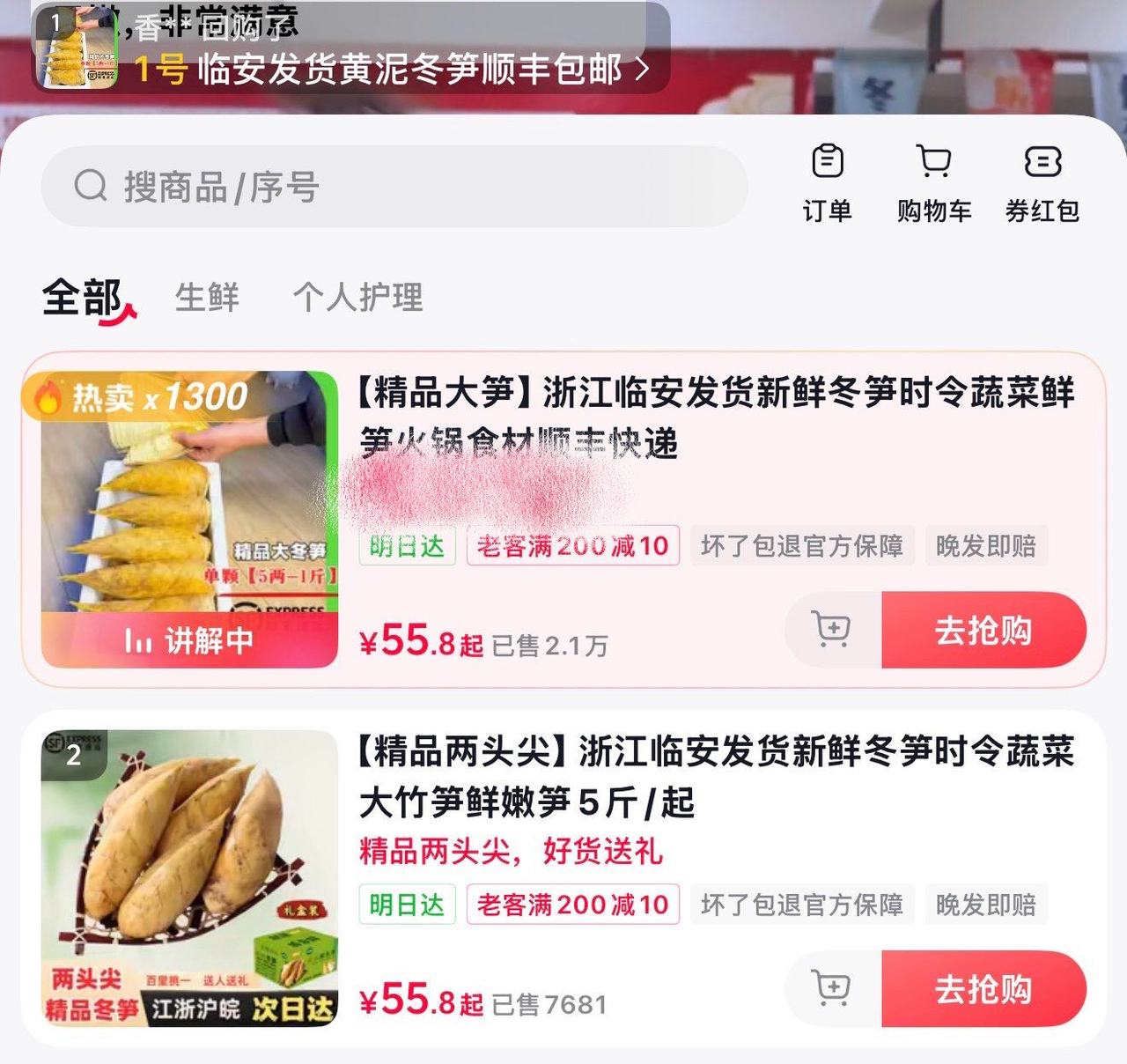
临安冬笋

Search documents
保障直播带货食品安全 新规出台向行业乱象亮剑
Xin Lang Cai Jing· 2026-01-18 16:23
Core Viewpoint - The rise of live-streaming e-commerce in the food sector has led to significant issues such as false advertising and counterfeit products, prompting the National Market Supervision Administration to introduce regulations aimed at ensuring food safety responsibilities among live-streaming e-commerce operators [1][23]. Group 1: Regulatory Framework - The newly released regulations specifically target live-streaming e-commerce operators, which include platform operators, live-stream hosts, marketing personnel, and service agencies [10][23]. - The regulations clarify the responsibilities of each participant in the food sales chain, emphasizing the need for a clear "responsibility checklist" for all involved [10][23]. - Live-streaming marketers, especially influencers, are required to establish strict product selection systems, verify food information, and maintain records for at least three years [10][12]. Group 2: Consumer Protection and Compliance - The regulations mandate that live-streaming platforms act as the primary overseers of food safety, with enhanced responsibilities for risk management and compliance monitoring [12][14]. - Platforms must implement a comprehensive process for monitoring, including pre-broadcast checks of hosts' qualifications, real-time detection of false advertising, and retention of sales records for three years [14][21]. - The regulations outline 13 categories of prohibited food items and 10 banned live-streaming behaviors to protect consumers and ensure compliance [21][23]. Group 3: Case Studies and Enforcement - Notable cases of false advertising have emerged, such as a popular influencer selling sweet potato noodles that were found to contain no sweet potato, resulting in fines totaling 1.65 million yuan for the influencer's company [3][5]. - Another influencer faced penalties of 68.94 million yuan for misleading advertising related to mooncakes, highlighting the serious consequences of non-compliance [5][21]. - The regulations aim to address the complexities of consumer rights protection in the live-streaming e-commerce landscape, where consumers often struggle to seek redress [3][10]. Group 4: Market Dynamics and Challenges - The live-streaming e-commerce market is rapidly expanding, with projections indicating that by the end of 2024, the number of live-streaming users in China will exceed 830 million, representing 75.2% of internet users [12][23]. - Issues such as price discrepancies and the sourcing of products, like the case of "Lin'an winter bamboo shoots," reveal the challenges of maintaining quality and transparency in the market [16][21]. - The regulations are part of a broader effort to ensure food safety and consumer trust in the rapidly growing live-streaming e-commerce sector, which is crucial for sustainable development [23].


焦点访谈|守护“舌尖上的安全”,新规来了
Yang Shi Wang· 2026-01-18 14:46
Core Viewpoint - The rise of live-streaming e-commerce has led to significant issues in food safety, prompting the National Market Regulatory Administration to introduce regulations aimed at ensuring food safety responsibilities among live-streaming e-commerce operators [1][21]. Group 1: Overview of Live-Streaming E-commerce - Live-streaming e-commerce, characterized by real-time product demonstrations and direct consumer interaction, has become a popular sales method due to its convenience and efficiency [3]. - However, this new sales model has exposed various food safety issues, including false advertising and the sale of counterfeit products [3][5]. Group 2: Regulatory Response - The National Market Regulatory Administration has issued the "Regulations on the Supervision and Management of Food Safety Responsibilities of Live-Streaming E-commerce Operators," which specifically targets live-streaming e-commerce operators [1][21]. - The regulations clarify that live-streaming e-commerce operators include platform operators, live-streaming room operators, marketing personnel, and service agencies, establishing a comprehensive responsibility chain [9]. Group 3: Responsibilities and Penalties - The regulations require live-streaming marketing personnel to implement strict product selection systems, verify food information, and maintain records for at least three years [9]. - Penalties for violations include fines, confiscation of illegal gains, and operational suspensions, as demonstrated by cases involving false advertising [7][21]. Group 4: Platform Responsibilities - Live-streaming platforms are designated as the primary responsible parties, tasked with ensuring compliance through rigorous checks of operators' qualifications and product legality [13]. - Platforms must implement a full-process risk management mechanism, including pre-broadcast checks, real-time monitoring during broadcasts, and post-broadcast record retention for three years [13][16]. Group 5: Market Context and Challenges - The live-streaming e-commerce market is rapidly expanding, with projections indicating over 830 million users by the end of 2024, highlighting the need for stringent regulatory measures [13]. - Issues such as the sale of counterfeit products and misleading advertising practices have raised consumer concerns, necessitating a robust regulatory framework to protect consumer rights [5][21]. Group 6: Future Implications - The introduction of these regulations is part of a broader effort to address common issues in live-streaming e-commerce, reinforcing the platform's role as the first responsible party in the ecosystem [23]. - The focus on food safety is critical for maintaining consumer trust and ensuring the sustainable development of the live-streaming e-commerce industry [23].
收购价20元/斤,直播间只卖10元?你买的杭州“本地冬笋”有猫腻
Xin Lang Cai Jing· 2026-01-02 04:04
Core Viewpoint - The article highlights the challenges faced by the local bamboo shoot industry in Lin'an, Hangzhou, where the selling price of bamboo shoots in e-commerce platforms is significantly lower than the local purchase price, leading to concerns about the authenticity of the products and the sustainability of local farmers [1][4]. Pricing Discrepancies - The local purchase price for Lin'an bamboo shoots is approximately 20 yuan per kilogram, while e-commerce platforms are selling them for around 10 yuan per kilogram, which is less than half of the local acquisition cost [3][4]. - A specific e-commerce link reported sales exceeding 20,000 orders, translating to over 110,000 kilograms sold, raising questions about the availability of such quantities from local sources [4]. Production Challenges - Local bamboo shoot farmers report a significant reduction in yield due to drought conditions, with some farmers unable to irrigate their crops effectively, leading to lower production levels [4][11]. - The average yield of bamboo shoots in Lin'an is about 300 kilograms per acre, with labor costs for harvesting reaching approximately 10 yuan per kilogram, making the low selling price unsustainable [4][11]. Quality and Authenticity Issues - Experts indicate that true Lin'an bamboo shoots have distinct characteristics, such as a specific shape and high moisture content, which differentiate them from lower-quality shoots from other regions [6][8]. - The article emphasizes the importance of recognizing the quality differences, as local bamboo shoots are best consumed fresh, while those from other regions undergo lengthy transportation, affecting their taste and quality [8][11]. Industry Infrastructure and Labor Concerns - The bamboo shoot industry in Lin'an faces infrastructural challenges, including inadequate irrigation and transportation facilities, which are exacerbated by labor shortages as skilled workers migrate to urban areas [8][11]. - The price of bamboo has dropped significantly, with current prices at 400 yuan per ton being 60% lower than historical highs, leading some farmers to abandon their bamboo groves [11]. Consumer Awareness - The article advises consumers to be cautious when purchasing bamboo shoots, providing tips for identifying fresh products and warning against potentially harmful additives used to preserve inferior quality shoots [14].