直播电商

Search documents
张雪峰离世,一个时代最复杂的教育符号
凤凰网财经· 2026-03-24 14:06
Group 1 - The article discusses the life and career of Zhang Xuefeng, highlighting his rise from a poor background to becoming a prominent figure in the education industry with millions of followers and a vast business empire [1][40] - Zhang Xuefeng owned 11 companies, with 9 currently operational, spanning various sectors including education, tourism, and information technology, showcasing a diversified business model [2][10] - His core education companies, such as Suzhou Fengxue Weilai Education Technology Co., Ltd., focus on high-end college application services, with products priced at 12,999 yuan and 18,999 yuan for the 2026 college entrance examination season [12][13][17] Group 2 - Zhang Xuefeng's journey into the education sector began unexpectedly when he helped a friend organize graduate school materials, leading him to understand the complexities of college admissions [21][22] - He gained popularity in 2016 with a viral video that explained admission processes for top universities, significantly increasing his visibility and leading to the publication of his first book on graduate school success [29][30] - Despite controversies surrounding his statements and methods, Zhang Xuefeng's influence in the education sector has grown, positioning him as a key figure in college admissions and career planning [35][39]


东方甄选:品牌认知驱动长期成长-20260324
HTSC· 2026-03-24 02:25
Investment Rating - The report maintains a "Buy" rating for the company with a target price of HKD 32.07 [7][43]. Core Insights - The company has shown significant growth, outperforming the overall online retail market, with a GMV growth rate of 10.3% in early 2026, driven by effective operations during the New Year festival [1][12]. - The company is focusing on brand recognition and has strengthened its core operations on Douyin, with a notable increase in self-operated product sales, which now account for over 50% of total sales [1][34]. - The brand is evolving from a channel brand to a comprehensive consumer brand, with substantial engagement in content creation by the founder, enhancing brand loyalty and user retention [4][29]. Summary by Relevant Sections Traffic Side - The company continues to optimize its traffic structure, with the main Douyin account stabilizing and contributing over 80% of GMV in January [2][19]. - New niche accounts have been established to target differentiated consumer groups, effectively supplementing GMV growth [2][21]. Product Category - Self-operated products have become the core growth engine, with a GMV share of 52.8% in the first half of FY26, reflecting continuous improvement [3][34]. - The company has invested significantly in quality control, completing over 20,000 quality inspection reports in 2025, which has bolstered product quality and consumer trust [3][32]. Brand Development - The company has accelerated its brand-building efforts, conducting 645 traceability events in 2025 and engaging the founder in innovative content creation [4][29]. - The self-operated app has seen rapid growth, with GMV from the app accounting for 15.1% of total GMV in the first half of FY26, and monthly active users exceeding 1.5 million [4][41]. Profit Forecast and Valuation - The profit forecast for FY26-28 has been revised upwards to RMB 5.91 billion, RMB 6.12 billion, and RMB 6.48 billion respectively, reflecting a significant increase from previous estimates [5][43]. - The average PE ratio for comparable companies is 48.9x, leading to a target price of HKD 32.07 for the company [5][45].
中伦深度观察2026年2月
中伦律师事务所· 2026-03-09 06:15
Investment Rating - The report does not explicitly provide an investment rating for the industry or companies discussed Core Insights - The report highlights the evolving landscape of reverse mergers in the Hong Kong stock market, emphasizing the shift from simple financial engineering to strategic industry integration as a pathway for successful listings [19][20][21] Summary by Sections Case Study 1: Weima Automobile's Failed Reverse Merger with Apollo - Weima's financial distress included cumulative losses of 17.4 billion yuan from 2019 to 2021 and current liabilities of 9.477 billion yuan by the end of 2021, indicating severe insolvency [3][4] - The merger attempt was announced at a valuation of 2.02 billion USD (approximately 15.76 billion HKD) but was terminated within eight months due to market instability and Weima's operational failures [4][28] - The failure was attributed to Weima's inability to meet the listing requirements due to its operational crisis and the regulatory environment that prioritizes substance over form [5][6][30] Case Study 2: Yiteng Pharmaceutical's Merger with Jiahe Biotech - The merger was recognized as a successful case of industry collaboration, with Yiteng providing stable profits and a sales network to Jiahe, which faced R&D challenges [7][31] - The merger was structured as a share swap, leading to the creation of a new entity named "Yiteng Jiahe," which successfully navigated the regulatory landscape despite being classified as a reverse merger [9][33] - The transaction demonstrated the importance of creating real synergistic value, contrasting with Weima's failed attempt, and highlighted the necessity for both parties to be healthy enterprises [10][35][36] Case Study 3: "Jiao Ge Peng You" Merging with Century Ruike - This case exemplified a successful reverse merger that avoided triggering reverse acquisition scrutiny through careful structuring and gradual business integration [13][37] - The transaction involved a step-by-step approach, including a five-year exclusive operational agreement, which allowed the listed company to secure core business and revenue sources without immediate equity involvement [14][38] - The success hinged on the strategic alignment and trust between the parties, showcasing a new model for light-asset companies seeking to enter the market [17][18][38]
东方甄选(01797):——东方甄选(1797.HK)动态研究:自营放量盈利修复,费用管控释放业绩
Guohai Securities· 2026-03-06 14:31
Investment Rating - The investment rating for the company is "Buy" (maintained) [1] Core Insights - The company has entered a phase of "structural optimization and profit recovery," with an increase in the proportion of self-operated products and multi-channel layout expected to continue improving profitability [11] - The company reported a significant recovery in profitability, with a net profit of 239 million yuan in FY2026H1, compared to a loss of 96.5 million yuan in the same period last year [6][11] - The self-operated product strategy has become a core growth engine, contributing 2 billion yuan in revenue in FY2026H1, representing a year-on-year increase of 18.1% [8] Financial Performance Summary - For FY2026H1, the company achieved revenue of 2.31 billion yuan, a year-on-year increase of 5.7%, with GMV totaling approximately 4.1 billion yuan, reflecting a 16.4% growth after excluding one-time disturbances [6] - The gross profit for FY2026H1 was 840 million yuan, with a gross margin of 36.4%, an increase of 2.8 percentage points year-on-year, driven by an increase in the proportion of self-operated products and improved supply chain efficiency [6] - The company’s operating expenses have stabilized, with sales expense ratio, management expense ratio, and R&D expense ratio at approximately 19%, 3.6%, and 2.3% respectively, showing a significant decrease compared to the previous year [7] Future Projections - The company is projected to achieve revenues of 5.08 billion yuan, 6.05 billion yuan, and 7.19 billion yuan for FY2026, FY2027, and FY2028 respectively, with corresponding net profits of 445.26 million yuan, 528.04 million yuan, and 644.72 million yuan [10][11] - The expected P/E ratios for FY2026, FY2027, and FY2028 are approximately 50.14, 42.28, and 34.63 respectively, indicating a favorable valuation outlook [10][11]
全国人大代表、陇上庄园生态农业有限公司总经理梁倩娟:护航中小规模从业者,推动直播电商行业规范化发展
证券时报· 2026-03-05 08:47
Core Viewpoint - The article emphasizes the need for the live e-commerce industry to transition towards high-quality development, focusing on improving the quality of practitioners and ensuring rights protection for small and medium-sized operators to share in the digital economy's benefits [1]. Group 1: Industry Growth and Opportunities - Live e-commerce is one of the fastest-growing and most innovative business models in China's digital economy, with market size increasing over 12 times from 2019 to 2024 [1]. - The development of live e-commerce has created significant employment opportunities for rural residents, particularly for university graduates returning to their hometowns and left-behind women, who seek local job opportunities [1]. Group 2: Challenges Faced by Practitioners - The live e-commerce industry faces challenges such as inadequate professional standards for network anchors, a lack of comprehensive training systems, and low social recognition [2]. - Small and medium-sized operators struggle with limited capital, difficulty in gaining traffic, and intense competition, which hampers their ability to accumulate followers and access commercial resources [2]. - The flexible employment nature of network anchors leads to unstable income and high mobility, making it difficult to fit into traditional social security systems [2]. Group 3: Recommendations for Industry Improvement - To promote a more standardized development of the live e-commerce industry, it is recommended to establish a multi-dimensional occupational protection system for network anchors, including legal relationship clarity and a dispute resolution mechanism [3]. - There is a call for e-commerce platforms to enhance support for small and medium-sized operators, with examples such as Douyin e-commerce's plan to save merchants over 32 billion yuan by 2025 through various support policies [4]. - The article suggests that government departments should encourage e-commerce platforms to implement systematic support measures for small businesses, including establishing support funds and expanding commission exemptions [4].

「借壳上市」是假,但三只羊的困境是真
36氪· 2026-03-01 23:59
Core Viewpoint - The article discusses the recent rumors surrounding "San Zhi Yang" Group's alleged reverse merger listing, emphasizing that the company has officially denied any plans for an IPO or reverse merger, clarifying that the rumors are related to normal overseas business collaborations [6][21][23]. Group 1: Company Situation - San Zhi Yang Group is currently facing significant challenges, marking one of the most difficult periods since its establishment [7][8]. - Following the resumption of domestic broadcasts, the company's performance has been disappointing, with a substantial loss of core hosts and ongoing difficulties from its transformation efforts [8][9]. - The company has seen a drastic reduction in signed hosts, from over 2,000 at its peak to just 303 currently [36]. Group 2: Financial and Operational Context - The company was linked to a reverse merger rumor due to the acquisition of "Step Distinctive" by Rich Sparkle Holdings for $975 million, which has created confusion regarding its listing status [12][15]. - Rich Sparkle Holdings, a shell company with no substantial business, has been criticized for its dubious IPO practices [15]. - San Zhi Yang's revenue and profit figures have significantly declined, with a recent live broadcast achieving only about 250,000 yuan in sales, a stark contrast to its previous performance [34]. Group 3: Crisis and Recovery Efforts - The crisis began with a false advertising incident in September 2024, resulting in a fine of 68.95 million yuan and a halt to all operations for rectification [28]. - Despite efforts to establish a quality control mechanism and a new app to regain customer trust, the results have been minimal, and the app has not generated significant traffic [39][40]. - The absence of the core figure "Crazy Yang" since the crisis has further complicated the company's recovery, as it struggles to establish new brand ambassadors [41][43]. Group 4: Market Perception and Challenges - The public's tolerance for issues related to counterfeit products and false advertising has decreased significantly, making recovery more challenging for the company [44][46]. - The company faces the daunting task of rebuilding user trust and diversifying its brand influence beyond reliance on a single IP [46].

快手电商发布2025治理体验报告:AI驱动与机制创新双轮并进构建信任电商新生态
Zhong Guo Zhi Liang Xin Wen Wang· 2026-03-01 03:46
Core Insights - The live e-commerce industry is transitioning from "scale expansion" to "quality cultivation" as it enters a new stage of high-quality development [1] - Kuaishou E-commerce aims to build a fair, efficient, and trustworthy e-commerce ecosystem through a dual strategy of "AI technology-driven + institutional innovation" by 2025 [1] Consumer Experience - Kuaishou E-commerce has shifted from "manual review" to "AI model governance" to address long-standing issues like false advertising and scripted promotions [3] - The platform has reduced the overall risk leakage rate to 0.1% and decreased the false advertising complaint rate by 35% [3] - A comprehensive governance system has been established to combat scripted promotions, with a 61% year-on-year reduction in related complaints [3] - The platform has automated its quality inspection mechanism, achieving 100% automatic identification and dispatch of problematic products [4] Product Quality and Intellectual Property Protection - In 2025, Kuaishou E-commerce upgraded its counterfeit detection model, identifying and intercepting 1.9 million risky products and handling over 30,000 counterfeit items [4] - The daily interception capability for extreme risk products has increased to over 30,000 [4] - The platform has removed over 400,000 non-compliant book products by connecting with authoritative databases [5] After-Sales and Fulfillment - Kuaishou E-commerce has introduced an innovative "after-sales good service exemption from product return" mechanism, encouraging merchants to provide superior after-sales service [5] - Over 280,000 merchants have participated in this program, leading to a significant reduction in return rates and a 35% increase in order volume for participating merchants [5] - The proportion of orders shipped within 48 hours has increased by 8.16%, and the average delivery time has been shortened by over 8 hours [5] Merchant Empowerment - The platform has expanded the "zero-cost entry" coverage, benefiting over 3 million merchants and saving them over 3 billion yuan in startup costs [7] - Kuaishou E-commerce has introduced a rapid payment product that shortens the payment cycle to as little as 17 days, helping 12,000 merchants resolve cash flow issues [7] - An automated order recovery tool has been launched, achieving a return on investment 2.5 times that of manual recovery efforts, recovering over 130 million yuan in GMV during the Double 11 shopping festival [9] Future Outlook - 2025 is identified as a critical year for governance and service upgrades at Kuaishou E-commerce, with plans to further integrate AI technology and institutional innovation [11] - The company aims to enhance consumer protection systems and merchant empowerment policies to create a "consumer-satisfied, merchant-healthy, and ecosystem-trustworthy" environment [11]


国家市场监督管理总局副局长、国家标准化管理委员会主任邓志勇:以更高要求、更实举措深入整治“内卷式”竞争
Qi Huo Ri Bao· 2026-02-27 11:39
Core Viewpoint - The Chinese government is actively working to address issues hindering the construction of a unified national market, focusing on regulatory enforcement, industry optimization, and the establishment of clear institutional rules [1][2] Group 1: Regulatory Enforcement - The State Administration for Market Regulation (SAMR) is intensifying regulatory enforcement by conducting cost audits and inspections in key industries, launching nine special rectification actions, and addressing typical cases in live-streaming e-commerce [1] - Actions include urging major platform companies to remove "lowest price" promotions and halting controversial refund policies, aiming to create a deterrent effect through the exposure of typical cases [1] Group 2: Industry Optimization - The government is promoting quality enhancement in supply chains by implementing 1,856 quality improvement projects and addressing over 25,000 quality-related issues [2] - In the electric vehicle sector, the government has initiated special supervision and random inspections to ensure quality and safety standards are met [2] Group 3: Institutional Rule Improvement - The government is advancing the revision of the Anti-Unfair Competition Law and has released several regulatory documents to delineate legal boundaries for platform enterprises [2] - Over 60,000 important policy measures have been reviewed by market regulation departments to effectively standardize local government economic promotion behaviors [2] Group 4: Future Directions - The SAMR plans to implement higher standards and more practical measures to further address "involution" competition, aiming to better integrate effective markets with proactive government actions to support the construction of a unified national market and achieve high-quality development [2]
李佳琦直播间“38大促”:“自我犒劳”推动美妆、办公、健康品类增长
Bei Ke Cai Jing· 2026-02-27 11:26
Core Insights - The article highlights a shift in consumer focus from "gift-giving" during the pre-festival period to "self-care" and enhancing quality of life post-festival, indicating a trend towards "self-reward" consumption [1] Group 1: Consumer Behavior Trends - Consumers are increasingly prioritizing self-care, leading to growth in categories such as beauty, office supplies, and health products [1] - Products like coffee, ergonomic chairs, and sleep pillows have seen significant increases in popularity, with search volumes rising by 161% and 132% respectively in the week following the festival compared to the week before [1] Group 2: Market Dynamics - The concept of "emotional economy" has become a key term in the consumer market, with live streaming platforms acting as amplifiers for changes in consumer emotions and demands [1] - The "self-reward" consumption trend is characterized by rational and refined purchasing decisions, rather than impulsive buying, based on clear needs and understanding [1]
顶流网红,神话终结
Xin Lang Cai Jing· 2026-02-27 11:19
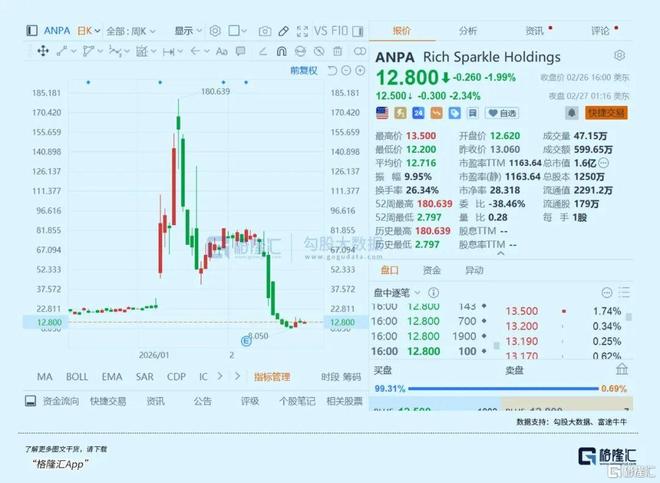
Group 1 - A little-known company experienced a dramatic stock price surge from $22 to $180, a 45-fold increase from its initial offering price of $4, before crashing back to around $10, resulting in a 95% drop in market value to $102 million [1][3] - The company, Rich Sparkle, is involved in financial printing, primarily assisting listed companies with tasks like printing prospectuses and translations, and has no substantial business operations of its own [5][6] - Rich Sparkle's acquisition of Step Distinctive, valued at $975 million, was executed through a share issuance of approximately 75 million new shares, allowing both parties to avoid cash transactions [6][8] Group 2 - The partnership between Rich Sparkle and Step Distinctive includes exclusive operational rights for the TikTok influencer Khaby Lame, allowing Rich Sparkle to manage various aspects of his global operations without financial investment [8][10] - The collaboration aims for an ambitious sales target of $4 billion, approximately 277.6 billion RMB, which is nearly double the peak sales of the domestic company [10][11] - Despite the potential for growth in the U.S. and European markets, the current penetration rate for live commerce is below 20%, compared to over 70% in China, indicating significant challenges ahead [12][13] Group 3 - The recent stock volatility is attributed to speculative hype surrounding the partnership, with a combined fan base of nearly 800 million across both entities [9][14] - The historical context reveals that the company, once a leader in the live commerce space, has faced significant setbacks, including a major regulatory fine that severely damaged its reputation and operational capacity [23][25] - The decline of the company reflects broader trends in the influencer and live commerce industry, where the lifecycle of internet celebrities is often short-lived, leading to instability in revenue generation [26][30] Group 4 - The live commerce landscape is evolving, with a shift in market dynamics favoring smaller influencers over top-tier ones, as evidenced by a report indicating that the contribution of top influencers to GMV is decreasing [30][32] - The changing algorithms of platforms are moving away from promoting superstars to fostering a diverse range of niche influencers, which may lead to a more sustainable ecosystem [33][34] - The overall situation suggests a potential end of an era for "phenomenal influencers," marking a significant transition in the internet short video landscape [34][35]