香港美诚月饼

Search documents
保障直播带货食品安全 新规出台向行业乱象亮剑
Xin Lang Cai Jing· 2026-01-18 16:23
Core Viewpoint - The rise of live-streaming e-commerce in the food sector has led to significant issues such as false advertising and counterfeit products, prompting the National Market Supervision Administration to introduce regulations aimed at ensuring food safety responsibilities among live-streaming e-commerce operators [1][23]. Group 1: Regulatory Framework - The newly released regulations specifically target live-streaming e-commerce operators, which include platform operators, live-stream hosts, marketing personnel, and service agencies [10][23]. - The regulations clarify the responsibilities of each participant in the food sales chain, emphasizing the need for a clear "responsibility checklist" for all involved [10][23]. - Live-streaming marketers, especially influencers, are required to establish strict product selection systems, verify food information, and maintain records for at least three years [10][12]. Group 2: Consumer Protection and Compliance - The regulations mandate that live-streaming platforms act as the primary overseers of food safety, with enhanced responsibilities for risk management and compliance monitoring [12][14]. - Platforms must implement a comprehensive process for monitoring, including pre-broadcast checks of hosts' qualifications, real-time detection of false advertising, and retention of sales records for three years [14][21]. - The regulations outline 13 categories of prohibited food items and 10 banned live-streaming behaviors to protect consumers and ensure compliance [21][23]. Group 3: Case Studies and Enforcement - Notable cases of false advertising have emerged, such as a popular influencer selling sweet potato noodles that were found to contain no sweet potato, resulting in fines totaling 1.65 million yuan for the influencer's company [3][5]. - Another influencer faced penalties of 68.94 million yuan for misleading advertising related to mooncakes, highlighting the serious consequences of non-compliance [5][21]. - The regulations aim to address the complexities of consumer rights protection in the live-streaming e-commerce landscape, where consumers often struggle to seek redress [3][10]. Group 4: Market Dynamics and Challenges - The live-streaming e-commerce market is rapidly expanding, with projections indicating that by the end of 2024, the number of live-streaming users in China will exceed 830 million, representing 75.2% of internet users [12][23]. - Issues such as price discrepancies and the sourcing of products, like the case of "Lin'an winter bamboo shoots," reveal the challenges of maintaining quality and transparency in the market [16][21]. - The regulations are part of a broader effort to ensure food safety and consumer trust in the rapidly growing live-streaming e-commerce sector, which is crucial for sustainable development [23].

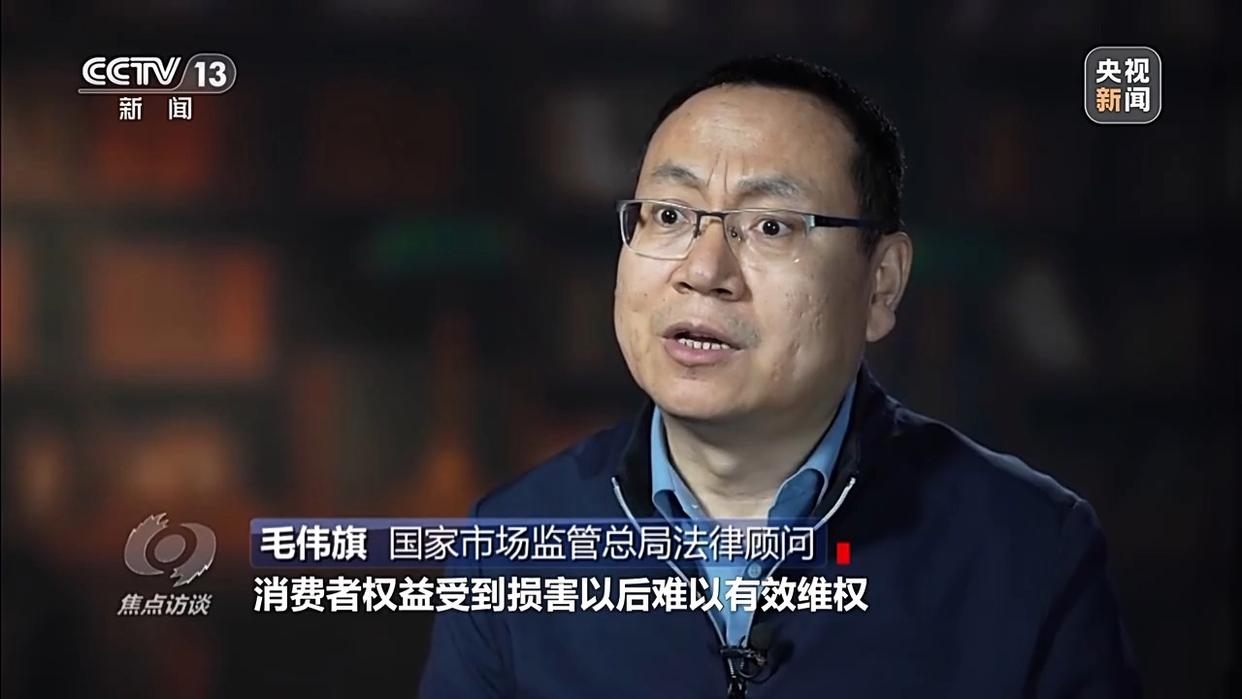
焦点访谈|守护“舌尖上的安全”,新规来了
Yang Shi Wang· 2026-01-18 14:46
Core Viewpoint - The rise of live-streaming e-commerce has led to significant issues in food safety, prompting the National Market Regulatory Administration to introduce regulations aimed at ensuring food safety responsibilities among live-streaming e-commerce operators [1][21]. Group 1: Overview of Live-Streaming E-commerce - Live-streaming e-commerce, characterized by real-time product demonstrations and direct consumer interaction, has become a popular sales method due to its convenience and efficiency [3]. - However, this new sales model has exposed various food safety issues, including false advertising and the sale of counterfeit products [3][5]. Group 2: Regulatory Response - The National Market Regulatory Administration has issued the "Regulations on the Supervision and Management of Food Safety Responsibilities of Live-Streaming E-commerce Operators," which specifically targets live-streaming e-commerce operators [1][21]. - The regulations clarify that live-streaming e-commerce operators include platform operators, live-streaming room operators, marketing personnel, and service agencies, establishing a comprehensive responsibility chain [9]. Group 3: Responsibilities and Penalties - The regulations require live-streaming marketing personnel to implement strict product selection systems, verify food information, and maintain records for at least three years [9]. - Penalties for violations include fines, confiscation of illegal gains, and operational suspensions, as demonstrated by cases involving false advertising [7][21]. Group 4: Platform Responsibilities - Live-streaming platforms are designated as the primary responsible parties, tasked with ensuring compliance through rigorous checks of operators' qualifications and product legality [13]. - Platforms must implement a full-process risk management mechanism, including pre-broadcast checks, real-time monitoring during broadcasts, and post-broadcast record retention for three years [13][16]. Group 5: Market Context and Challenges - The live-streaming e-commerce market is rapidly expanding, with projections indicating over 830 million users by the end of 2024, highlighting the need for stringent regulatory measures [13]. - Issues such as the sale of counterfeit products and misleading advertising practices have raised consumer concerns, necessitating a robust regulatory framework to protect consumer rights [5][21]. Group 6: Future Implications - The introduction of these regulations is part of a broader effort to address common issues in live-streaming e-commerce, reinforcing the platform's role as the first responsible party in the ecosystem [23]. - The focus on food safety is critical for maintaining consumer trust and ensuring the sustainable development of the live-streaming e-commerce industry [23].
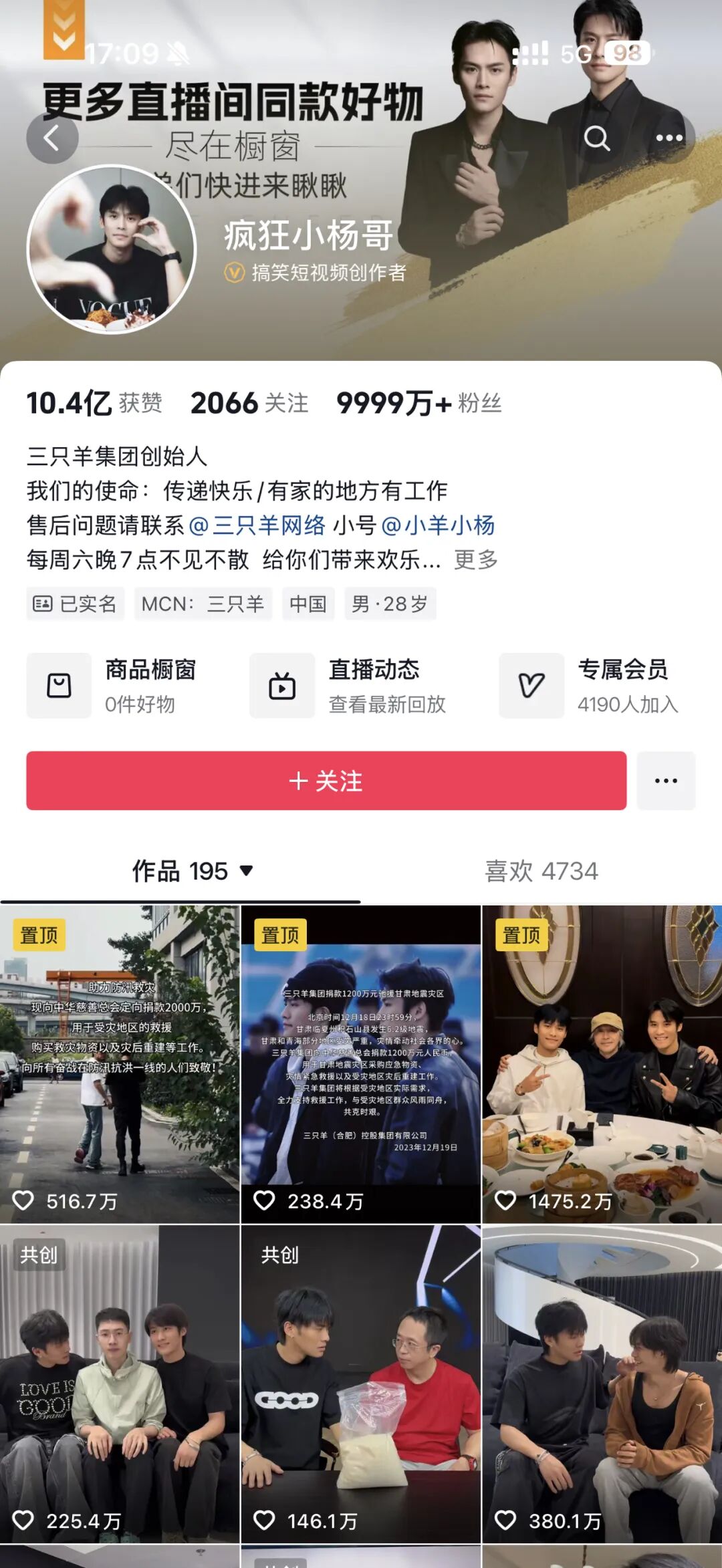
徒弟密集复播后,小杨哥能“重回巅峰”吗?
3 6 Ke· 2025-10-10 10:30
Core Viewpoint - The article discusses the return of the popular livestreaming host "Crazy Little Yang" and the company "Three Sheep Network" after a year-long suspension due to controversies surrounding false advertising and product misrepresentation. The company is attempting to regain consumer trust and adapt its business strategy in a changing market environment [1][3][4]. Summary by Sections Company Background and Controversy - Three Sheep Network faced significant backlash after "Crazy Little Yang" promoted products that were falsely advertised, leading to a year-long suspension and a comprehensive internal restructuring [3][4]. - The company completed 89 corrective measures and paid fines totaling approximately 68.9 million yuan, alongside compensation of about 27.8 million yuan for affected products [4]. Return to Livestreaming - On September 15, 2025, Three Sheep Network's hosts resumed livestreaming, with "Zui Ge" achieving over 100,000 concurrent viewers and generating estimated sales of 250,000 to 500,000 yuan [5][7]. - The hosts focused on self-branded low-cost daily necessities, indicating a shift away from reliance on third-party brands [7][8]. Business Strategy and Market Adaptation - During the suspension, Three Sheep Network explored various strategies, including migrating to different platforms and expanding into Southeast Asian markets, where they established a presence on TikTok [9][10][12]. - The company launched its own e-commerce app, "Xiao Yang Zhen Xuan," aiming to attract price-sensitive consumers with a low membership fee, although initial performance was underwhelming compared to competitors [14]. Challenges Ahead - The company faces regulatory scrutiny and a changing platform ecosystem, with increased emphasis on compliance and a shift towards smaller merchants in the livestreaming space [19][20]. - Consumer trust remains a significant hurdle, as public sentiment is still wary following the controversies, despite the company's efforts to rectify past mistakes [21][22].

最新动态,疯狂小杨哥将在近日复播
3 6 Ke· 2025-10-09 10:14
Core Viewpoint - The return of the influencer "Crazy Xiao Yang" to live streaming after a year-long suspension due to a false advertising incident, indicating a potential recovery for the company and the industry [1][5]. Company Summary - "Crazy Xiao Yang" was suspended in September 2024 due to the "Hong Kong Meicheng Mooncake" false advertising incident, resulting in a fine of 68.9495 million yuan and a significant drop in followers by over 12 million within six months [1]. - The company, San Zhi Yang Network, has completed 89 corrective measures and is now eligible to resume operations as of March 2025 [1]. - In April 2025, the company launched its self-operated app "Xiao Yang Zhen Xuan," but it faced challenges with low initial downloads and online viewership [1]. - Recent updates suggest that "Crazy Xiao Yang" is set to officially return, with the main account showing over 99.99 million followers [1]. Industry Summary - The live streaming e-commerce industry has seen increased regulatory scrutiny, with new regulations targeting false advertising and raising penalties significantly [6]. - Compliance requirements have tightened, leading to a 78% reduction in the use of non-compliant language by top influencers compared to three years ago [6]. - Innovations in content and interactive experiences are being prioritized, with new formats like narrative and scene-based live streaming being introduced [6]. - There is a noticeable trend of brands opting for self-broadcasting to maintain control over their brand image and enhance consumer trust [6]. - The rise of instant retail services, such as next-day and hourly delivery, is becoming a new trend, allowing local businesses to leverage live streaming for expansion [7]. Influencer Dynamics - Influencer Li Jiaqi engaged in a charity event in September 2025, showcasing a commitment to social responsibility [9]. - Luo Yonghao criticized the prevalence of pre-prepared dishes in restaurants, sparking a legal dispute with a restaurant founder [9]. - Wei Ya is returning with a new focus on brand incubation and content production, adapting to compliance changes with significant viewership in her first month back [9]. - Dong Yuhui participated in educational outreach and achieved high viewership in a recent live event [9].
三只羊、辛巴,凭啥“复活”
Zhong Guo Jing Ji Wang· 2025-09-19 09:36
Core Viewpoint - The recent revival of the "Three Sheep" live streaming hosts has shown mixed results, with significant audience engagement but limited sales performance, reflecting broader challenges in the live commerce industry. Group 1: Revival of "Three Sheep" Hosts - Multiple hosts from "Three Sheep," including Jiao Mei, Lao K, and Zui Ge, resumed live streaming on the evening of the 15th [1] - Zui Ge's live stream attracted over 100,000 viewers, indicating strong interest [2] - The live stream received 2.078 million likes, showcasing high engagement [3] Group 2: Sales Performance - The three hosts sold products from "Xiao Yang Zhen Xuan," the self-operated store of "Three Sheep," but only streamed for one hour [5][6] - Sales figures were modest, with Lao K selling between 1,000 to 2,500 items, generating sales of 25,000 to 50,000 yuan [8] - Jiao Mei's sales ranged from 7,500 to 10,000 items, with revenue between 100,000 to 250,000 yuan [9] - Zui Ge peaked at 109,000 viewers, selling 10,000 to 25,000 items, resulting in sales of 250,000 to 500,000 yuan [10] Group 3: Industry Context and Challenges - The "Three Sheep" incident, involving a failed product launch, led to a suspension of their accounts on Douyin [10] - The live commerce industry has faced a downturn, with major hosts transitioning away from the platform and companies like Dongfang Zhenxuan and Jiaoge Friends reporting profit declines [17][26] - The reliance on top hosts is being questioned, as the industry shifts towards a model driven by product reputation rather than celebrity endorsement [24][25] Group 4: Future Directions - The industry may see a shift towards mid-tier hosts with strong reputations, as the era of top-tier hosts fades [24] - Companies are exploring international markets as a potential avenue for growth, although this may only provide temporary relief [28][30] - The transition from influencer-driven models to reputation-driven approaches is expected to continue, impacting the overall landscape of live commerce [26][30]
“三只羊”复播,大小杨哥缺席!此前被罚没6894.95万元
Xin Lang Cai Jing· 2025-09-16 09:26
Group 1 - The company "Three Goats Network" resumed its live streaming on September 15 after nearly a year of silence, with different hosts instead of the founder appearing [1] - During the first five minutes of the broadcast, hosts "Zui Ge" and "Qiao Mei" attracted approximately 8,700 and 7,300 viewers respectively [1] - The hosts indicated that the purpose of the broadcast was mainly to interact with the audience rather than to focus on sales [1] Group 2 - In 2024, the company faced controversy over the sale of "Hong Kong Mei Cheng Mooncakes," which were found to be produced in Guangzhou and Foshan, not Hong Kong, leading to public outcry [7] - On September 19, the Hefei Market Supervision Administration announced the formation of a joint investigation team with other departments to address the issue [7] - The investigation concluded with a fine of 68.9491 million yuan and a suspension of operations for rectification [7] Group 3 - By March 23, 2025, the Hefei joint investigation team reported that the company had paid the fine in full and compensated 27.7785 million yuan for the involved products [9] - The company's rectification measures were deemed satisfactory, allowing it to meet the conditions for resuming operations [9]

小杨哥和东北雨姐,别再惦记复出了
3 6 Ke· 2025-08-28 10:18
Group 1 - The possibility of the return of "Xiao Yang Ge" is diminishing due to increased regulatory scrutiny and past violations [4][21][36] - "San Zhi Yang" and "Dong Bei Yu Jie" have faced significant penalties, including fines of nearly 70 million yuan for false advertising and 6.71 million yuan for selling counterfeit products [4][21] - Both "Xiao Yang Ge" and "Dong Bei Yu Jie" have seen a substantial loss in followers, with "Xiao Yang Ge" losing 20 million followers, dropping to 104 million, and "Dong Bei Yu Jie" falling from 24.5 million to 17.7 million [6][21] Group 2 - The live-streaming e-commerce industry is transitioning from rapid growth to a more mature phase, with a projected 2024 online retail sales of 15.5 trillion yuan, a 7.2% increase year-on-year [32] - The survival of influencers with past misconduct is becoming increasingly difficult, as the industry no longer tolerates past mistakes [33][36] - The case of "Xiao Yang Ge" and "Dong Bei Yu Jie" reflects a broader trend where major influencers face severe consequences for regulatory violations, making a comeback challenging [36][38]
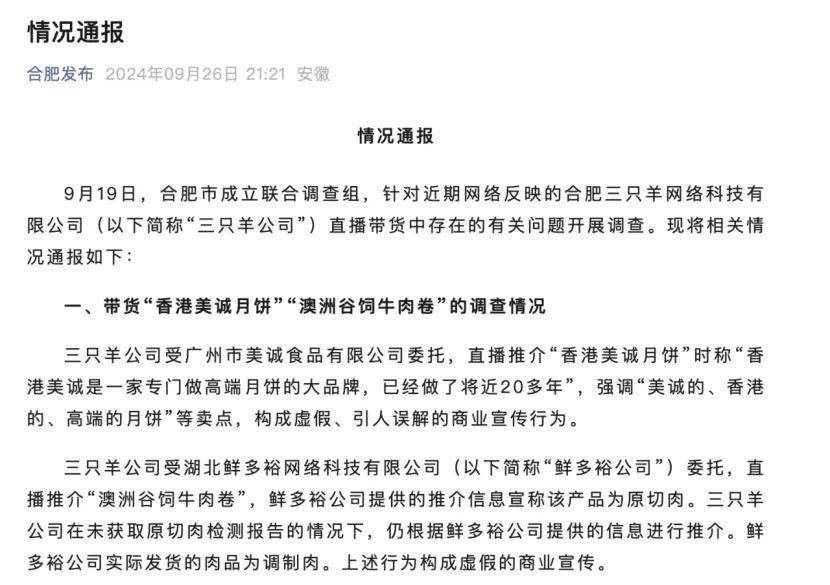
市监总局点名“三只羊”“东北雨姐”!直播间虚假宣传被重罚
Nan Fang Du Shi Bao· 2025-08-22 11:35
Group 1 - The market regulatory authority is intensifying the governance of irregularities in live e-commerce, focusing on significant cases such as "Three Sheep" and "Northeast Rain Sister" [1][2] - "Three Sheep" company has been fined over 68.94 million yuan for involvement in multiple incidents, including the "Hong Kong Meicheng Mooncake" controversy and the original cut meat scandal [1][2] - "Northeast Rain Sister" faced penalties for promoting sweet potato vermicelli with misleading ingredient claims, leading to a proposed fine of 1.65 million yuan and a suspension of operations [2] Group 2 - The regulatory authority is conducting ongoing special actions to monitor and address violations in the online market, particularly in the live e-commerce sector [1] - The "Hong Kong Meicheng Mooncake" incident sparked significant public backlash due to claims that the product was unavailable in Hong Kong, resulting in misleading commercial promotion [1] - The regulatory body has mandated "Three Sheep" to cease operations temporarily and rectify its practices following a comprehensive evaluation of its compliance with regulatory standards [2]
自作孽不可活!昔日的头号主播小杨哥,如今落魄不已,却无人心疼
Sou Hu Cai Jing· 2025-06-22 05:03
Core Viewpoint - The article discusses the downfall of a prominent internet influencer, Xiao Yang Ge, who initially aimed to improve his family's financial situation but later engaged in unethical practices that led to his decline in popularity and credibility [1][3][42]. Group 1: Background and Initial Intentions - Xiao Yang Ge entered the internet space with the goal of changing his impoverished background [1] - As his follower count grew, his motivations shifted towards profit, leading to actions that harmed his fans [3] Group 2: Unethical Practices and Consequences - Despite knowing the products promoted in his livestreams lacked quality assurance, Xiao Yang Ge continued to endorse them, resulting in backlash [5] - His actions, along with those of his apprentice, led to a significant decline in their reputations and sales [11][39] Group 3: Competitive Landscape - During the 618 shopping festival, another influencer, Xin Ba, reported sales exceeding 40 billion, highlighting the stark contrast in their fortunes [9] - Xiao Yang Ge, once a leading figure in livestreaming, now struggles to regain his former status and is often unrecognizable to his audience [15][20] Group 4: Public Perception and Accountability - The public's reaction to Xiao Yang Ge's decline reflects a broader sentiment of betrayal, as many fans feel deceived by his past actions [19][41] - His attempts to re-enter the spotlight have been met with skepticism, as the audience remains unwilling to forgive his previous misconduct [41][42] Group 5: Ethical Standards in Influencer Marketing - The article emphasizes the importance of maintaining ethical standards in influencer marketing, as Xiao Yang Ge's failure to do so resulted in severe repercussions for his career [31][38] - The case serves as a cautionary tale for other influencers about the potential fallout from prioritizing profit over consumer trust [42]

董宇辉登顶一哥,小杨哥难回牌桌
36氪· 2025-05-29 13:23
Core Viewpoint - The competition between top Douyin streamers, Dong Yuhui and Crazy Xiao Yang, has reached a conclusion, with Dong Yuhui emerging as the leading figure in 2024, while Crazy Xiao Yang faces significant setbacks due to controversies and regulatory issues [4][36]. Group 1: Background and Development - Dong Yuhui achieved a single-day sales record of 176 million yuan during the 618 shopping festival, while Crazy Xiao Yang has been absent from the live streaming scene for nine months due to a scandal involving false advertising [4][6]. - The contrasting growth trajectories of the two streamers highlight their different backgrounds: Dong Yuhui, educated and from a teaching background, focuses on cultural value in his streams, while Crazy Xiao Yang, a grassroots figure, gained fame through comedic content [7][9]. - Both streamers initially rose to prominence on Douyin, with Crazy Xiao Yang becoming the first streamer to surpass 100 million followers on a single platform in November 2022 [10][11]. Group 2: Market Position and Audience - The audience demographics for the two streamers differ significantly: Crazy Xiao Yang appeals primarily to younger, lower-tier market consumers, while Dong Yuhui targets middle-class viewers [19]. - The user structure reflects a cultural divide, with Crazy Xiao Yang's audience comprising 75% from the younger generation and urban blue-collar workers, whereas Dong Yuhui's audience includes 60% from white-collar professionals and affluent mothers [19]. Group 3: Controversies and Challenges - Crazy Xiao Yang faced a major setback due to a scandal involving false advertising related to a mooncake product, leading to regulatory investigations and a suspension of his streaming activities [22][35]. - Despite the challenges, Crazy Xiao Yang's company, San Zhi Yang, reported a GMV of 16 billion yuan in 2023, with a 97% year-on-year growth in the first five months of 2024 [22]. Group 4: Strategic Approaches - Dong Yuhui emphasizes a philosophy of rational consumption and aims to contribute to cultural and agricultural initiatives, distancing himself from the typical influencer model [27][29]. - In contrast, Crazy Xiao Yang continues to operate under his established "crazy" persona, which has been both a strength and a liability as the industry moves towards more regulated practices [20][22]. Group 5: Future Prospects - Dong Yuhui has expanded his business ventures into various sectors, including cultural programs and tourism, and has established multiple companies to diversify his income streams [37]. - Crazy Xiao Yang's new app, "Xiao Yang Zhen Xuan," has struggled to gain traction despite his large follower base, indicating potential challenges in re-establishing his brand [39].