乌龙茶饮料

Search documents
食饮|能量饮料渠道交流
2026-02-04 02:27
Summary of the Conference Call on Energy Drink Channel Update Company and Industry - **Company**: Dongpeng Beverage (东鹏饮料) - **Industry**: Energy Drinks Key Points and Arguments Overall Performance - In January, Dongpeng achieved a revenue target of **21.93 billion** with a year-on-year growth of **41.8%**, exceeding the target growth rate by nearly **5%** [3][9] - The overall sales volume for January was **21 billion**, with a target growth rate of **35.8%** [3] Revenue Breakdown by Product Category - **Energy Drinks**: Revenue of **16.2 billion**, year-on-year growth of **22.85%**. The **250ml bottle** showed a significant growth of **34.7%** due to special gift box promotions for the Spring Festival [3][4] - **500ml bottle**: Revenue growth was stable, with a year-on-year increase of **22.87%** [4] - **Hydration Products**: Revenue of **4.31 billion**, with an impressive growth of **95.02%** [4] - **Other Products**: - **Daka**: Revenue of **0.2 billion**, growth of **42.86%** [4] - **Oolong Tea**: Revenue of **0.14 billion**, decline of **13%** [4] - **Fruit Tea**: Revenue of **0.34 billion**, newly launched last February [4] - **Seaweed Salt**: Revenue of **0.35 billion**, with gift boxes contributing significantly [5] Inventory and Sales Dynamics - The overall inventory level is at its highest for the year, with energy drink inventory at **88 days** and hydration products at **92 days** [13] - The sales rate for January was **38.4%**, with gift box products contributing to this figure [6] - The actual sales performance is expected to improve in February as promotional activities ramp up [6] Spring Festival Gift Box Strategy - The target for Spring Festival gift box sales is **18 billion**, but achieving this target may be challenging due to limited time for distribution [9][11] Market Penetration and Regional Goals - The overall sales target for the fiscal year is **270 billion**, with specific regional targets: - **Guangdong**: **57 billion**, growth of **15.11%** - **East China**: **37.5 billion**, growth of **30.57%** - **Central China**: **34 billion**, growth of **27.2%** - **Guangxi**: **16 billion**, growth of **17.04%** - **North China**: **35 billion**, growth of **39.9%** [24][25] New Product Launches and Market Feedback - The **Port Milk Tea** has reached **1.47 million** distribution points, while **Beihai Tea** has **1.03 million** [14] - Initial market feedback indicates that while the Port Milk Tea is performing well, the overall sales for both new products are still uncertain due to seasonal factors [16][17] Competitive Landscape - The company aims to leverage competitive pricing and product quality to enhance market share, particularly in the **sugar-free tea** and **milk tea** segments [18][19] Future Outlook - The company plans to continue investing in ice cream cabinets, with a target of **80,000** new units this year, having already deployed nearly **20,000** by January [26][27] - The overall target for energy drinks is set at **191 billion**, reflecting a **21%** increase from the previous year [29][31] Challenges and Risks - The company faces challenges in meeting ambitious growth targets, particularly in light of previous supply chain issues and inventory management [35][41] Conclusion - Dongpeng Beverage is positioned for growth in the energy drink market, with a strong focus on new product launches and regional expansion, although it must navigate inventory challenges and competitive pressures to achieve its ambitious targets.

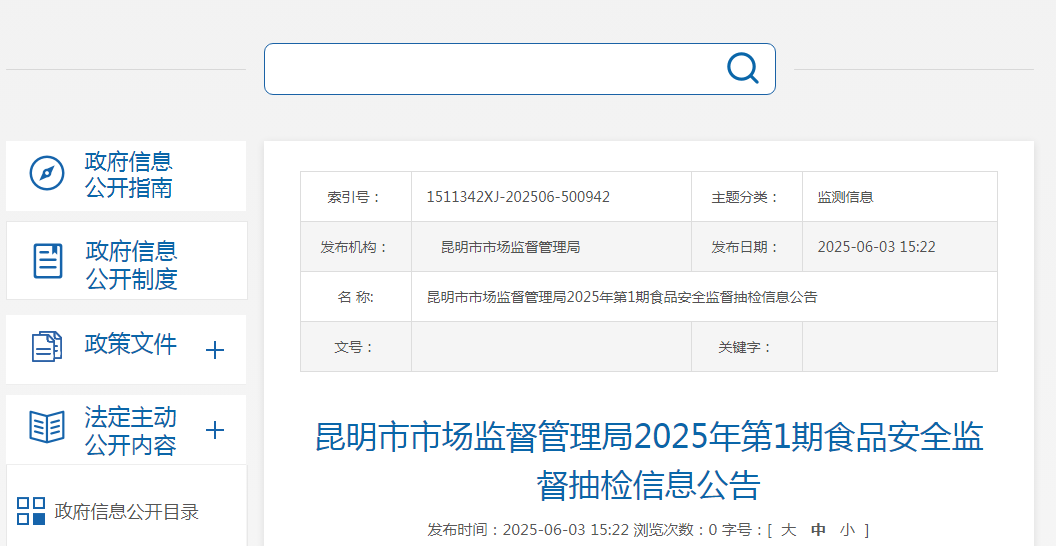
昆明市市场监督管理局2025年第1期食品安全监督抽检信息公告
Zhong Guo Zhi Liang Xin Wen Wang· 2025-06-06 08:37
Core Points - The announcement from Kunming Market Supervision Administration details the first food safety supervision and sampling inspection information for 2025, focusing on various food products including agricultural products, grain processing products, dairy products, condiments, and beverages [3]. Group 1: Inspection Standards and Criteria - The sampling inspections are based on national food safety standards such as GB 2760-2024 for food additives, GB 2762-2022 for contaminants, and GB 2763-2021 for pesticide residues [3]. - The inspection items include indicators like lead (Pb), benzoic acid and its sodium salt, sorbic acid and its potassium salt, aflatoxin B1, sodium saccharin, cyclamate, total bacterial count, and coliforms [3]. Group 2: Non-compliance and Compliance Statistics - A table lists non-compliant samples, including details such as sampling number, product name, production date, and the specific non-compliance item [4][5]. - Another table provides information on compliant samples, including the name of the production enterprise, product specifications, and purchase dates [5][6].