九鼎八簋

Search documents
当年轻人“遇见”楚考烈王
Xin Lang Cai Jing· 2026-02-15 14:49
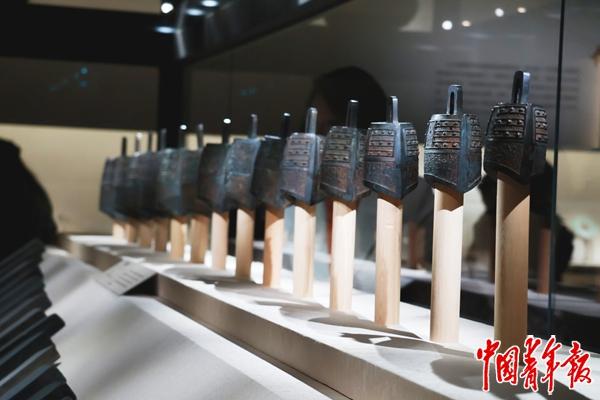
Core Viewpoint - The archaeological exhibition "Meeting the King of Kao Lie" showcases the significant findings from the excavation of the Wangdun No. 1 tomb in Huainan, Anhui, which is the largest and most complex royal tomb of the Chu state discovered to date, providing valuable insights into the burial customs and royal tomb systems from the Chu state to the Western Han dynasty [2][12]. Group 1: Archaeological Findings - The Wangdun No. 1 tomb is the burial site of King Kao Lie of Chu, containing over 10,000 precious artifacts, which are crucial for studying the royal burial customs and tomb planning of the Chu state [2][12]. - The tomb features a well-preserved collection of ceremonial objects, including a set of bronze bells that have been confirmed to possess excellent musical qualities [5][12]. - The excavation team, primarily composed of young archaeologists, has faced numerous challenges, including the need for urgent protective measures due to the risk of looting and environmental degradation [4][8]. Group 2: Team Dynamics and Challenges - The excavation team has shown resilience, with many members being recent graduates who have taken on significant responsibilities in the project [3][4]. - The team has developed innovative techniques for artifact extraction and preservation, including the use of water gel and epoxy resin for large artifacts [9][12]. - The work environment has been demanding, with team members often working long hours to ensure the careful extraction and documentation of artifacts [4][8]. Group 3: Public Engagement and Cultural Impact - The exhibition has sparked public interest, with local residents and students actively engaging with the archaeological process and expressing their support for the project [12][13]. - Educational initiatives, such as student competitions related to the Wangdun site, have fostered a deeper understanding of archaeology among younger generations [12]. - The successful preservation of artifacts, such as lacquerware, has exceeded public expectations and highlights the effectiveness of the conservation efforts undertaken by the team [12].

楚王熊悍鼎“返乡” 楚国“父子鼎”世纪重逢
Xin Hua Wang· 2025-05-03 11:59
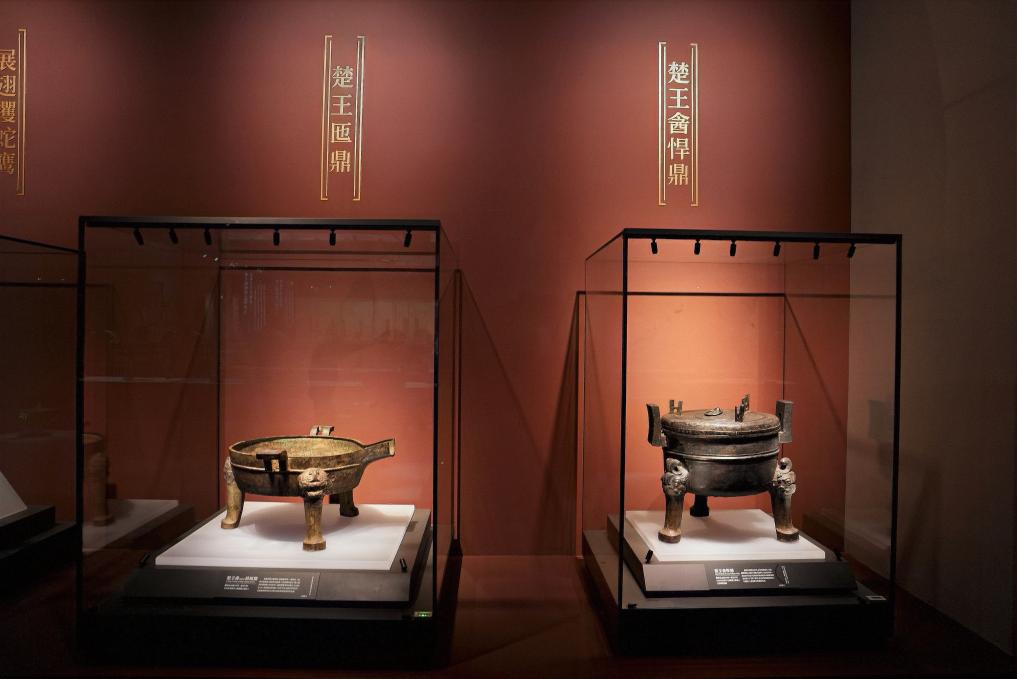
Core Viewpoint - The newly opened exhibition "Anhui Civilization History Exhibition - Anhui during the Xia, Shang, and Zhou Dynasties" at the Anhui Museum showcases significant artifacts, including the reunion of the bronze vessels from the tombs of two generations of Chu kings, which have not been displayed together for 92 years [1][2][4]. Group 1: Exhibition Highlights - The exhibition features the reunion of the Chu Wang Xiong Han Ding and Chu Wang Yi Ding, which are significant artifacts from the tomb of Chu Wang Xiong Han, marking a historical moment for the Chu dynasty [2][3]. - The Chu Wang Xiong Han Ding stands at 53 cm tall, with a diameter of 45.5 cm and a circumference of 148 cm, containing over 60 characters of inscriptions that indicate its use as a ceremonial vessel [2][5]. - The exhibition has expanded from approximately 220 artifacts to over 930, including more than 180 first-class cultural relics, showcasing a comprehensive collection of artifacts from the Li San Gu Tomb [6]. Group 2: Historical Context - The Chu state, which rose during the Spring and Autumn and Warring States periods, saw its capital moved to Shouchun by Chu Kao Lie Wang Xiong Yuan in 241 BC to avoid the Qin state [2]. - The artifacts displayed provide insights into the political transitions and military culture of the late Warring States period, enhancing public understanding of the history of the Chu state and Shouchun [4][6]. - The exhibition also includes the "Nine Ding and Eight Gui" ceremonial vessels, representing the highest level of ritual artifacts from the pre-Qin period, allowing the public to glimpse the grandeur of ancient bronze ritual systems [4][7].