
竹席

Search documents
当年轻人“遇见”楚考烈王
Xin Lang Cai Jing· 2026-02-15 14:49
Core Viewpoint - The archaeological exhibition "Meeting the King of Kao Lie" showcases the significant findings from the excavation of the Wangdun No. 1 tomb in Huainan, Anhui, which is the largest and most complex royal tomb of the Chu state discovered to date, providing valuable insights into the burial customs and royal tomb systems from the Chu state to the Western Han dynasty [2][12]. Group 1: Archaeological Findings - The Wangdun No. 1 tomb is the burial site of King Kao Lie of Chu, containing over 10,000 precious artifacts, which are crucial for studying the royal burial customs and tomb planning of the Chu state [2][12]. - The tomb features a well-preserved collection of ceremonial objects, including a set of bronze bells that have been confirmed to possess excellent musical qualities [5][12]. - The excavation team, primarily composed of young archaeologists, has faced numerous challenges, including the need for urgent protective measures due to the risk of looting and environmental degradation [4][8]. Group 2: Team Dynamics and Challenges - The excavation team has shown resilience, with many members being recent graduates who have taken on significant responsibilities in the project [3][4]. - The team has developed innovative techniques for artifact extraction and preservation, including the use of water gel and epoxy resin for large artifacts [9][12]. - The work environment has been demanding, with team members often working long hours to ensure the careful extraction and documentation of artifacts [4][8]. Group 3: Public Engagement and Cultural Impact - The exhibition has sparked public interest, with local residents and students actively engaging with the archaeological process and expressing their support for the project [12][13]. - Educational initiatives, such as student competitions related to the Wangdun site, have fostered a deeper understanding of archaeology among younger generations [12]. - The successful preservation of artifacts, such as lacquerware, has exceeded public expectations and highlights the effectiveness of the conservation efforts undertaken by the team [12].

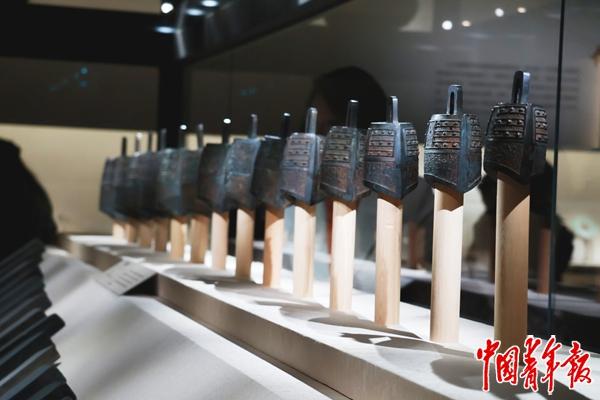
当年轻人“遇见”楚考烈王 | 文化中国行
Zhong Guo Qing Nian Bao· 2026-02-15 13:32
Core Viewpoint - The archaeological exhibition "Meeting the King of the Examined" showcases the significant findings from the excavation of the Wangdun No. 1 tomb in Huainan, which is the largest and most complex royal tomb of the Chu state discovered to date, providing valuable insights into the burial customs and royal burial systems from the Chu state to the Western Han period [2][3]. Group 1: Archaeological Findings - The Wangdun No. 1 tomb is the burial site of King Xiong Yuan of the Chu state, with over 10,000 precious artifacts unearthed from 2020 to 2024, contributing to the understanding of royal burial practices [2]. - The tomb features a well-preserved array of ceremonial objects, including a set of bells that have been confirmed to possess excellent musical qualities [5][6]. - The excavation team, primarily composed of young archaeologists, has faced numerous challenges, including the need for rapid extraction and preservation of fragile artifacts [4][8]. Group 2: Team Dynamics and Challenges - The excavation team, mostly comprised of individuals born in the 1990s, has shown remarkable resilience and capability, with many members transitioning into professional roles in various cultural heritage departments across China [3][4]. - The team has developed innovative techniques for artifact extraction and preservation, such as using water gel and epoxy resin for large artifacts, which can serve as a reference for future archaeological projects [9][8]. - The work environment has been demanding, with team members often working long hours to ensure the successful extraction and documentation of artifacts [4][8]. Group 3: Public Engagement and Cultural Impact - The exhibition has sparked significant public interest, with local residents and students actively engaging with the archaeological process and expressing their support for the project [11]. - Educational initiatives, such as student competitions and community events, have been organized to raise awareness about the importance of archaeology and cultural heritage [11]. - The preservation efforts have exceeded public expectations, particularly regarding the condition of lacquerware artifacts, highlighting the effectiveness of the conservation techniques employed [11].
爱在雪山峡谷间
Xin Lang Cai Jing· 2025-12-21 02:12
Core Viewpoint - The article highlights the efforts of the Jilong Border Police Station in promoting local tourism and economic development while ensuring safety and security in the region [3][5]. Group 1: Border Police Station Activities - The Jilong Border Police Station oversees a jurisdiction of 747.57 square kilometers and a 70-kilometer border line, acting as a frontline guardian [3]. - Officers conduct regular patrols in the scenic Jifu Canyon area, reminding tourists about safety measures and regulations [3][5]. - The police station has established a routine of rotating personnel every three months, with daily patrols conducted three times a day [3]. Group 2: Economic Development Initiatives - The police station identified the rich bamboo resources in Jifu Village and initiated a bamboo weaving industry to boost local income, leading to a 300% increase in villagers' earnings [5]. - The bamboo weaving cooperative produces various products, including bamboo baskets and mats, which are sold in major cities like Lhasa and Chengdu [5]. - Local tourism has significantly increased, with daily visitors rising from about 50 in the off-season to over 5,000 during peak times, contributing to improved local security and income [5]. Group 3: Support for Local Entrepreneurs - The police have assisted local hotel owners in navigating regulations and obtaining necessary permits, which has led to the expansion of hotel capacity to over 70 beds [6]. - The support provided by the police has instilled confidence in local entrepreneurs, enhancing their business operations and prospects for future growth [6]. - The police station emphasizes the importance of local resource utilization and community engagement in fostering economic development and social governance [6].
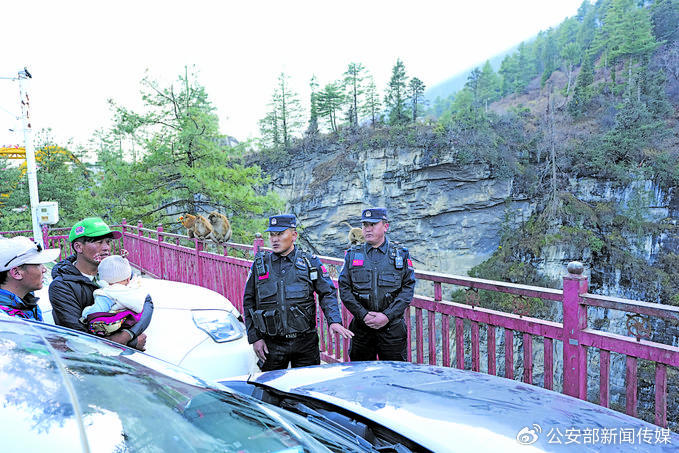
清凉床品伴好眠
Jing Ji Ri Bao· 2025-07-23 22:11
Core Insights - The demand for cooling bedding products is increasing due to high temperatures across the country, with consumers seeking innovative ways to enhance sleep quality [1][2] Group 1: Market Trends - The sales of cooling mats have seen significant growth, with ice silk mats accounting for over 40% of total sales, while bamboo and rattan mats maintain a stable market among traditional consumers [1] - New products such as gel mattresses and soft tube pillows are gaining popularity due to their physical cooling properties, showing considerable sales growth [1] Group 2: Consumer Preferences - Consumers are increasingly focused on comfort and functionality in bedding products, leading to innovations in materials and designs that enhance cooling effects while improving softness and skin-friendliness [1] - Young consumers are particularly attracted to new types of cooling mats, such as anti-mosquito mats and breathable "hole mats," which cater to their quality of life concerns [1] Group 3: Industry Response - Companies are encouraged to innovate products and build brands in response to diverse consumer needs, aiming for sustainable development in the cooling bedding market [2]
探寻尘封2000多年的楚国文明(赓续历史文脉·考古故事)
Ren Min Ri Bao· 2025-07-20 22:12
Core Viewpoint - The excavation of the Wuwangdun No. 1 tomb in Huainan, Anhui Province, represents the largest and highest-grade archaeological discovery of a Chu kingdom tomb to date, revealing significant insights into the Chu civilization that has been buried for over 2000 years [5][6][13]. Archaeological Discovery - The Wuwangdun No. 1 tomb is recognized as a major archaeological find, ranking among the "Top Ten Archaeological Discoveries of 2024" [6]. - The tomb is believed to be the burial site of King Koa of Chu, with excavation efforts spanning over four years, culminating in the completion of fieldwork by December 2024 [6][13]. - The excavation revealed a well-preserved structure with nine chambers and over 10,000 artifacts, providing crucial data for understanding the burial customs and material culture of the Chu kingdom [8][13]. Urgent Excavation Efforts - The excavation was initiated as a rescue operation due to previous looting incidents that damaged many artifacts, necessitating immediate archaeological intervention [7][8]. - The excavation team, comprising various universities and research institutions, worked tirelessly to recover and protect the artifacts, employing advanced technologies and methods [9][10][11]. Technological Innovations in Preservation - Innovative preservation techniques were utilized, such as the use of deionized water for cleaning artifacts and the application of a unique mint alcohol method for temporary reinforcement of fragile items [9][10]. - The team successfully extracted and preserved large bamboo mats from the tomb, employing a systematic approach to ensure the artifacts' safety during transportation and further study [10][11]. Team Composition and Experience - The excavation team is predominantly composed of young professionals, averaging under 30 years of age, who have dedicated significant time and effort to the project, often living in challenging conditions [11][12]. - The project emphasizes interdisciplinary collaboration, integrating various fields of study to enhance the archaeological process and artifact preservation [11][12].
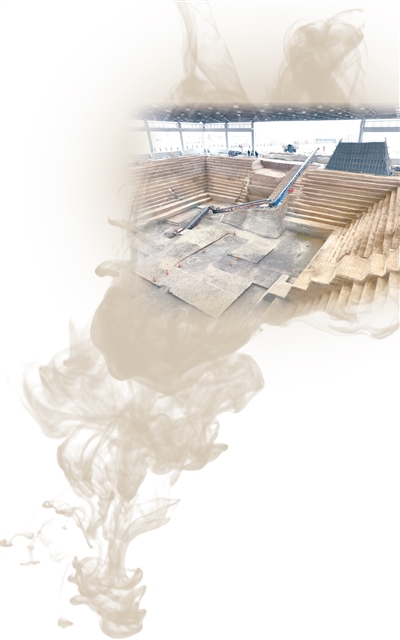
古法消暑受追捧 带来“低能耗”降温新体验
Xiao Fei Ri Bao Wang· 2025-07-14 03:21
Core Viewpoint - The rising popularity of winter melon as a cooling method reflects a shift towards low-carbon, low-cost living among contemporary youth, emphasizing a return to traditional wisdom and a critique of modern consumerism [2][3]. Group 1: Market Trends - The trend of using winter melon for cooling is driven by an increasing demand for sustainable and low-cost cooling solutions, particularly among younger consumers [2][3]. - The extreme heat experienced this year has acted as a catalyst for the popularity of winter melon, but the underlying demand for eco-friendly cooling methods is a more significant trend [3]. - The market is responding to this green wave, with other natural cooling products like bamboo mats, cooling towels, mint sprays, and mung bean water gaining popularity [3]. Group 2: Health and Traditional Wisdom - The use of winter melon aligns with traditional Chinese medicine principles, particularly the idea of using cold to counteract heat, which is rooted in the philosophy of achieving balance [1][4]. - The cooling properties of winter melon are supported by its "sweet and cold" nature, which can alleviate common summer ailments such as loss of appetite and fatigue [1]. - However, individual differences in body constitution must be considered, as not everyone may benefit from prolonged contact with cold items like winter melon [1]. Group 3: Future Prospects - The future of natural cooling products appears promising, but challenges such as standardization and durability need to be addressed for long-term industry development [4].