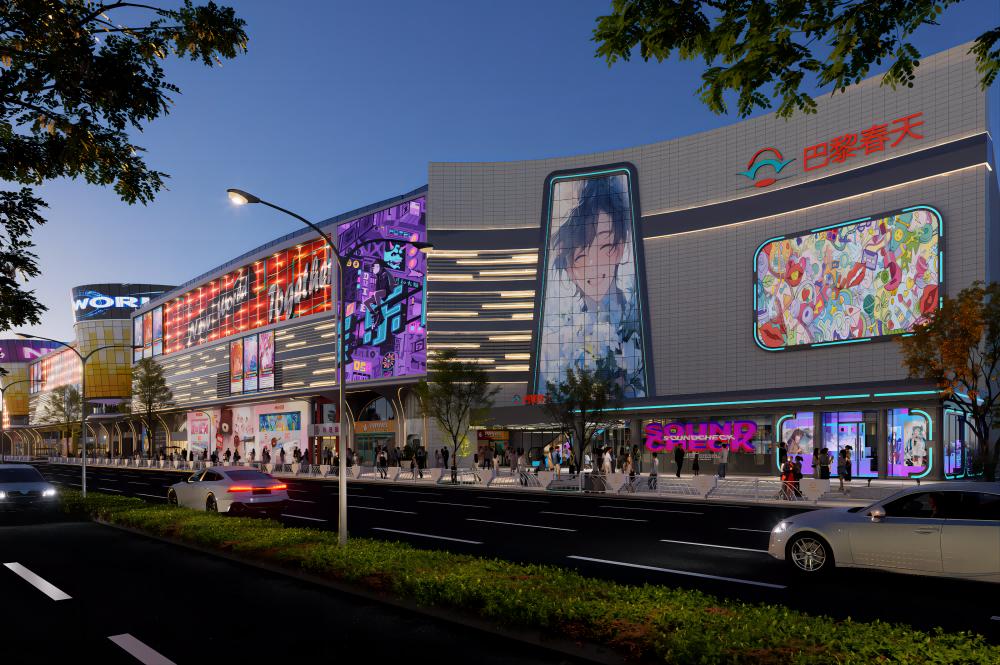
二次元主题商业

Search documents
新消费趋势引致线下零售分化 解码商业地产竞争优势来源
Zhong Guo Jing Ji Wang· 2025-11-07 12:33
Group 1 - The core viewpoint of the article highlights the steady growth of China's consumption market and the reduced impact of online shopping on offline consumption, presenting new opportunities for the commercial real estate sector [1][2] - From January to September 2023, the total retail sales of consumer goods in China reached 36.6 trillion yuan, a year-on-year increase of 4.5%, indicating a stable expansion of the overall consumption market [2] - The contribution rate of final consumption expenditure to GDP growth in the first half of 2023 was 52%, an increase of 7.5 percentage points compared to the previous year, emphasizing the significant role of consumption in economic growth [2] Group 2 - The competition among existing centralized commercial properties is intensifying, with the number of new openings slowing down due to market saturation and reduced investment in commercial projects [4] - As of 2024, the number of new centralized commercial projects is expected to be 436, down from an average of 660 per year from 2015 to 2019 [4] - The total number of existing centralized commercial projects in China has surpassed 10,000, with a total commercial area of 708 million square meters [4] Group 3 - The operational performance of domestic brand commercial real estate companies has been strong, with retail sales growth outpacing the overall retail sales growth [5] - Major listed companies like China New Town Development and China Resources Land have reported significant increases in rental income and retail sales, with China Resources Land's rental income reaching 19.4 billion yuan and retail sales reaching 195.3 billion yuan in 2024 [5] - The successful operation of commercial real estate companies relies on their ability to position themselves effectively in different consumer markets, categorized into high-end, high-energy, and sinking markets [5] Group 4 - In the high-end market, the ability to attract customer traffic has become crucial for successful mall operations, with luxury sales showing signs of recovery [6] - The opening of the "Louis" maritime-themed landmark at Xinyi Taikoo Hui in Shanghai significantly boosted foot traffic and sales, with weekend visitor numbers increasing by over 100% [6] - High-end malls are diversifying their offerings by incorporating dining and experiential retail to reduce reliance on traditional retail sales [7] Group 5 - The high-energy market, including outlets and themed commercial spaces, has shown strong performance, particularly in core cities where consumer preferences are shifting towards practical and emotional value [8] - Outlets have outperformed overall retail sales growth, with visitor numbers and sales increasing significantly compared to national averages [8] - The two-dimensional market is rapidly growing, with the number of related brand openings increasing significantly, indicating a new growth point for offline commercial spaces [9] Group 6 - The sinking market is experiencing higher consumption growth rates, with three to four-tier cities showing better performance compared to first and second-tier cities [10] - New Town Holdings' Wu Yue Plaza has successfully attracted foot traffic and sales growth by leveraging its extensive brand partnerships, achieving a 19% increase in both metrics in 2024 [11]




11个老百货“逆天改命”,招招惊艳!
3 6 Ke· 2025-08-11 06:02
Core Insights - Traditional department stores are undergoing a significant transformation, focusing on thematic renovations and cultural integration to attract younger consumers and enhance the shopping experience [1][38] - The shift from a product-centric model to an experience-driven approach is crucial for survival in the competitive retail landscape [38] Thematic Renovations - Shanghai's Paris Spring has been rebranded to focus on "LOL eating valley," creating a unique space for Z-generation consumers to express creativity [2][4] - Chengdu's Qun Guang Plaza is developing a magical two-dimensional anime IP base, collaborating with 14 IP brands, including four that are first in China [8] - Xi'an's Xingyue Mall has introduced over 40 unique brands and created a diverse consumption ecosystem centered around anime and gaming [13] Silver Economy - Chongqing's Chongbai Jiulong Mall has launched the city's first silver-themed store, achieving a sales increase of over 300% on opening day [14][16] - The store's design incorporates nostalgic elements and offers various activities tailored for the elderly, enhancing their shopping experience [16] Cultural Integration - Chongbai Building is being transformed into a "city civilization curator," integrating local culture into its design and offerings [17][19] - Beijing's Xidan Shopping Center is set to undergo a major renovation, focusing on local cultural narratives and targeting a younger demographic [20][22] New Consumption Scenarios - Beijing's Shuang'an Mall is undergoing a 70% area renovation to become a quality lifestyle experience venue, introducing new brands and enhancing dining options [23][25] - Guangzhou's Friendship National Gold Store has opened the city's first urban duty-free shop, creating a "shopping as travel" experience [36][38] Market Trends - The retail industry is witnessing a shift towards immersive experiences, with traditional department stores needing to adapt to changing consumer preferences [38] - The emergence of duty-free shops and thematic experiences presents new opportunities for department stores to differentiate themselves in a saturated market [39]