
奥特莱斯

Search documents
百盛集团2025年净利润亏损增加,转型过程挑战重重
Xi Niu Cai Jing· 2026-02-28 02:57
Core Viewpoint - 百盛集团 reported a total operating revenue of 3.698 billion yuan for the year ending December 31, 2025, a year-on-year decrease of 0.8%, and a net loss of 186 million yuan, indicating a further increase in losses compared to 2024 [2] Group 1: Financial Performance - The total sales revenue for 百盛集团 in 2025 was 7.746 billion yuan (including VAT), down 10.9% from the previous year, primarily due to structural changes in consumer spending behavior and cautious consumer spending amid macroeconomic headwinds and weak income growth expectations [3] - From 2020 to 2024, 百盛集团's total operating revenue was 4.428 billion yuan, 4.739 billion yuan, 3.749 billion yuan, 4.178 billion yuan, and 3.727 billion yuan respectively, with only a slight profit in 2023, while the other years recorded losses [5] Group 2: Store Operations and Strategy - As of December 31, 2025, 百盛集团 operated and managed 40 stores across 23 cities in China and Laos, including department stores, shopping plazas, outlets, and supermarkets [4] - 百盛集团 has been undergoing a strategic transformation, closing underperforming stores and attempting to adapt to changing consumer demands, but the effectiveness of these transformations has been limited [5][6] - In 2025, 百盛集团 upgraded several key stores, such as transforming the Hefei store into an ACGN (Anime, Comics, Games, Novels) themed youth cultural center and converting the Shanghai Huaihai store's supermarket into a food court [6] Group 3: Industry Challenges - Traditional department stores, including 百盛集团, are facing unprecedented challenges, losing their previous popularity and struggling to attract customers [5] - The current shopping experience sought by consumers extends beyond products to include authenticity, value, emotional connection, and immersive experiences [5][7]


百盛亏损1.86亿元,旗下有40多家门店
Shen Zhen Shang Bao· 2026-02-25 03:10
Group 1 - The core viewpoint of the article highlights that Parkson Group reported a total operating revenue of 3.698 billion yuan for the year ending December 31, 2025, reflecting a year-on-year decline of 0.8%, with a loss attributable to shareholders of 186 million yuan, an increase in loss compared to the previous year [1] - The company operates and manages 40 Parkson stores across 23 cities in China and Laos, including department stores, shopping plazas, outlets, Parkson Beauty concept stores, and supermarkets, as well as 2 Parkson Youke city squares [1] - Parkson Group's total sales revenue for 2025 was 7.746 billion yuan (including VAT), a decrease of 10.9% from the previous year, primarily due to structural changes in consumer spending behavior and cautious consumer spending amid macroeconomic headwinds and weak income growth expectations [1] Group 2 - The company emphasizes that modern shoppers seek more than just products; they value authenticity, a sense of value, emotional connection, and immersive experiences, prompting the company to transform from a traditional retailer to an innovative lifestyle destination [1] - The strategic core involves shifting physical spaces from transactional markets to lifestyle innovation destinations, with several landmark initiatives planned for 2025 to advance this vision [1] - Looking ahead to 2026, the retail industry is expected to face intense competition and rapid changes, but the company is confident in its ability to adapt to transformations and lead the industry forward [1] Group 3 - Notably, accounts receivable for Parkson Group have been steadily increasing, with figures of approximately 164 million yuan, 250 million yuan, 392 million yuan, 677 million yuan, and 837 million yuan from 2021 to 2025 [2] - The company maintains strict control over its outstanding receivables, with a general credit period of one month, and has a credit monitoring department to minimize credit risk [2] - Given the diverse customer base for its accounts receivable, the company does not face high concentration credit risk, and it does not hold any collateral or other credit guarantees for its accounts receivable balances, except for receivables secured by customers' vehicles [2]
王府井:在37个城市开设大型零售门店78家
Zheng Quan Ri Bao Wang· 2026-02-13 13:14
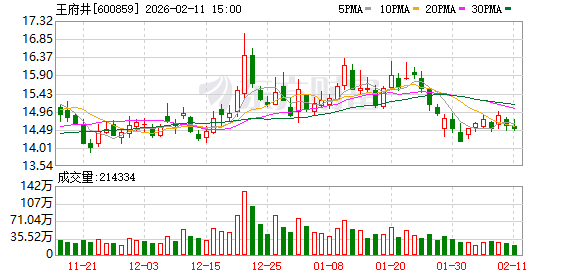
Core Viewpoint - Wangfujing (600859) has actively expanded its business over the years, focusing on a dual-main business model of taxable and duty-free operations, aiming for high-quality sustainable development in the retail sector [1] Group 1: Business Development - The company has undergone shareholding reform, chain strategy, diversified business operations, mergers and acquisitions, and innovation in business models [1] - As of now, the sales network covers seven major economic regions in China, with 78 large retail stores established in 37 cities [1] Group 2: Brand and Membership - Wangfujing has formed a matrix of well-known brands, with a nationwide membership and fan base [1] Group 3: Retail System - The company is focused on creating a comprehensive retail system that includes various retail formats such as outlets, shopping centers, department stores, and duty-free shops [1] - It emphasizes strengthening its core operational capabilities in both self-operated and online businesses, continuously extending and innovating its business model [1]

王府井:公司持续深耕商业服务业,做强有税+免税双轮驱动核心引擎
Zheng Quan Ri Bao· 2026-02-11 13:08
Core Viewpoint - The company is focused on deepening its presence in the commercial services industry, leveraging a dual engine of tax and duty-free operations to strengthen its development foundation [2] Group 1: Business Strategy - The company aims to enhance its retail ecosystem by promoting deep integration and collaborative empowerment across various formats such as outlets, shopping centers, department stores, and duty-free operations [2] - The company is committed to expanding through a multi-channel approach that integrates online and offline strategies, utilizing digital transformation to reshape its operational system and activate growth momentum [2] Group 2: Innovation and Consumer Focus - The company is dedicated to continuous innovation and transformation, driving iterative upgrades in its business model and extending its value boundaries to meet consumer demands for a better quality of life [2] - The company emphasizes the importance of maintaining investor interests while pursuing its growth objectives [2]
新消费时代下的大机遇系列报告一:从“场所”到“场景”,新消费时代下的商业地产迎来重大机遇
Bank of China Securities· 2026-02-11 08:04
Investment Rating - The report rates the real estate industry as "Outperforming the Market" [1] Core Insights - The traditional residential development sector is contracting, while commercial real estate is entering a policy-driven growth phase, with a focus on new consumption scenarios starting from 2024 [1][8] - The shift from traditional commercial spaces to immersive experience-driven scenarios is essential to meet the diverse needs of modern consumers [1][10] - The report emphasizes the importance of integrating "scene" and "consumption" to create unique consumer experiences, enhancing customer retention and engagement [1][10] Summary by Sections 1. Current State of Commercial Real Estate - The commercial real estate sector has entered a "stock era," with the number of new openings in 2025 reaching a ten-year low, with 369 new projects and a total area of approximately 27.41 million square meters, down 24% and 25% year-on-year respectively [15][19] - High vacancy rates and declining rents are significant challenges, with 2025 seeing a 20% share of new openings being stock renovation projects [14][15] - New market entrants include outlet malls and themed commercial spaces, which are becoming differentiated "new scenes" [14][15] 2. New Consumption Scenarios - The core of new scenarios lies in transitioning from merely providing sales spaces to creating emotionally resonant immersive experiences [1][10] - The rise of new consumption brands is reshaping the operational strategies of commercial real estate, focusing on customer flow and experience rather than just transactions [1][10] - Non-standard commercial projects, characterized by small-scale and open street designs, are gaining traction, with a 18.7% increase in foot traffic compared to traditional shopping centers [1][10] 3. Differentiated Commercial Spaces - The report categorizes non-standard commercial spaces into three types: fashion innovation, retro innovation, and ecological innovation, each targeting different consumer emotional needs [1][10] - Major cities like Shanghai, Beijing, Hangzhou, and Chengdu are leading in the development of non-standard commercial projects, with a significant focus on cultural and experiential elements [1][10] 4. Recommendations for Developers and Operators - Developers and operators are encouraged to innovate by creating differentiated offerings that resonate with specific consumer segments, emphasizing cultural integration and social spaces [1][10] - The report suggests that the focus should shift from traditional metrics like rental income to new indicators such as customer dwell time and engagement in experiential activities [1][10] - The commercial real estate sector is expected to benefit from favorable policies during the 14th Five-Year Plan, with opportunities for high-quality assets to thrive [1][10]
新型奥莱,正在“杀死”平庸的购物中心
虎嗅APP· 2026-01-31 03:54
Core Insights - The article discusses the transformation of outlet malls in China, highlighting their evolution from discount-focused shopping destinations to comprehensive lifestyle centers that cater to a wider range of consumer needs and experiences [6][7][18]. Group 1: Market Trends - The sales revenue of China's outlet industry is projected to grow from approximately 126 billion to 248 billion yuan between 2021 and 2025, nearly doubling in five years, showcasing strong resilience during market fluctuations [6]. - The traditional perception of outlet malls is changing, with younger consumers increasingly frequenting these locations for leisure and social activities, rather than just for discounted shopping [31][35]. Group 2: Business Model Evolution - Outlet malls are shifting towards a "one-stop" and "full-format" model, integrating non-retail sectors such as dining and entertainment, which now account for over 40% of offerings in some locations [11][12]. - Brands that previously avoided outlet malls are now entering the space, with examples including lululemon and ON, indicating a shift in inventory strategies where new and full-price items are becoming more prevalent [14][16][17]. Group 3: Consumer Demographics - The influx of younger consumers, particularly families, is revitalizing outlet malls, with family demographics making up 74.51% of visitors in some locations, prompting tailored experiences such as children's activities [34]. - Outlet malls are increasingly adopting immersive experiences and themed events to attract younger audiences, transforming them into social hubs rather than mere shopping venues [35][31]. Group 4: Competitive Landscape - The rise of new outlet formats is putting pressure on traditional shopping centers, which must adapt to maintain their relevance by offering unique experiences or locations that cannot be easily replicated by outlet malls [39]. - The competition is intensifying as new players, including internet giants, enter the outlet space, leveraging their resources to create a scale that challenges established outlet chains [26][28].

身处结构性调整与新旧动能转换的关键阶段,王府井去年业绩预亏
Bei Ke Cai Jing· 2026-01-29 11:49
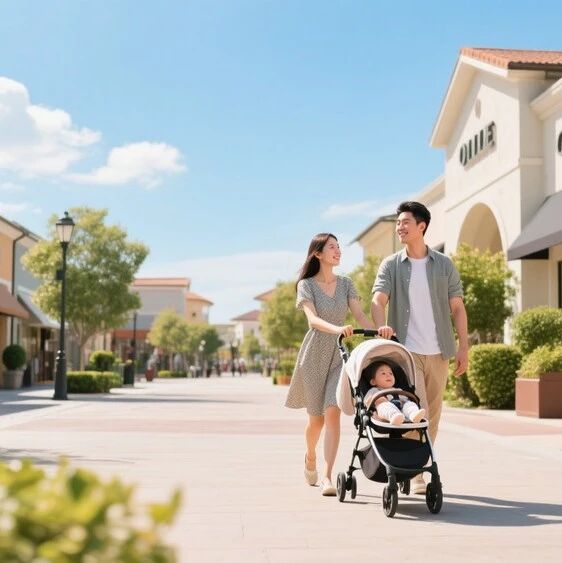
Core Viewpoint - Wangfujing is expected to report a net loss attributable to shareholders ranging from -45 million to -23 million yuan for 2025, reflecting the pressures of structural adjustments and the transformation of business models in the retail industry [1]. Group 1: Financial Performance - For 2025, Wangfujing anticipates a net profit loss between -45 million and -23 million yuan due to ongoing structural adjustments and the transition to new business models [1]. - The company plans to recognize goodwill impairment for the Qianxi asset group, estimating the impairment amount to be between 5 million and 10 million yuan, which will impact the net profit for 2025 [1]. Group 2: Business Strategy and Operations - Wangfujing is undergoing significant changes in the retail sector, focusing on business model iteration and upgrading existing operations, which has led to short-term financial pressures due to the time lag between investment and benefit realization [1]. - The company will close three stores due to lease expirations and two additional stores as part of its strategic transformation, which will negatively affect revenue and increase personnel-related costs in 2025 [2]. - In 2025, Wangfujing plans to open three new outlet and shopping center stores, as well as three duty-free shops, while continuing to adjust its department stores [2]. - The new leasing standards have resulted in higher initial costs for long-term lease stores, significantly impacting the financial performance of newly opened and renewed stores [2].
福建商业“踩刹车”,2025年仅17个新商场开业!
3 6 Ke· 2026-01-27 02:22
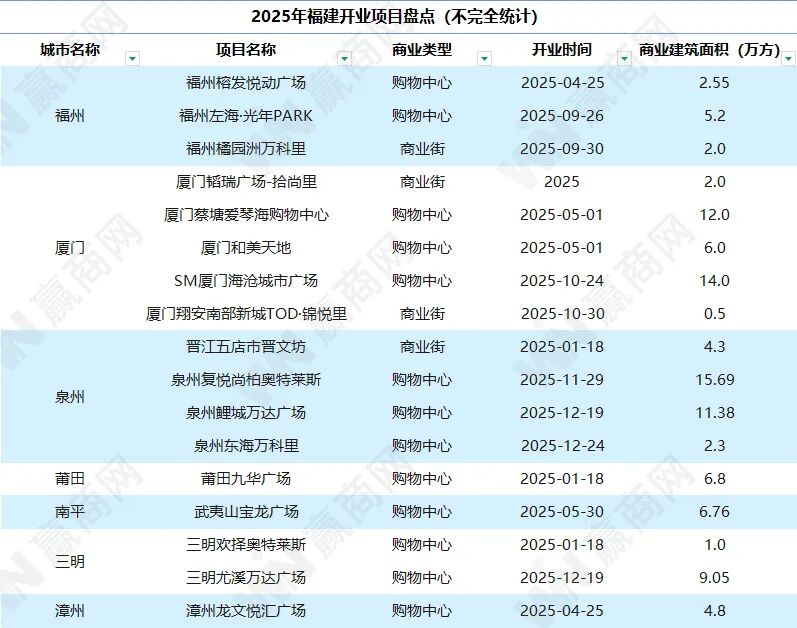
Core Insights - The commercial market in Fujian is transitioning from a phase of rapid expansion to a period of deep adjustment, with a projected total of 17 commercial projects opening in 2025, covering approximately 1.06 million square meters [1][3]. Summary by Sections Project Overview - In 2025, Fujian will see the opening of 17 commercial projects, including shopping centers, outlets, and commercial streets, with a total commercial area of about 1.06 million square meters [1][2]. - The number of new openings in 2025 marks a significant decline, falling below 20 for the first time in five years, returning to levels seen in 2020 when only 15 projects opened [2][3]. Market Trends - The decline in new openings reflects a saturation of commercial space in core cities of Fujian, with developers shifting focus from rapid expansion to optimizing existing assets [3][21]. - The industry is moving from new development to revitalizing existing properties, with significant contributions from renovation projects, indicating a total new area of approximately 780,000 square meters for 2025 [3]. Opening Schedule - The majority of openings are concentrated in the second and fourth quarters, with January, May, and December seeing peaks in project launches [4]. Project Size Distribution - Over 75% of the new projects in 2025 are small to medium-sized, with only two large-scale projects exceeding 100,000 square meters [5][6]. - The trend towards smaller projects is driven by lower land and capital requirements, making them more feasible for smaller developers in a challenging market [5]. City-Specific Developments - Xiamen leads with five new projects, totaling 345,000 square meters, but this represents a 64% decrease in project numbers and a 49% decrease in total area compared to 2024 [6]. - Fuzhou's openings are limited to three projects with a total area of only 97,500 square meters, reflecting a 50% drop in project numbers and a 74% drop in area from the previous year [7]. Notable Projects - The SM Xiamen Haicang City Square emphasizes a "first store + specialty" strategy, featuring over 200 brands and a pet-friendly environment [8][10]. - The Quanzhou Licheng Wanda Plaza integrates local cultural elements into its design, featuring a 30,000 square meter themed street and various recreational facilities [18][20]. Future Outlook - The cooling of the Fujian commercial market is seen as a microcosm of national market adjustments, with future competition focusing on operational capabilities and consumer demand adaptability rather than sheer scale [21].
【招银研究|行业深度】经营性不动产之零售物业——全景透视与评价模型,解码优质现金流资产
招商银行研究· 2026-01-14 09:05
Core Viewpoint - Retail properties are essential for providing a one-stop shopping experience and are favored by financial institutions due to their ability to generate stable cash flows, especially in a period of real estate inventory [4][6] Group 1: Market Characteristics - The retail property market has entered a phase of deepening inventory, with over 50% of properties now in a mature stage, characterized by a significant reduction in new supply since 2020 [4][36] - Rental levels for retail properties are on a downward trend, while vacancy rates remain relatively controllable as operators adjust rents to maintain occupancy [4][39] Group 2: Key Determinants of Performance - Location, management capabilities, and product types are critical to the operational performance of retail properties [5][57] - High-quality retail properties are concentrated in first- and second-tier cities, with 60% located in these areas, indicating a trend towards high-capacity urban centers [59][61] Group 3: Financial Aspects - Retail properties exhibit high financial intervention potential due to their heavy asset characteristics and the ability to generate stable cash flows during the operational phase [8][13] - The development of a multi-tiered REITs market is enhancing the financial attributes and investment value of retail properties, with a notable increase in interest from institutional investors [12][14] Group 4: Operational Trends - The operational model of retail properties is shifting towards a focus on experience and social interaction, with shopping centers increasingly integrating dining and entertainment options [27][30] - The rental income structure is evolving, with a growing preference for leasing models that include fixed rents and performance-based components [52][54] Group 5: Competitive Landscape - The competitive landscape is intensifying in high-capacity cities, leading to potential oversupply risks in certain markets, particularly where retail space is concentrated [61][62] - The operational management landscape is characterized by a concentration of a few large operators, while many smaller firms struggle to compete effectively [66]
百联股份:目前未涉及商业航天业务
Mei Ri Jing Ji Xin Wen· 2026-01-09 09:28
Core Viewpoint - The company, Bailian Group, confirmed that it is not currently involved in the commercial space industry and focuses on core businesses such as department stores, shopping centers, chain supermarkets, and outlet malls [1]. Group 1 - An investor inquired whether the company plans to expand into the commercial space sector by establishing retail stores in outer space [1]. - Bailian Group's core business areas include department stores, shopping centers, chain supermarkets, and outlet malls [1].
