
云数据仓库

Search documents
从业务系统到数据智能:数据分析系统的完整演进
3 6 Ke· 2025-12-16 08:07
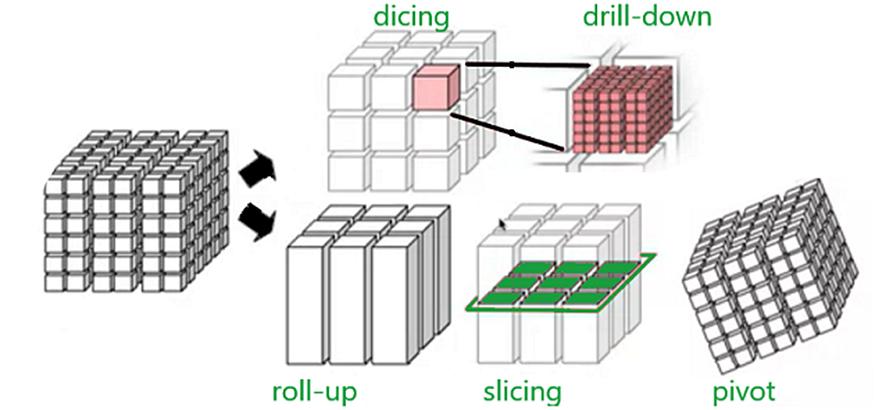
Core Insights - The article discusses the evolution of data systems from traditional OLTP to modern AI-driven analytics platforms, highlighting the importance of understanding this transformation for better architectural decisions. Group 1: OLTP and OLAP Systems - OLTP systems are designed for daily operations, focusing on fast and accurate transaction processing, while OLAP systems are tailored for analysis and reporting, emphasizing the interpretation of historical data [2][5] - The fundamental difference between OLTP and OLAP lies in their optimization goals: OLTP aims for quick writes and specific record reads, whereas OLAP focuses on reading vast amounts of data and performing complex calculations [2][5] Group 2: Rise of OLAP and Data Cubes - In the 1990s, the need for faster data analysis led to the introduction of dedicated OLAP systems and the concept of data cubes, which pre-aggregate data across multiple dimensions for quicker query responses [3][4] - Data cubes allow for rapid retrieval of complex queries that previously took hours, now achievable in seconds [3] Group 3: Data Warehouse Boom - The late 1990s saw the emergence of data warehouses, designed as centralized repositories optimized for analysis, utilizing ETL pipelines to integrate data from various sources [7][8] - Star schema and snowflake schema became dominant models for organizing data within these warehouses, optimizing read performance at the cost of storage efficiency [8][9] Group 4: Big Data and Hadoop Era - The late 2000s introduced the Hadoop ecosystem, which addressed the challenges of handling unstructured and semi-structured data, enabling the storage of massive datasets at lower costs [13][14] - Hadoop's architecture allowed for distributed storage and processing, but it faced limitations in query performance and operational complexity [15] Group 5: Cloud Data Warehousing - The 2010s marked the rise of cloud-native data warehouses like Snowflake and Google BigQuery, which separated compute and storage, allowing for scalable and cost-effective analytics [17][19] - These systems introduced features like on-demand resource allocation and zero management, significantly enhancing performance and accessibility [21][23] Group 6: Open Table Formats and Lakehouse Architecture - Open table formats like Apache Iceberg and Delta Lake brought ACID transactions and schema evolution to data lakes, enabling a hybrid architecture known as Lakehouse that combines the flexibility of data lakes with the performance of data warehouses [27][32] - This architecture allows for seamless integration of various data workloads, supporting both BI and machine learning applications [32] Group 7: AI-Driven Analytics - The current trend is towards AI-native analytics platforms that integrate machine learning and natural language interfaces, simplifying complex data interactions for users [35][38] - These platforms aim to democratize data analysis, allowing non-technical users to perform sophisticated queries and derive insights without needing extensive SQL knowledge [38] Group 8: Future Outlook - The future of data systems is expected to focus on self-optimizing capabilities, real-time intelligence, and natural language interfaces, enhancing user experience and decision-making processes [43][44] - Companies that prioritize openness, intelligence, and user empowerment in their data strategies are likely to succeed in the evolving landscape [45]


大摩首予Snowflake(SNOW.US)“增持”评级,看好战略转型与AI驱动增长
智通财经网· 2025-06-25 06:40
Core Viewpoint - Morgan Stanley has initiated coverage on Snowflake (SNOW.US) with an "Overweight" rating and a target price of $262, highlighting the company's improved strategic execution and product iteration under new CEO Sri Dhar Ramaswamy [1] Group 1: Business Transformation and Growth - Under the leadership of CEO Sri Dhar Ramaswamy, Snowflake has made substantial progress in its business transformation, showcasing enhanced strategic execution and product iteration speed [1] - The company is expected to achieve a compound annual growth rate (CAGR) of over 20% by 2030, driven by the integration of artificial intelligence (AI) technologies into its core business [1] - Snowflake's product revenue growth has stabilized at around 20%, reflecting improvements in sales optimization, market strategy adjustments, and product development processes [1] Group 2: Product Innovation and Market Demand - Snowflake's product innovation is accelerating, particularly in four key areas: continuous iteration in cloud data warehousing, enhanced data engineering solutions, strengthened AI/machine learning platform capabilities, and progress in enterprise applications and collaboration tools [1] - The company's core data warehouse business is stabilizing, supported by strong demand from enterprise clients for modernizing their data infrastructure, despite the AI-related business and application market still being in its early stages [1] Group 3: Market Performance - Year-to-date, Snowflake's stock price has increased by 37%, significantly outperforming the average 9% gain of large software stocks, excluding Palantir (PLTR.US) [2] - Morgan Stanley believes that as subsequent quarterly results continue to validate the company's growth potential, market expectations for Snowflake's growth trajectory are likely to enter an upward trend [2]