
数据仓库

Search documents
SaaS 已死?不,SaaS 会成为 Agent 时代的新基建
Founder Park· 2025-12-17 06:33
Core Viewpoint - Traditional SaaS applications like CRM and ERP systems will not be replaced but will evolve to serve as the infrastructure for AI Agents, which will enhance the importance of data definition and interpretation within enterprises [2][10][15] Group 1: The Role of AI Agents - AI Agents will not eliminate traditional software systems; instead, they will necessitate a clearer separation between how tasks are performed and the sources of facts [2][10] - The effectiveness of AI Agents is contingent upon their ability to access and understand the correct data from various systems, highlighting the need for accurate and structured input data [2][9] - The emergence of AI Agents creates significant entrepreneurial opportunities for companies that can help businesses manage and structure their unstructured data [3][10] Group 2: Data Management Challenges - A significant portion of enterprise knowledge (80%) exists in unstructured data, which is becoming increasingly difficult to manage [2] - The complexity of data definitions within organizations leads to discrepancies in key metrics like Annual Recurring Revenue (ARR), complicating the role of AI Agents in providing accurate information [7][11] - The traditional approach of consolidating data into warehouses has only partially succeeded, as operational teams still rely on individual systems for real-time transactions [8][10] Group 3: Evolution of Systems - CRM and ERP systems will transition from user-centric interfaces to machine-oriented APIs, allowing AI Agents to interact with these systems programmatically [12][15] - The core value of enterprise systems lies in their ability to encapsulate chaotic data, which will remain essential despite changes in interface and interaction methods [13][15] - The demand for a clear, authoritative source of truth will only increase as AI Agents become more prevalent in business processes [14][15] Group 4: Future of Data Infrastructure - The combination of data warehouses, semantic layers, and governance tools will form the foundation for AI Agent workflows, evolving beyond traditional reporting systems [10][12] - The valuation of AI platforms will increasingly depend on their ability to define and manage facts, rather than just their user interfaces [14][15] - Companies that can create exceptional AI Agent experiences based on reliable data sources will have a competitive advantage in the evolving landscape [15]


从业务系统到数据智能:数据分析系统的完整演进
3 6 Ke· 2025-12-16 08:07
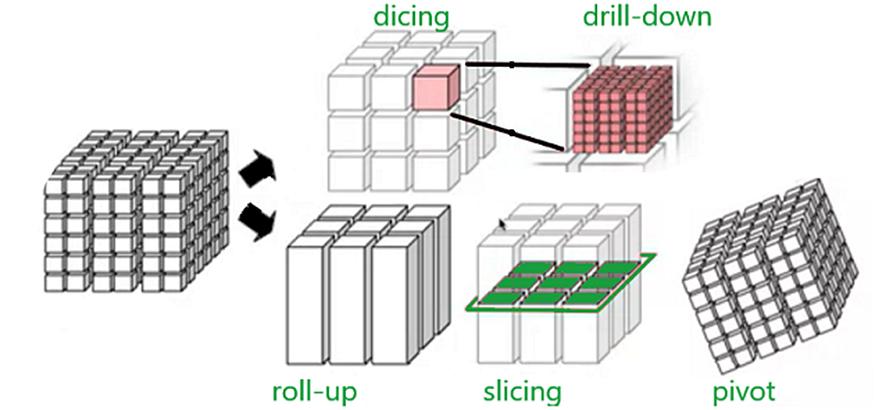
Core Insights - The article discusses the evolution of data systems from traditional OLTP to modern AI-driven analytics platforms, highlighting the importance of understanding this transformation for better architectural decisions. Group 1: OLTP and OLAP Systems - OLTP systems are designed for daily operations, focusing on fast and accurate transaction processing, while OLAP systems are tailored for analysis and reporting, emphasizing the interpretation of historical data [2][5] - The fundamental difference between OLTP and OLAP lies in their optimization goals: OLTP aims for quick writes and specific record reads, whereas OLAP focuses on reading vast amounts of data and performing complex calculations [2][5] Group 2: Rise of OLAP and Data Cubes - In the 1990s, the need for faster data analysis led to the introduction of dedicated OLAP systems and the concept of data cubes, which pre-aggregate data across multiple dimensions for quicker query responses [3][4] - Data cubes allow for rapid retrieval of complex queries that previously took hours, now achievable in seconds [3] Group 3: Data Warehouse Boom - The late 1990s saw the emergence of data warehouses, designed as centralized repositories optimized for analysis, utilizing ETL pipelines to integrate data from various sources [7][8] - Star schema and snowflake schema became dominant models for organizing data within these warehouses, optimizing read performance at the cost of storage efficiency [8][9] Group 4: Big Data and Hadoop Era - The late 2000s introduced the Hadoop ecosystem, which addressed the challenges of handling unstructured and semi-structured data, enabling the storage of massive datasets at lower costs [13][14] - Hadoop's architecture allowed for distributed storage and processing, but it faced limitations in query performance and operational complexity [15] Group 5: Cloud Data Warehousing - The 2010s marked the rise of cloud-native data warehouses like Snowflake and Google BigQuery, which separated compute and storage, allowing for scalable and cost-effective analytics [17][19] - These systems introduced features like on-demand resource allocation and zero management, significantly enhancing performance and accessibility [21][23] Group 6: Open Table Formats and Lakehouse Architecture - Open table formats like Apache Iceberg and Delta Lake brought ACID transactions and schema evolution to data lakes, enabling a hybrid architecture known as Lakehouse that combines the flexibility of data lakes with the performance of data warehouses [27][32] - This architecture allows for seamless integration of various data workloads, supporting both BI and machine learning applications [32] Group 7: AI-Driven Analytics - The current trend is towards AI-native analytics platforms that integrate machine learning and natural language interfaces, simplifying complex data interactions for users [35][38] - These platforms aim to democratize data analysis, allowing non-technical users to perform sophisticated queries and derive insights without needing extensive SQL knowledge [38] Group 8: Future Outlook - The future of data systems is expected to focus on self-optimizing capabilities, real-time intelligence, and natural language interfaces, enhancing user experience and decision-making processes [43][44] - Companies that prioritize openness, intelligence, and user empowerment in their data strategies are likely to succeed in the evolving landscape [45]

Databricks大会力挺“数据层”投资韧性 瑞银唱多Snowflake(SNOW.US)维持“买入”评级
智通财经网· 2025-06-13 08:37
Core Viewpoint - UBS's participation in the Databricks investor day indicates a strong ongoing investment in the "data layer," which may benefit both Databricks and Snowflake despite their competition [1] Databricks Disclosure - Databricks expects a revenue run rate of $3.7 billion for the second half of the year, representing a year-over-year growth of approximately 50% [2] - Databricks anticipates its data warehouse revenue run rate will exceed $1 billion this year, which aligns with expectations and does not raise concerns about Snowflake's market share loss [2] - Databricks' "AI suite" has an annual recurring revenue (ARR) of $300 million, surpassing Snowflake [2] - The CEO of Databricks has adopted a more neutral stance towards Snowflake compared to the past [2] - Demand for Postgres databases is described as "very hot," which may not bode well for MongoDB [2] - Most enterprises are still in the early stages of deploying AI agents, with much of the activity being speculative [2] - Demand in the Europe, Middle East, and Africa (EMEA) markets is reported to be weak [2] Customer/Partner Feedback - Feedback from clients regarding Databricks is overwhelmingly positive, particularly concerning product functionality, pricing, and innovation speed [2] - Feedback on Snowflake is unexpectedly constructive, with clients noting that the development pace of Snowflake and Databricks appears similar, a sentiment not expressed two years ago [3] - Enterprises are attempting to organize data for AI applications, supported by feedback from interviews [3] - Adoption of data lake or iceberg technology is reported to be more positive than anticipated [3] Valuation - UBS maintains that if Snowflake's growth rate trends towards 30% and the data investment cycle remains prolonged, a multiple of 13x/51x CY26E revenue/free cash flow (FCF) does not seem unreasonable [3] - The target price for Snowflake remains at $265, based on a multiple of 17x/66x CY26E, which is considered a reasonable premium relative to high-growth peers [3]