亚马逊Alexa

Search documents
OpenAI押注耳机市场,AI巨头意在何处?
Xin Lang Cai Jing· 2026-01-14 13:29
Core Insights - OpenAI is developing an AI headset named Sweetpea to compete with Apple's AirPods, aiming to enhance user experience and intelligence in consumer electronics [2][4] - The entry into the headphone market is part of OpenAI's strategic expansion into hardware, driven by the need for dedicated devices to unlock AI's potential [3][12] Group 1: Product Development and Features - Sweetpea is expected to feature advanced capabilities, including a custom chip for voice commands, potentially replacing iPhone operations and directly controlling Siri [4][10] - The design of Sweetpea is unique, utilizing metal materials and an "eggstone" shape, which may help it stand out in a crowded market [4][5] - The estimated material cost for Sweetpea is high, potentially comparable to that of a smartphone, indicating a likely premium price point for consumers [5] Group 2: Market Context and Competition - The wireless headphone market is saturated, with major players like Apple, Sony, and Bose focusing on sound quality and noise cancellation, making OpenAI's entry a significant shift in competition dynamics [7][8] - OpenAI's entry could challenge Apple's ecosystem, which currently holds about 30% of the global true wireless headphone market [8] - Traditional audio brands face challenges in differentiating their products as the competition shifts from audio quality to AI-driven features and personalized services [9] Group 3: Strategic Implications and Future Trends - OpenAI's move into the headphone market reflects a broader trend towards the physical embodiment of AI, aiming to create a new paradigm of human-AI interaction [12][13] - The success of AI headsets like Sweetpea could lead to a proliferation of AI-enabled devices across various sectors, including health monitoring and home services [13] - The integration of AI into everyday devices raises ethical considerations regarding privacy and the impact on human behavior, necessitating new design principles and regulatory frameworks [13]


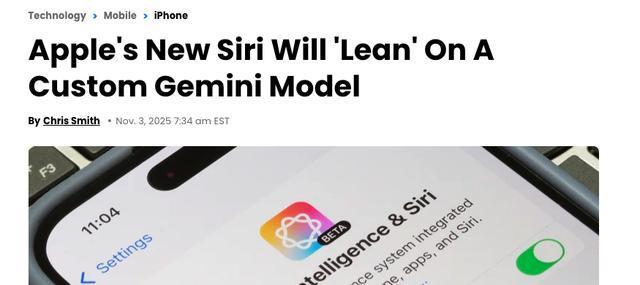
消息称苹果明年3月推升级版Siri,或接入谷歌Gemini模型
Huan Qiu Wang Zi Xun· 2025-11-04 03:01
Core Insights - Apple plans to launch a significant upgrade to its voice assistant Siri in March 2026, incorporating external AI models, particularly Google's Gemini model, to enhance its capabilities [1][3] - The new version of Siri will feature AI-driven web search functionality, aiming to improve user experience by autonomously filtering and summarizing web content [1][3] Group 1 - Siri has been criticized for its limitations since its launch in 2011, and the upcoming upgrade aims to break the traditional closed system by allowing access to Google's computational power for better semantic understanding and multi-turn conversations [3] - The integration of AI web search is seen as a direct response to competitors like Google Assistant and Amazon Alexa, which have already adopted generative AI features [3] - Despite the technological advancements, there are concerns about Siri's future due to past performance issues, with only 32% of iPhone users setting Siri as their default voice assistant compared to 58% for Google Assistant and 41% for Alexa as of a 2025 survey [3] Group 2 - The reliance on Google's servers for data processing may raise questions about Apple's privacy commitments, potentially affecting user trust [3] - Siri's brand image has suffered due to years of stagnation, leaving uncertainty about whether users will give the assistant a second chance after the upgrade [3]