京八件

Search documents
记者观察:在服务区体验“流动的烟火”
Xin Lang Cai Jing· 2026-02-22 10:43
Core Viewpoint - The article highlights the transformation of highway service areas in China into multifunctional hubs that integrate commerce, culture, and tourism, significantly contributing to regional economic development [1]. Group 1: Service Area Transformation - Service areas along highways have evolved into "road economy" hubs, connecting local cultural and industrial resources while creating a consumption ecosystem that stimulates regional economic growth [1]. - The service areas now feature diverse offerings, including local delicacies, cultural crafts, and modern amenities, enhancing the travel experience for motorists [1][16]. Group 2: Culinary and Shopping Options - Various service areas offer a wide range of food options, from local specialties like Xianghe meat pie to international brands such as Starbucks and KFC, catering to diverse consumer preferences [4][10][11]. - Tourists can purchase local products and souvenirs, including Beijing specialties and unique gifts, making service areas a convenient stop for last-minute shopping [5][11]. Group 3: Innovative Facilities - The introduction of smart facilities, such as self-service kiosks for driving license services, represents a significant innovation in service area offerings, enhancing convenience for travelers [15]. - Recent renovations have expanded service areas, improving infrastructure with spacious parking, clean restrooms, and family-friendly amenities, thus elevating the overall travel experience [16].

老北京严选春节伴手礼
Xin Lang Cai Jing· 2026-02-15 09:32
Group 1 - The article highlights the festive atmosphere in Beijing during the extended Spring Festival holiday, emphasizing the importance of traditional gifts known as "伴手礼" [1] - It suggests various options for these gifts, including products from famous local brands such as 稻香村 and other century-old establishments, showcasing the rich cultural heritage of Beijing [1] - The narrative encourages visitors to take a piece of Beijing with them as a way to share the city's charm with friends and family, reinforcing the emotional connection to the city [1]
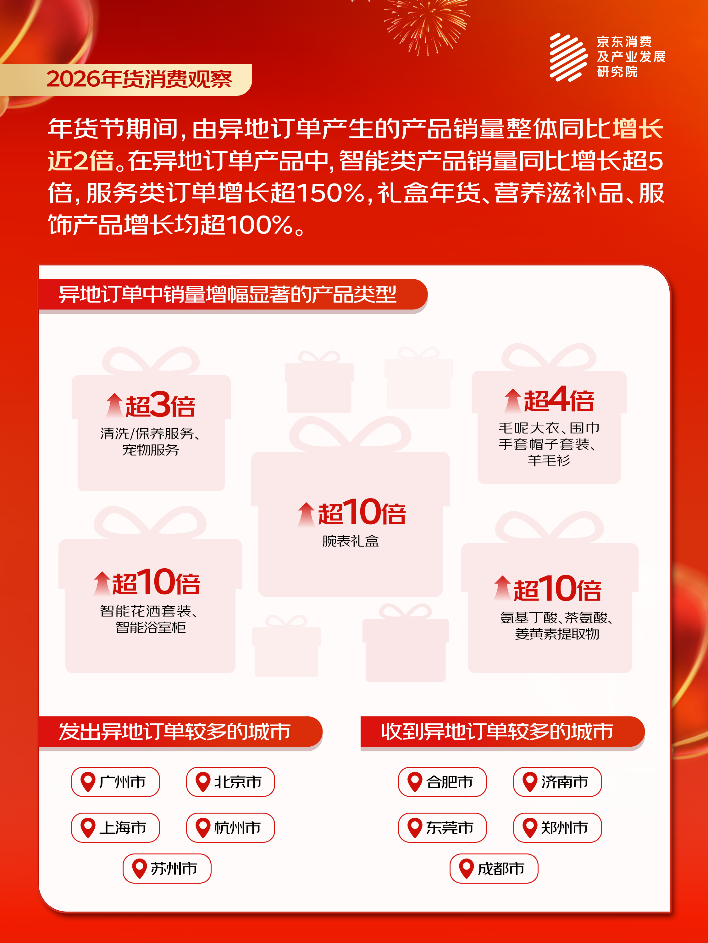
京东消费观察看“流动的年货”:异地年货订单同比增长近2倍,合肥、济南、东莞等地收到更多外省包裹
Zhong Jin Zai Xian· 2026-02-11 09:22
Core Insights - The article highlights the significant increase in cross-regional orders for traditional Chinese New Year goods, with overall sales growth of nearly 200% since the start of the festival season [4][6] - The trend reflects a shift in consumer behavior, where younger generations are sending not only traditional foods but also modern products and services to their families, indicating a blend of cultural heritage and contemporary lifestyle [2][8] Group 1: Cross-Regional Order Trends - Cross-regional orders have seen a nearly 200% increase in product sales, with specific regions like Tibet, Xinjiang, and Yunnan experiencing over 300% growth in order volume [4][6] - Major cities such as Guangzhou, Beijing, and Shanghai are the primary sources of these orders, while cities like Hefei, Jinan, and Zhengzhou are the main recipients [6][9] Group 2: Product Categories and Consumer Preferences - The diversity of products in cross-regional orders has expanded from traditional foods to include smart products and health supplements, with smart toilets and watch gift boxes seeing sales growth exceeding 1000% [2][8] - Local specialties have also gained traction, with overall sales growth of over 140%, particularly in Zhejiang, which saw a 571% increase [9][12] Group 3: Consumer Motivations and Cultural Significance - Consumers prioritize unique flavors and authenticity when selecting local specialties, with 56.6% emphasizing the importance of "authentic taste" [3][11] - The emotional connection to traditional foods and the desire to share these experiences with family are significant motivators for purchasing [15]