
路衍经济

Search documents
歇脚地变体验馆 高速服务区打开乡村产业发展新窗口
Shang Hai Zheng Quan Bao· 2026-02-26 17:59
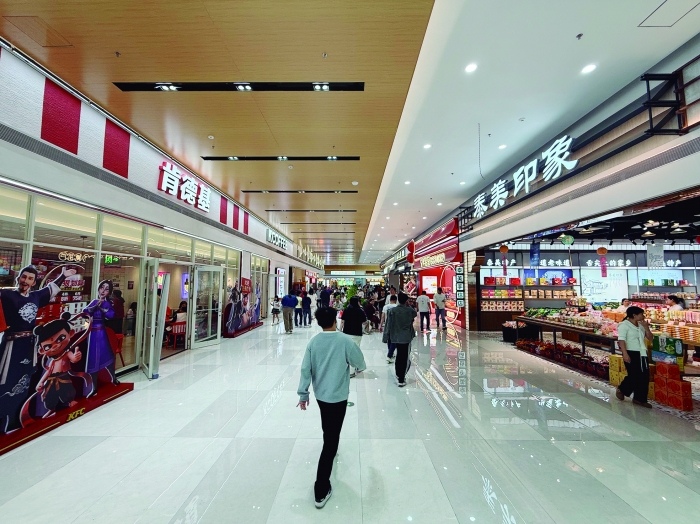
Core Insights - The article highlights the innovative integration of highway service areas with local agricultural industries, showcasing them as platforms for rural economic development and consumer engagement [2][4]. Group 1: Service Area Transformation - The Dragon Gate service area has transformed from a traditional rest stop into a vibrant space resembling a high-end shopping mall, featuring diverse dining options and a lively atmosphere [3]. - Local specialties, such as Hakka cuisine, are prominently featured, enhancing the service area's appeal and providing a unique dining experience for travelers [3][4]. - The service area has become a marketing platform for local agricultural products, effectively promoting regional flavors and supporting local farmers [4]. Group 2: Economic Impact - The "service area + agriculture" model leverages highway traffic to connect rural products with urban consumers, positioning service areas as critical points for agricultural sales [4]. - Guangdong Province has established numerous agricultural product stations and specialty stores within service areas, promoting nearly 5,000 types of local products across the highway network [4]. - The Dragon Gate service area has also created job opportunities for local residents, contributing to community development and retaining young talent in the area [5]. Group 3: Future Development Strategies - The article emphasizes the need for service areas to evolve from mere transit points to "third spaces" that foster community interaction and economic activity [6]. - Suggestions for enhancing the service area's value include creating unique consumer experiences and integrating local attractions and products into the service area offerings [6]. - The potential for digital systems to analyze consumer behavior and optimize service area operations is highlighted as a key factor for sustainable growth in the "road economy" [6].

从“加油驿站”到“消费地标” 高速服务区变身路衍经济新引擎
Shang Hai Zheng Quan Bao· 2026-02-25 17:32
Core Viewpoint - The transformation of highway service areas into consumer landmarks is driven by an increase in the duration of stay for passing drivers, particularly with the rise of electric vehicles, which require longer charging times [6][9]. Group 1: Consumer Experience and Behavior - The average stay time for drivers at the Yangcheng Lake service area has increased from 15 minutes to 45 minutes [6]. - Electric vehicle drivers typically spend around 30 minutes charging, compared to the 5 minutes for traditional fuel vehicles, leading to more opportunities for consumption [6][7]. - The service area is enhancing the consumer experience by integrating local cultural elements and unique products, such as the Yangcheng Lake hairy crab plush toys, which have attracted visitors [6][7]. Group 2: Economic Impact and Development - Highway service areas are evolving from basic fuel stations to multi-functional hubs that contribute to the road economy, showcasing local culture and products [8][9]. - The development of service areas is categorized into three stages: basic fuel provision, expanded services including dining, and the current phase focusing on unique experiences and diverse offerings [8]. - The commercial value of service areas extends beyond direct sales, as they can stimulate local tourism and cultural industries, enhancing regional economic impact [8][9]. Group 3: Future Directions and Strategies - Future transformations of highway service areas will align with local economic development plans, maximizing the use of local resources and creating new industry integration points [9]. - There is a call for exploring new "transportation + industry" development models and optimizing service areas for logistics and renewable energy integration [9]. - The potential for further commercial exploitation of service areas remains, with a focus on converting traffic into experiences that drive consumption and enhance regional economic and cultural influence [9].

记者观察:在服务区体验“流动的烟火”
Xin Lang Cai Jing· 2026-02-22 10:43
Core Viewpoint - The article highlights the transformation of highway service areas in China into multifunctional hubs that integrate commerce, culture, and tourism, significantly contributing to regional economic development [1]. Group 1: Service Area Transformation - Service areas along highways have evolved into "road economy" hubs, connecting local cultural and industrial resources while creating a consumption ecosystem that stimulates regional economic growth [1]. - The service areas now feature diverse offerings, including local delicacies, cultural crafts, and modern amenities, enhancing the travel experience for motorists [1][16]. Group 2: Culinary and Shopping Options - Various service areas offer a wide range of food options, from local specialties like Xianghe meat pie to international brands such as Starbucks and KFC, catering to diverse consumer preferences [4][10][11]. - Tourists can purchase local products and souvenirs, including Beijing specialties and unique gifts, making service areas a convenient stop for last-minute shopping [5][11]. Group 3: Innovative Facilities - The introduction of smart facilities, such as self-service kiosks for driving license services, represents a significant innovation in service area offerings, enhancing convenience for travelers [15]. - Recent renovations have expanded service areas, improving infrastructure with spacious parking, clean restrooms, and family-friendly amenities, thus elevating the overall travel experience [16].

中部六省加快构建增长新引擎
Jing Ji Wang· 2026-02-10 06:04
Group 1: Economic Growth and Investment - The GDP of the central region is expected to approach 30 trillion yuan by 2025, with Henan leading at a growth rate of 5.6% [1] - The focus for 2026 among central provinces is on "stabilizing growth and expanding domestic demand," leveraging local resources and insights into new consumption trends [1] - Effective investment is crucial for stabilizing economic growth, with provinces exploring investment potential in water conservancy and other sectors [4] Group 2: New Consumption Trends - Central provinces are focusing on "emotional value" and "emotional economy" in their government work reports, indicating a shift in consumer trends [2] - Various provinces are cultivating new consumption growth points, such as the "first launch economy" and "night economy," to enhance consumer vitality [2][3] - Specific initiatives include promoting local business innovations and developing new consumption scenarios in provinces like Henan and Shanxi [2] Group 3: Modern Manufacturing and High-Tech Industries - The central region aims to build a modern industrial system with a focus on new energy, new materials, and optoelectronic information [6] - Provinces like Hubei and Hunan are advancing projects in high-tech sectors, including lithium batteries and new energy systems [6][7] - Jiangxi is enhancing its capabilities in aircraft manufacturing and electric vehicles, while Shanxi is focusing on high-end equipment manufacturing and new materials [7]
布局新消费 促进有效投资 中部六省加快构建增长新引擎
Shang Hai Zheng Quan Bao· 2026-02-09 18:33
Core Insights - The central provinces of China are focusing on "stabilizing growth and expanding domestic demand" as key priorities in their 2026 government work reports, with a projected GDP nearing 30 trillion yuan for 2025 [1][2] - The concept of "emotional value" and "emotional economy" has emerged as a significant trend in consumer behavior, prompting these provinces to innovate in consumption and investment [1][2] Economic Growth and Investment - Henan leads the central provinces with a GDP growth rate of 5.6%, while Hubei, Anhui, and Jiangxi also report growth rates exceeding 5% [1] - The provinces are enhancing their investment in sectors like water conservancy and logistics to strengthen their roles as key hubs in the domestic and international economy [3][5] New Consumption Trends - Provinces are actively cultivating new consumption growth points such as the "first release economy," "exhibition economy," and "silver economy" to meet evolving consumer demands [2] - Specific initiatives include promoting local business innovations and developing diverse consumption scenarios to stimulate economic activity [2] Industrial Development - The central region aims to establish a modern industrial system with a focus on new energy, new materials, and high-tech industries [5][6] - Hubei is working on a world-class integrated storage and computing industry base, while other provinces are advancing projects in electric vehicles, lithium batteries, and aerospace [5][6] Infrastructure and Project Development - Significant infrastructure projects are being prioritized, with Hunan announcing 389 key projects totaling 2 trillion yuan in investment [3] - The provinces are also focusing on enhancing their logistics and transportation networks to facilitate economic growth and connectivity [3][5]
河南方城:便捷交通赋能乡村振兴提质增效
Zhong Guo Jing Ji Wang· 2026-02-09 09:57
Core Insights - The article highlights the successful integration of transportation infrastructure improvements with agricultural development in Guzhuangdian Town, Henan Province, leading to increased efficiency and economic benefits for local farmers [1][2] Group 1: Agricultural Development - The town has established 44,000 acres of high-standard farmland and developed a 3,500-acre fruit and vegetable picking garden, enhancing the online sales channels for quality agricultural products [2] - The steel onion cultivation area in Cangli Village has reached hundreds of acres, becoming a key industry for local economic growth [2] - The introduction of modern agricultural practices, including the use of over 100 facility agriculture greenhouses, has led to the successful staggered planting and marketing of crops like tomatoes and peppers, ensuring year-round income from the land [2] Group 2: Transportation Infrastructure - The completion of the G345 line reconstruction has significantly reduced travel time from the county seat to the town from 40 minutes to 15 minutes, facilitating better access for external buyers [1] - The new road network has decreased logistics costs for agricultural products by approximately 30%, improving the efficiency of transporting fresh produce to markets [1] - The ongoing investment in rural road construction has resulted in the new and upgraded rural roads totaling 3,291.32 kilometers, providing strong support for the development of specialty agriculture [2] Group 3: Economic Impact - The improved transportation has stimulated the growth of the "road economy," with service industries such as dining, lodging, and auto repair clustering along the new routes [1] - The integration of transportation and agricultural development has created a virtuous cycle, promoting both economic growth and rural revitalization [2] - The town's approach to combining agriculture with tourism and leisure activities is seen as a model for rural economic development, leveraging local resources for broader economic benefits [2]
中国收费公路行业展望
Zhong Cheng Xin Guo Ji· 2026-02-05 07:08
Investment Rating - The report maintains a stable outlook for the Chinese toll road industry, reflecting the expectation that the overall credit quality of the industry will not undergo significant changes in the next 12 to 18 months [3][32]. Core Insights - The toll road industry in 2025 is characterized by stable overall performance, with passenger transport experiencing a "total decline, slight increase in turnover" due to competition from other transportation modes, while freight transport continues to grow under macroeconomic support [4][31]. - The fixed asset investment scale in the toll road sector has been on a downward trend, with future construction tasks primarily concentrated in the western regions, which may face greater investment pressures [4][12]. - The overall profitability of toll road operators has shown slight recovery, with debt repayment capabilities slightly declining but remaining at a good level, and financial leverage levels appearing relatively stable [4][31]. Summary by Sections Analysis Approach - The report analyzes the overall fundamentals of the toll road industry from the perspectives of demand changes, investment pressures, and industry policies, while summarizing the current credit situation and future credit trends for the next 12 to 18 months [5]. Industry Fundamentals - The toll road industry in 2025 shows stable performance, with passenger transport volume slightly declining by 2.4% to 11.492 billion passengers, while freight transport volume increased by 3.4% to 43.288 billion tons [6][7]. - The construction of a smart transportation system is expected to bring new opportunities and challenges to the toll road industry [6][11]. - The proportion of road transport turnover in the total transport industry is expected to decline slightly, with road passenger turnover accounting for 14.35% and freight turnover for 29.81% [8]. Financial Performance - The net profit of toll road operators has shown slight growth due to diversified business development and a decrease in financial expenses, with a net profit increase of 4.29% in 2025 [22][30]. - The overall financial performance remains stable, with the total debt of sample enterprises maintaining a low growth rate, and the financial leverage continuing to decline [24][30]. - The cash flow from operating activities for sample enterprises has increased, with net cash flow from operations growing by 10.33% and 8.62% in 2024 and the first three quarters of 2025, respectively [26][30]. Conclusion - The toll road industry is expected to maintain stable performance, with the overall credit level remaining stable due to manageable capital expenditure pressures and ongoing consolidation within the industry [31][32].
以“双碳”为牵引,江西高速公路建设交上绿色答卷
Zhong Guo Huan Jing Bao· 2026-02-01 23:38
Core Viewpoint - The 20th Central Committee of the Communist Party of China emphasizes accelerating the comprehensive green transformation of economic and social development, with a focus on achieving carbon peak and carbon neutrality goals, particularly in the transportation sector, which is a key area for energy consumption and carbon emissions [1] Group 1: Green Road Concept and Ecological Protection - Jiangxi prioritizes ecological protection in road network planning and construction, minimizing disturbances to the natural environment by avoiding sensitive ecological areas during project planning [2] - The province promotes the use of green building materials and recycling technologies, transforming solid waste into roadbed materials, achieving over 80% utilization of tunnel spoil in highway construction, and saving over 200 acres of land [2] - Flexible protection techniques are employed for slope protection to promote vegetation recovery and prevent soil erosion, enhancing carbon sink capacity through greening projects in service areas and toll stations [3] Group 2: Energy Efficiency and Carbon Reduction in Operations - Jiangxi focuses on reducing carbon intensity during the operation phase of transportation infrastructure through technological innovation and management optimization, including the development of a smart highway system [4] - The province has implemented comprehensive LED energy-saving retrofits along highways, achieving over 60% energy savings, and has promoted the use of low-carbon materials in highway maintenance, reducing greenhouse gas emissions by over 20% [5] Group 3: Integrated Energy Solutions - Jiangxi is strategically deploying clean energy industries along highways, utilizing abundant land and space resources for large-scale distributed photovoltaic systems to meet operational electricity needs [6] - The province has established a comprehensive electric vehicle charging network, with over 180 charging stations covering more than 95% of the highway network, and is exploring integrated energy systems to enhance energy resilience [7] Group 4: Expanding Road-Related Economy - Jiangxi is developing low-energy, high-value green industries by leveraging highway resources, promoting tourism along scenic routes, and transforming service areas into regional tourism hubs [8] - The province is advancing green logistics and supply chain initiatives, optimizing transportation modes, and reducing carbon emissions through the use of new energy logistics vehicles [8]
“路过经济”变“落地经济”
Xin Lang Cai Jing· 2026-02-01 22:23
Core Viewpoint - The recent guidelines issued by the provincial transportation department aim to transform highway service areas from traditional "rest stops" into comprehensive stations that support the high-quality development of county economies [1][2] Group 1: Economic Development - Since the 14th Five-Year Plan, Guizhou has actively cultivated a "road-derived economy" that connects highways and service areas, resulting in service area revenues exceeding 400 million yuan [1] - The "Long March National Cultural Park · Daluo Mountain Service Area" integrates red culture to boost red tourism and consumption [1] - The Xijiang Service Area leverages its proximity to Qianhu Miao Village to create a cultural tourism hub, effectively promoting local employment and rural industry development through a "service area + employment + industry" model [1] - The Dao'an Highway Zheng'an Service Area has become a "guitar culture window" and established a rural revitalization service station to facilitate direct sales of local agricultural products [1] - The Hukun Highway Hot Spring Service Area deeply integrates Miao and Dong cultures, enhancing consumer experiences and stimulating spending [1] Group 2: Infrastructure and Connectivity - The expansion of highway service area functions is a strategic move to enhance the endogenous power of county economies, transforming service areas from "transit points" to "access points" [2] - New connections to local road networks will shorten distances between industrial parks, agricultural bases, and tourist attractions, reducing logistics costs and promoting the export of local products [2] - The ongoing improvement of Guizhou's highway network is expected to accelerate the transition from "road-passing economy" to "landed economy" as service areas evolve into economic interfaces that drive county industries and promote urban-rural integration [2]
福建:“村口的高速”助力乡村振兴跑出“加速度”
Xin Hua Wang· 2026-01-28 01:01
Core Viewpoint - The implementation of the "Two Connectivity Projects" in Fujian aims to enhance rural development by improving access to highways, thereby increasing the sales of local agricultural products and benefiting nearly 300 million residents across 80 towns by 2025 [1][2]. Group 1: Project Overview - Fujian plans to initiate 33 new "Two Connectivity Projects" and open 28 highway service area entrances by 2025, significantly benefiting rural areas [1]. - The "Two Connectivity Projects" include "Neighboring County Highway Connectivity" and "Township Convenient Connectivity," focusing on reducing travel distances and improving access to highways for rural towns [1]. Group 2: Economic Impact - The addition of the "Baijigou Toll Station" near Qiaoyan Village has reduced travel time to Fuzhou by 20 minutes, leading to increased tourism and sales of local agricultural products [2]. - Currently, 85% of land-based townships in Fujian can reach highways within 30 minutes, with the opening of 70 service area back channels reducing average travel distance by nearly 10 kilometers [2]. - By 2025, service areas with back channels are projected to achieve a revenue of 420 million yuan, a 21% increase year-on-year, with agricultural product sales rising by 39% [2]. Group 3: Future Developments - The traffic flow through service area back channels is expected to increase by 45% from January to December 2025, contributing to an average income growth of 103% for village collectives and 32% for villagers [3]. - Fujian aims to further implement the "Two Connectivity Projects" to enhance urban-rural integration and increase income for residents [3].