仓储搬运机器人Stretch

Search documents
现代汽车推出新款人形机器人,计划年产3万台、2028年进厂造车
Hua Er Jie Jian Wen· 2026-01-06 09:37
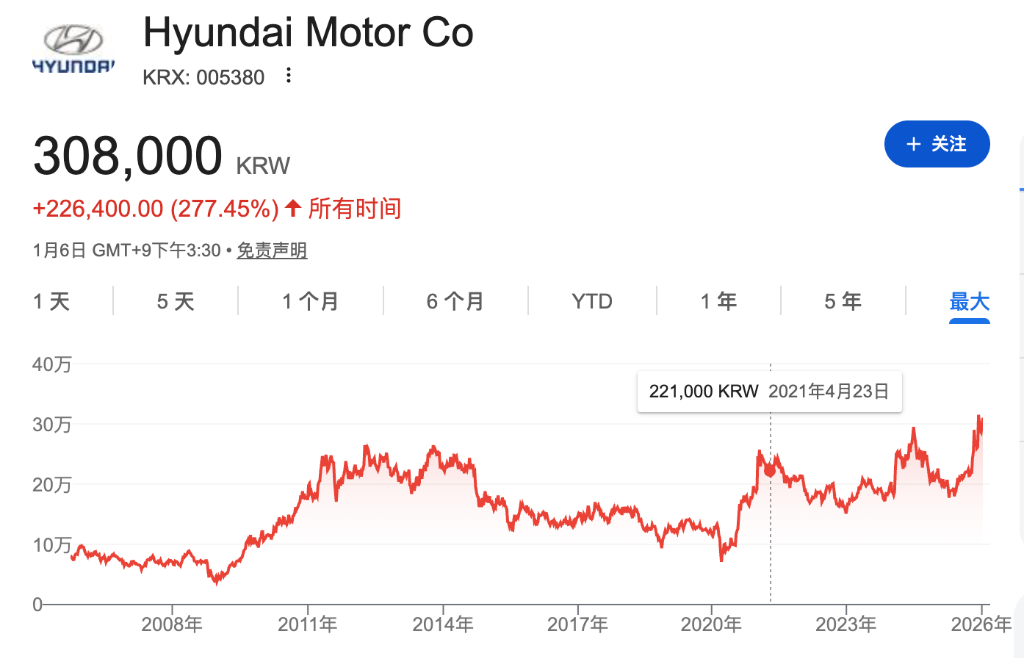
Core Viewpoint - Hyundai Motor Group's Boston Dynamics has announced the latest version of its humanoid robot, which is set to be deployed in Hyundai's manufacturing plants starting in 2028, significantly boosting Hyundai's stock price by 8.4% to a record high [1]. Group 1: Product Development and Deployment - The new Atlas humanoid robot will be produced at Hyundai's "Metaplant" in Savannah, Georgia, with an annual production target of 30,000 units by 2028, integrating them into factories and warehouses globally [4]. - The Atlas robot features human-sized tactile sensing hands and fully rotating joints, capable of lifting up to 110 pounds (50 kilograms) and operating in temperatures ranging from -4°F (-20°C) to 104°F [4]. - Initially, the Atlas robots will perform highly repetitive tasks, with plans to engage in more complex assembly work by 2030 [4]. Group 2: Strategic Investments and Collaborations - Hyundai has established a robotics lab in 2019 and acquired Boston Dynamics in 2021, with existing products like the Spot quadruped robot and Stretch warehouse robot already commercialized [5]. - The company plans to invest 125 trillion KRW in AI and robotics over the next five years in South Korea and an additional $26 billion in the U.S. by 2028, including new steel plants in Louisiana and expanded automotive capacity in Georgia [5]. - Hyundai aims to deepen its strategic partnership with NVIDIA to enhance innovation and R&D efficiency, with a $3 billion physical AI computing cluster project in collaboration with leading AI firms like Google DeepMind [5]. Group 3: Industry Competition and Trends - The automotive manufacturing sector is at the forefront of automation, focusing on reducing labor costs and enhancing production efficiency through technological innovation [6]. - Competitors like Xpeng Motors and Tesla are also advancing humanoid robot projects, with Tesla's Optimus robot expected to significantly impact the company's overall value [6]. - Despite the current application of robots in standardized tasks like welding and logistics, the industry is seeking breakthroughs in key technologies to enable robots to perform more complex, unstructured tasks autonomously [6].