
四足机器人Spot

Search documents
30年老将罗伯特・普莱特宣布卸任波士顿动力CEO,CFO临时接班
Sou Hu Cai Jing· 2026-02-11 00:20
波士顿动力由雷伯特于 1992 年创立,脱胎于麻省理工学院(MIT),他当时在该校担任教授。谷歌母公司 Alphabet 于 2013 年收购了波士顿动力,随后该公 司于 2017 年被出售给日本投资集团软银,2021 年又被现代汽车集团收购。 这家机器人制造商最为人熟知的是其四足机器人 Spot,该产品在普莱特上任后不久于 2020 年实现商业化,公司近期还发布了人形机器人 Atlas。 据行业媒体 A3 报道,罗伯特 · 普莱特(Robert Playter)于周二在一份内部备忘录中宣布,他将卸任公司首席执行官一职。在公司寻找继任者期间,首席财 务官阿曼达 · 麦克马斯特(Amanda McMaster)将临时接任最高职位。 据IT之家了解,普莱特于 2020 年从创始人马克 · 雷伯特(Marc Raibert)手中接过波士顿动力的管理权。他已在该公司任职 30 年,此前还担任过工程副总 裁、首席运营官等职务。 IT之家 2 月 11 日消息,以四足机器人和人形机器人闻名的波士顿动力(Boston Dynamics)是一家总部位于马萨诸塞州的机器人公司,该公司目前正经历领 导层变动。 ...


现代汽车推出新款人形机器人,计划年产3万台、2028年进厂造车
Hua Er Jie Jian Wen· 2026-01-06 09:37
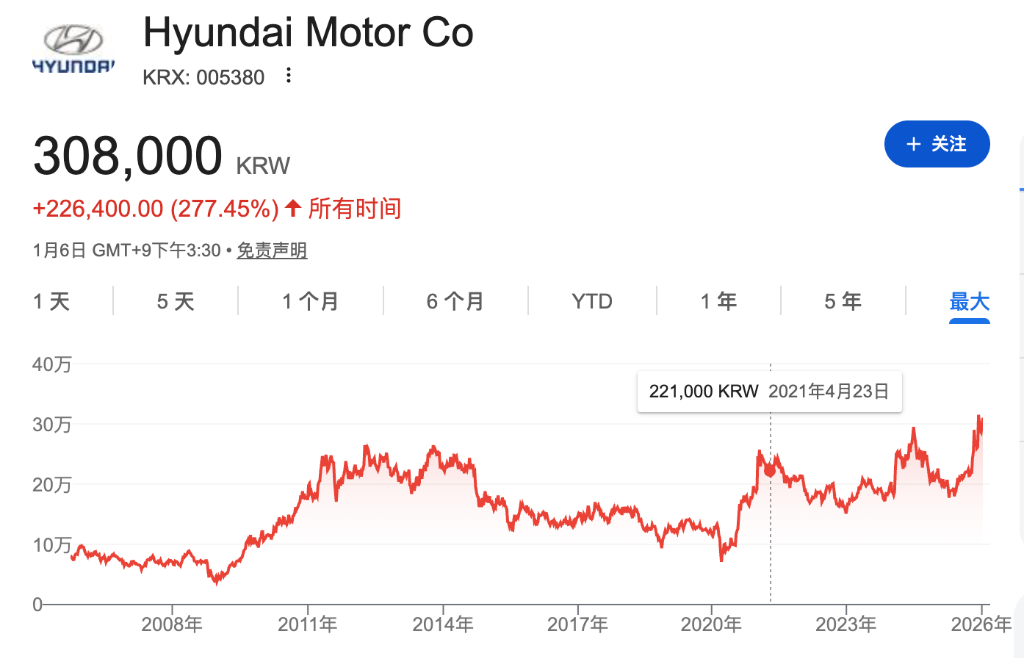
Core Viewpoint - Hyundai Motor Group's Boston Dynamics has announced the latest version of its humanoid robot, which is set to be deployed in Hyundai's manufacturing plants starting in 2028, significantly boosting Hyundai's stock price by 8.4% to a record high [1]. Group 1: Product Development and Deployment - The new Atlas humanoid robot will be produced at Hyundai's "Metaplant" in Savannah, Georgia, with an annual production target of 30,000 units by 2028, integrating them into factories and warehouses globally [4]. - The Atlas robot features human-sized tactile sensing hands and fully rotating joints, capable of lifting up to 110 pounds (50 kilograms) and operating in temperatures ranging from -4°F (-20°C) to 104°F [4]. - Initially, the Atlas robots will perform highly repetitive tasks, with plans to engage in more complex assembly work by 2030 [4]. Group 2: Strategic Investments and Collaborations - Hyundai has established a robotics lab in 2019 and acquired Boston Dynamics in 2021, with existing products like the Spot quadruped robot and Stretch warehouse robot already commercialized [5]. - The company plans to invest 125 trillion KRW in AI and robotics over the next five years in South Korea and an additional $26 billion in the U.S. by 2028, including new steel plants in Louisiana and expanded automotive capacity in Georgia [5]. - Hyundai aims to deepen its strategic partnership with NVIDIA to enhance innovation and R&D efficiency, with a $3 billion physical AI computing cluster project in collaboration with leading AI firms like Google DeepMind [5]. Group 3: Industry Competition and Trends - The automotive manufacturing sector is at the forefront of automation, focusing on reducing labor costs and enhancing production efficiency through technological innovation [6]. - Competitors like Xpeng Motors and Tesla are also advancing humanoid robot projects, with Tesla's Optimus robot expected to significantly impact the company's overall value [6]. - Despite the current application of robots in standardized tasks like welding and logistics, the industry is seeking breakthroughs in key technologies to enable robots to perform more complex, unstructured tasks autonomously [6].

特朗普“梭哈”机器人引爆超级风口,港A概念股集体狂欢!
Ge Long Hui· 2025-12-04 05:05
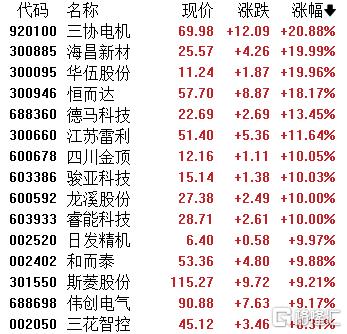
Core Viewpoint - The recent surge in the robotics sector in both A-shares and Hong Kong stocks is driven by favorable policy signals from the U.S. government, indicating strong support for the robotics industry as a key area for future economic growth and global competitiveness [4][5][6]. Group 1: Market Reaction - The robotics sector in the A-share market experienced a significant rally, with multiple stocks hitting the daily limit up, including Haichang New Materials and Hwa Wo, both reaching a 20% increase [1]. - In the Hong Kong market, major robotics stocks also saw strong performance, with companies like Sihua Intelligent Control and DCH Holdings rising over 9% [2][3]. Group 2: U.S. Policy Support - The U.S. Secretary of Commerce has been actively meeting with CEOs in the robotics industry, emphasizing a commitment to fully support the sector's accelerated development [4]. - The U.S. government is considering issuing an executive order on robotics and establishing a national robotics committee, highlighting the strategic importance of the industry [5]. Group 3: Domestic Growth and Policy - The domestic robotics sector is experiencing explosive growth, with significant policy support expected to materialize by 2025, as outlined in the "14th Five-Year Plan" [7]. - Local governments are providing substantial financial incentives for robotics companies, with Guangxi offering up to 2 million yuan in one-time rewards for qualifying firms [7]. Group 4: Industry Developments - Recent technological advancements and commercial applications in the robotics field are bolstering market expectations, such as Tesla's humanoid robot "Optimus" and Figure AI's humanoid robots being utilized in automotive production [6]. - The robotics industry is witnessing increased participation from various sectors, with companies like Changan Automobile and XPeng Motors entering the market with significant investments [8]. Group 5: Market Outlook - Analysts indicate that the humanoid robotics sector is entering a phase of significant rebound, with a more rational and unified industry outlook following recent adjustments [9]. - The anticipated mass production of humanoid robots by 2026, coupled with ongoing policy support and subsidies, is expected to create a favorable environment for investment in the sector [9].
中国机器人,在韩国需求量渐起
Huan Qiu Wang· 2025-10-10 07:34
Group 1: Industry Overview - The APEC meeting in late October will focus on the cooperation and competition in the robotics sector between China and South Korea, with Chinese companies preparing to mass-produce robots tailored for the South Korean market by the end of this year [1][9] - South Korea's Ministry of Trade, Industry and Energy has announced a plan to invest 1 trillion KRW (approximately 0.84 billion USD) by 2030 to enhance humanoid robot technology, aiming to achieve global leadership in emerging industries, including robotics [1][3] Group 2: Market Demand and Opportunities - There is a strong demand for robots in South Korea, with numerous inquiries from Korean enterprises and educational institutions, indicating a growing interest in Chinese robotic technology [2][5] - The cloud-based robot inspection solutions, such as the industrial-grade robot dog developed by Hangzhou Yundongchu Technology, are expected to save significant labor hours in inspections, showcasing the practical benefits of adopting Chinese robotic solutions [3][4] Group 3: Competitive Landscape - South Korean companies like Hyundai and Samsung are actively investing in robotics, with Hyundai acquiring an 80% stake in Boston Dynamics for 800 million USD and Samsung investing approximately 0.62 billion RMB in Rainbow Robotics [3][4] - Chinese robots are perceived as more cost-effective and have more practical deployment experience compared to South Korean counterparts, which face challenges in commercializing advanced humanoid robots [4][5] Group 4: Collaboration and Development - Chinese companies are open to collaboration with South Korean firms, focusing on integrating their technologies and platforms to enhance operational efficiency [7][8] - The trend of "second development" is prevalent, where foreign partners seek to customize and adapt Chinese robots for local needs, indicating a flexible approach from Chinese manufacturers [7][8] Group 5: Production and Supply Chain - The demand for Chinese robots in overseas markets is surging, leading to challenges in meeting production capacity, with some partners expressing concerns over long delivery times [8][9] - Plans are in place for mass production of robots tailored for the South Korean market by the end of this year, with potential future strategies including supplying key components for local assembly [9]