企业高可用性服务器

Search documents
行业聚焦:全球企业高可用性服务器行业头部企业市场份额及排名情况
QYResearch· 2025-11-19 01:47
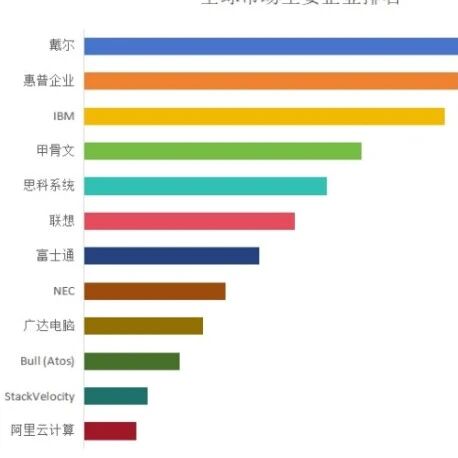
Core Viewpoint - Enterprise high availability servers are essential for ensuring continuous business operations during hardware or software failures, utilizing redundancy, failover, load balancing, and disaster recovery techniques to maximize reliability and service continuity [1][2]. Market Overview - The global enterprise high availability server market is projected to reach approximately $13.3 billion by 2025 and $19.3 billion by 2031, with a compound annual growth rate (CAGR) of 6.40% over the coming years [4]. Industry Chain - The industry chain for enterprise high availability servers includes upstream hardware manufacturers, midstream system integrators, and downstream enterprise users. Upstream suppliers provide processors, memory modules, storage systems, and power supplies, while midstream integrators assemble these components into high availability solutions [8]. Industry Policies - Industry policies focus on data security, operational reliability, and compliance standards, with governments in North America, Europe, and Asia-Pacific emphasizing data protection and disaster recovery guidelines. Policies often require critical sectors like banking and healthcare to adopt high availability infrastructure [9]. Development Trends - Key trends in the development of enterprise high availability servers include: - Intelligent operations and self-healing systems leveraging AI and automation to achieve zero downtime and reduce operational costs [10]. - Transition towards cloud-native high availability architectures to support hybrid and multi-cloud environments [10]. - Emphasis on green energy efficiency and low-carbon technologies to meet sustainability goals [10]. - Evolution from centralized to distributed architectures due to the rise of edge computing and 5G networks [12]. - Movement towards open and standardized industry ecosystems with modular designs and decoupled hardware and software [12]. Obstacles - The industry faces several obstacles, including: - High technical complexity requiring extensive reliability validation and compatibility testing, leading to significant barriers to entry [13]. - Elevated manufacturing and maintenance costs due to expensive components and stringent deployment conditions [13]. - High market concentration dominated by major players like HPE, Dell, and IBM, creating challenges for new entrants [13][14].