优酷海外版

Search documents
搜索量一度超越韩剧 国剧出海从“被看见”到“扎下根”
Shang Hai Zheng Quan Bao· 2026-01-30 20:04
Core Insights - The global popularity of "C-Drama" (Chinese Drama) is on the rise, with significant growth in content viewership and search volume, surpassing Korean dramas in 2025 [1][3] - Chinese dramas are transitioning from being merely "seen" to being "loved," indicating a deeper cultural resonance and engagement with international audiences [1][8] Group 1: Industry Growth - In 2025, the content viewership of iQIYI International increased by 114.5%, marking a historical high [1][3] - Chinese dramas like "难哄," "藏海传," and "三十而已·曼谷篇" have achieved over 100 million views on overseas platforms, showcasing their growing influence [2] - The overseas revenue for Lingmeng Film and Television reached 33 million yuan, which is 2.5 times that of the same period in 2024 [2] Group 2: Company Strategies - Lingmeng Film and Television is focusing on international distribution, with its core drama matrix reaching 180 countries and collaborating with platforms like Disney+ and Netflix [2] - iQIYI has established a dual headquarters model with operations in Beijing and Singapore, enhancing its international business through localized teams in key markets [5] - Tencent's WeTV and Youku are also expanding their international presence, with strategies tailored to specific regions such as Southeast Asia and North America [4][5] Group 3: Content Innovation - Lingmeng's "三十而已·曼谷篇" represents a new approach to overseas adaptations, combining Chinese themes with local cultural elements to resonate with Thai audiences [6] - The success of "庆余年第二季" on Disney+ demonstrates the increasing bargaining power of Chinese IPs, allowing for simultaneous global releases [8] - The industry is focusing on content innovation to enhance viewer engagement and expand the volume of content produced [8]

长视频出海困局:学不会的 Netflix,破不了的局
3 6 Ke· 2025-08-08 07:05
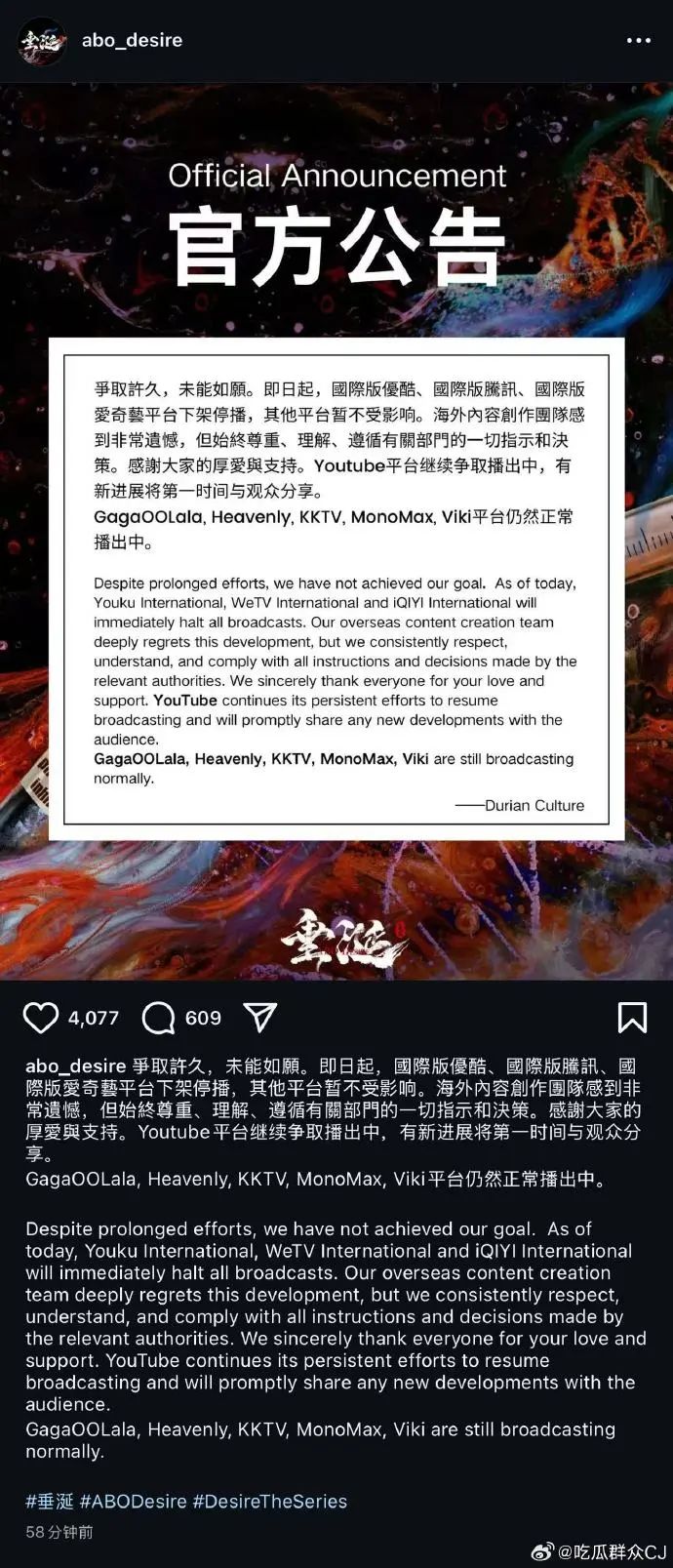
Group 1 - The core viewpoint of the articles highlights the challenges faced by Chinese long-video platforms in expanding into Southeast Asia, particularly with the failure of the dual male lead genre to gain traction [1][3][13] - The long-video industry has struggled to replicate the success of Netflix in Southeast Asia, with platforms like iQIYI and Tencent's WeTV attempting to adopt similar strategies without significant results [3][9][27] - Despite initial optimism, the long-video platforms have not effectively localized their content or identified a clear strategy for the Southeast Asian market, leading to stagnation in growth [13][26][41] Group 2 - Netflix's entry into the Asian market, particularly Japan, was marked by strategic pricing and local partnerships, which allowed it to establish a strong foothold [4][5][7] - The success of Netflix in Japan was attributed to its ability to adapt to local consumer preferences and invest heavily in local content, which has not been mirrored by Chinese platforms in Southeast Asia [28][31][33] - The article suggests that long-video platforms need to explore new strategies beyond mere replication of Netflix's model, focusing on unique content that resonates with local audiences [39][41]