传神素问中医大模型

Search documents
“通用大模型微调成为行业模型是伪命题”?医疗 AI 深度重构,传神语联创始人何恩培:孪生智能体能砍 70% 线下复诊工作
AI前线· 2026-01-13 03:42
Core Insights - The article discusses the evolving role of AI in the medical field, particularly in traditional Chinese medicine (TCM), highlighting the integration of AI technologies to enhance diagnostic and treatment processes [3][4][5] - It emphasizes the shift from traditional experience-based practices to data-driven approaches, with AI expected to play a crucial role in modernizing TCM and making it more accessible [29][30] AI in Healthcare - By the end of 2025, AI applications in healthcare are expected to achieve high penetration but remain superficially integrated, with a focus on practical performance rather than just model parameters [5][6] - AI's role in healthcare is expanding beyond single-task assistance to encompass multi-scenario and full-chain empowerment, particularly in drug development and patient management [7][8] TCM and AI Integration - The integration of AI in TCM is seen as a potential breakthrough area, with the development of digital twins of renowned TCM practitioners to enhance knowledge transfer and patient care [10][11] - The "Shuowen" model developed by the company is noted for its ability to replicate expert diagnostic reasoning, achieving a consistency rate of 95% in treatment recommendations [11][12] Challenges and Opportunities - The article identifies significant challenges in the adoption of AI in TCM, including skepticism from patients and practitioners regarding AI's reliability and the lack of regulatory frameworks for AI applications in healthcare [20][21] - Despite these challenges, the potential for AI to transform TCM practices is highlighted, particularly in enhancing the efficiency of healthcare delivery and improving patient outcomes [19][20] Future Directions - Looking ahead to 2026, the article predicts that AI will evolve into "scenario-based intelligent agents" that can assist in various aspects of TCM, including psychological health and wellness [24][25] - The focus will be on creating personalized health management solutions that integrate traditional practices with modern technology, aiming to provide continuous support to patients [28][29]


大模型狂叠 buff、Agent乱战,2025大洗牌预警:96%中国机器人公司恐活不过明年,哪个行业真正被AI改造了?
AI前线· 2026-01-01 05:33
Core Insights - The article discusses the significant changes in AI technologies, particularly focusing on large models, agents, and AI-native development paradigms, and how these have transformed various industries in 2025 [2] Group 1: Industry Landscape - OpenAI remains a leading player in the AI space, maintaining its position with general large model capabilities, although the release of GPT-5 did not meet high expectations [4] - Google made a strong comeback in 2025, with technologies like Gemini 3 and Nano Banana gaining user traction through effective distribution across search, office, and cloud products [4] - Anthropic has emerged as a stable player, surpassing OpenAI in API business scale and growth through deep partnerships with cloud providers like AWS [5] - Domestic company DeepSeek has become a notable star in 2025, with the release of R1 and an open-source approach that invigorated the AI ecosystem [5] - The industry is shifting focus from "scaling" to "sustainability," as companies face challenges like low production ratios and high loss pressures [5] Group 2: Company Capabilities - Companies that succeed are those addressing high-frequency demand scenarios, such as AI social media and music, which naturally fit large model applications [7] - Companies that have fundamentally restructured their cost structures through AI, significantly reducing marginal costs, are also positioned for success [7] - Companies lagging behind include those that focus solely on algorithms without integrating product development, leading to stagnation in commercialization [9] Group 3: Technological Evolution - The evolution of large models has shifted from merely increasing size to enhancing usability, with improvements in complex instruction understanding and multi-step reasoning [14] - The cost-effectiveness of models has improved significantly, with a nearly tenfold increase in performance per cost within a year [15] - The industry consensus is moving from "how strong is the model" to "how verifiable and reusable are the processes" [8] Group 4: Agent Development - Agents are recognized as the next core battleground in AI, with a shift from merely answering questions to executing tasks [36] - The introduction of standardized protocols like MCP has enabled agents to collaborate more effectively, moving from isolated operations to organized systems [38][39] - The competition is not just about the models but also about the surrounding infrastructure and operational capabilities necessary for agents to function effectively [40] Group 5: Future Directions - The future of agents lies in their ability to operate in open environments, handling uncertainties and making decisions based on incomplete information [45] - The industry is expected to see a shift from selling agent capabilities to providing automated services that deliver measurable business value [43] - The integration of agents into existing business processes is anticipated to redefine their role from mere tools to essential components of operational workflows [43]

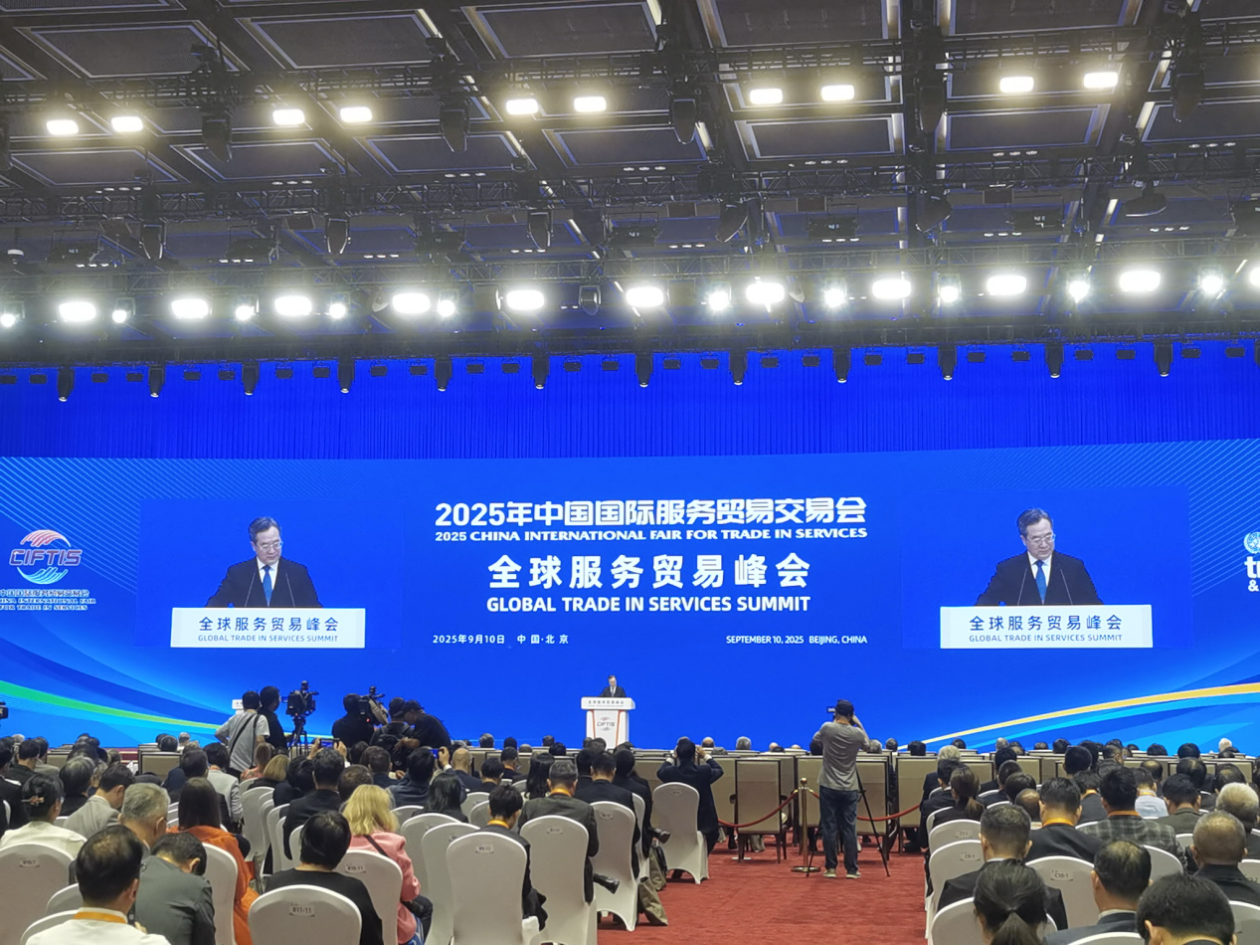
传神语联携“根原创”AI亮相2025服贸会,助力产业智能化升级
Huan Qiu Wang· 2025-09-12 11:06
Core Insights - The 2025 China International Service Trade Fair (CIFTIS) is being held in Beijing, focusing on the theme "Digital Intelligence Leading, Service Trade Renewed," highlighting the global shift towards digital and intelligent service trade [1] - Digital services and knowledge-intensive services are identified as the core engines driving global service trade growth [1] Group 1: AI Innovations and Applications - The fair showcases the integration of digital technology and artificial intelligence in service trade, with a focus on various applications [3] - Transn's AI innovations, including the Rendu large model and the Transn Suwen Traditional Chinese Medicine (TCM) model, received significant attention, particularly for their capabilities in intelligent diagnosis and health management [3][5] - The Transn Suwen TCM model achieved a high rating of 4+ in the evaluation by the China Academy of Information and Communications Technology, reinforcing its role in TCM cultural transmission and international expansion [3] Group 2: Language Services and Globalization - Transn has developed comprehensive solutions for language services, facilitating the digitalization and globalization of service trade [5] - The Global Meeting Room and Transn Little Tail AI Translator are highlighted as key products that enable seamless international meetings, supporting over 140 languages in real-time translation [5] Group 3: Technological Innovation and Competitive Edge - Transn emphasizes its "root original" technology as a core competitive advantage, showcasing its full-stack innovation capabilities in AI [6] - The Rendu large model demonstrates significant advancements in autonomous innovation, achieving certification for "zero open-source dependency" [6] Group 4: Future Directions and Collaboration - The company aims to enhance its research and development efforts, focusing on the "root original" AI development path to build a more comprehensive language service system [7] - Transn seeks to expand the application of its vertical models, such as Transn Suwen, in service trade scenarios, promoting TCM and health management services globally [7] - The company expresses a desire to collaborate with more partners to drive innovation in service trade and contribute to the prosperity of global service trade [7]