
传统文化旅游

Search documents
文旅消费提质升级 多地经济焕发冬日新活力
Xin Hua She· 2025-11-29 01:28
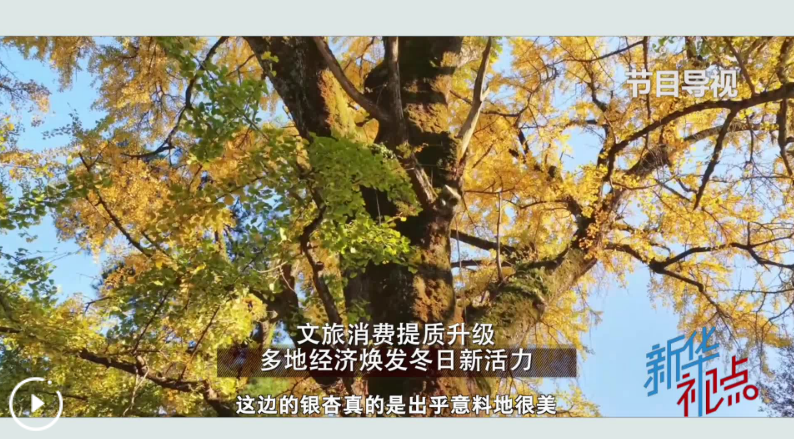
Core Insights - The article highlights the ongoing growth in winter tourism driven by unique local resources, supportive policies, and optimized services, showcasing vibrant consumer activity and new economic dynamics [2] Group 1: Cultural and Natural Attractions - The ancient ginkgo trees in Nanyue Hengshan, aged over 1400 years, are attracting numerous visitors during their peak viewing season [4] - In Qufu, Shandong, the promotion of traditional culture is drawing a steady stream of tourists to the Confucius Temple [6] - The Grand Canal, which runs through Jining, is being revitalized through the development of cultural districts that celebrate its historical significance [9] Group 2: Technological Enhancements in Tourism - The scenic area at the foot of Mount Ni is utilizing various digital technologies to provide immersive night tour experiences for visitors [10] - Ski resorts in Urumqi, Xinjiang, are undergoing comprehensive upgrades in facilities and smart systems to enhance the winter sports experience [11] - The Silk Road Mountain Resort has introduced self-service ticketing to alleviate long queues, significantly improving ticket purchasing efficiency [13] Group 3: Local Markets and Consumer Engagement - The Cao Wa market in Linshu County, Shandong, attracts large crowds with its vibrant atmosphere, featuring over 2000 stalls across various categories [16][18] - The market's popularity is evidenced by high sales figures, such as a food stall selling 100 pots of fried buns with a revenue of 7000 yuan, and a rice cake stall selling two tons with earnings of 30,000 to 40,000 yuan [18] - The diverse consumer experiences being created across regions are contributing to the sustained growth of the winter cultural tourism market, reflecting new economic momentum [19]

满足“诗和远方”新期待 旅游大国加速迈向旅游强国
Xin Hua She· 2025-08-27 23:55
Core Viewpoint - The development of the tourism industry is a crucial focus for promoting high-quality development in China [1] Group 1: Industry Growth and Trends - Since the beginning of the "14th Five-Year Plan," China has focused on improving the modern tourism system, promoting deep integration of culture and tourism, and accelerating supply-side structural reforms in the tourism sector [2] - The tourism industry has shown significant growth, with domestic tourist trips reaching 3.285 billion in the first half of the year, a year-on-year increase of 20.6%, and total spending reaching 3.15 trillion yuan, up 15.2% [4] - The "Village Super" initiative has been a successful case, attracting over 180,000 visitors in a single day and generating a total tourism revenue of 188 million yuan [3] Group 2: Economic Impact - The tourism sector has played an increasingly important role in enriching people's lives and boosting market confidence, driving growth in transportation, accommodation, dining, and retail sectors [5] - The Ministry of Culture and Tourism has implemented various measures to stimulate tourism consumption and create a favorable environment for tourism [6] Group 3: Cultural and Tourism Integration - The integration of culture and tourism has been actively promoted, with projects like "Only Henan: Drama Fantasy City" attracting significant visitor numbers, with nearly 80% of attendees coming from outside the province [7][8] - The development of cultural parks, museums, and historical sites has become essential in the tourism landscape, responding to contemporary demands for cultural engagement [13] Group 4: Diverse Tourism Offerings - The tourism industry has entered a new era characterized by diverse, personalized, and high-quality demands, with a focus on creating premium scenic spots and cross-regional tourism products [16] - As of now, there are 16,500 A-level tourist attractions and nearly 900 national and provincial-level tourist resorts, indicating a robust infrastructure to support tourism growth [16]