低空空域管理平台

Search documents
低空基建迎“政策红利期” 社会资本大有可为
Zheng Quan Ri Bao Wang· 2025-11-01 00:22
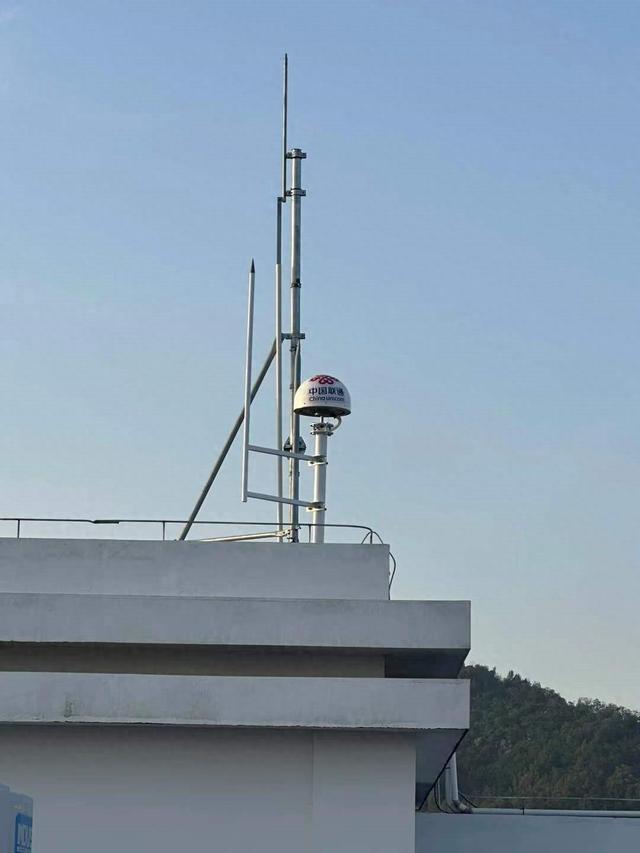
Core Viewpoint - The construction of low-altitude infrastructure is being actively promoted at both national and local levels, with policies aimed at enhancing the development potential of the low-altitude economy [1][2]. Group 1: National and Local Policies - The National Development and Reform Commission, along with other departments, released an action plan on October 31 to support the early layout of low-altitude data infrastructure in suitable regions [1]. - Various provinces, including Shandong, Guangdong, Guizhou, and Yunnan, have introduced new policies focused on low-altitude infrastructure to further unlock the potential of the low-altitude economy [1]. Group 2: Infrastructure Types and Development Models - Low-altitude infrastructure is categorized into physical infrastructure (hard infrastructure) and information infrastructure (soft infrastructure), with hard infrastructure including general airports and landing facilities, while soft infrastructure encompasses management platforms and communication systems [2]. - Different regions are adopting various approaches to advance low-altitude infrastructure, focusing either on soft infrastructure, hard infrastructure, or a combination of both [2]. Group 3: Financing and Investment Strategies - The construction of low-altitude infrastructure is recognized as a systematic project essential for the high-quality development of the low-altitude economy, necessitating the expansion of funding channels [3]. - A collaborative financing system involving government guidance, market leadership, and diverse participation is crucial, utilizing tools such as government bonds, special bonds, and REITs to attract social capital [3]. Group 4: Role of Social Capital - Social capital is seen as a catalyst for the high-quality development of emerging industries, with significant potential in low-altitude infrastructure due to its flexibility, decision-making efficiency, and market-oriented operational capabilities [4]. - Specific areas such as energy supply networks, landing sites, and low-altitude communication networks are particularly suitable for deep participation by social capital, which can also engage in value-added services like advertising and data services [4].
【西咸新区】秦创原推动无人机产业与智慧城市建设深度融合
Shan Xi Ri Bao· 2025-09-11 00:24
Core Insights - The recent event in Xixian New Area focused on the development of the drone industry, exploring new paths for low-altitude economy and establishing a comprehensive industrial ecosystem for innovation and capital integration [1][2] Group 1: Event Overview - The event utilized a three-dimensional interactive model of "signing and awarding - trend discussion - roadshow inspection" to stimulate innovation in the drone industry [1] - A total of 16 drone industry projects, 8 industry-university-research cooperation projects, 9 technology support and flight service projects, and 5 financial product projects were signed, covering various fields such as technological innovation and financial services [1] Group 2: Technological Developments - Shaanxi Unicom launched a low-altitude service support system that integrates key functions like airspace application, real-time monitoring, and flight plan approval, leveraging technologies such as 5G, big data, and cloud computing [1] - The system aims to create a unified network for drone operation management and flight assurance, promoting deep integration of the drone industry with smart city construction [1] Group 3: Industrial Ecosystem - The Xixian New Area's drone industry innovation cluster was officially approved in August 2024, focusing on a collaborative model involving provincial guidance and multi-point support [2] - The cluster aims to develop ten application scenarios, including medical delivery and agricultural protection, forming a strategic development plan for the drone industry [2] - Currently, over 110 drone industry chain enterprises have gathered in Xixian New Area, covering the entire chain from manufacturing to service assurance [2]
丰富智慧应用,共话产业趋势
Ke Ji Ri Bao· 2025-07-28 01:19
Group 1: Industry Trends and Developments - The 2025 International Low Altitude Economy Expo in Shanghai showcased nearly 300 leading global companies, highlighting advancements in drones and eVTOLs, and introduced 19 global and 25 domestic product launches, injecting new momentum into China's low altitude economy [1] - The integration of AI technology into low altitude airspace management is becoming increasingly significant, with platforms utilizing radar, 5G-A bases, and various sensors to create dynamic digital representations of airspace, enhancing ecological protection and urban management [3] Group 2: Technological Innovations - The "Lingchou" brand by the Xi'an Aviation Computing Technology Research Institute offers over 100 products that integrate key functions for eVTOLs and drones, providing high safety and low-cost solutions through intelligent algorithms and data analysis [2] - AI technologies enable drones to possess intelligent perception capabilities, allowing for real-time resource allocation and management of low altitude fleets, enhancing operational efficiency [4] - Agricultural drones equipped with multispectral cameras and AI image recognition can analyze crop health and optimize pesticide application, demonstrating advancements in precision agriculture [5]
中国联通携手厦门大学共建低空经济联合实验室
Huan Qiu Wang Zi Xun· 2025-04-29 09:19
Core Viewpoint - The low-altitude economy is emerging as a new engine for promoting high-quality economic development in China, with a focus on building a comprehensive ecosystem and innovative applications in low-altitude scenarios [1]. Group 1: Infrastructure Development - China Unicom is establishing a "1+1+3+N" capability system centered around low-altitude smart networks, low-altitude data intelligence, and various application platforms [1]. - The "Five Networks Integration" model, including communication, navigation, perception, computing, and meteorological networks, is being developed to support the low-altitude industry [2][4]. Group 2: Platform Empowerment - China Unicom and Xiamen University are jointly creating three major platforms: low-altitude airspace management, low-altitude application, and low-altitude safety supervision, which will enhance safety and efficiency in low-altitude operations [5][6]. - The 5G-A low-altitude safety supervision platform focuses on drone management, providing secure and efficient support for low-altitude flight applications [6]. Group 3: Application Scenarios - The Xiamen Xiangnan Aviation Industrial Park is being utilized as a testing ground for various drone applications, enabling performance verification and technology optimization [7]. - Collaborative projects are being initiated in areas such as smart healthcare, traffic facility inspection, urban governance, and cross-island logistics, aiming to drive innovation and development in the low-altitude economy [9]. Group 4: Strategic Collaboration - The strategic cooperation between China Unicom and Xiamen University aims to accelerate the establishment of a low-altitude economy joint laboratory and deepen collaboration across various sectors [9].