
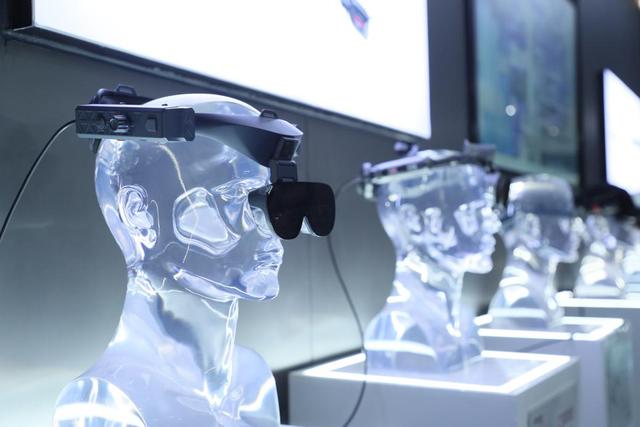
体全息波导镜片

Search documents
广州黄埔冲刺“世界显示之都”:超高清视频和新型显示迈向价值链高端
Xin Lang Cai Jing· 2025-12-16 09:06
Core Insights - Zeiss Group is expanding its optical and optoelectronic industry presence in Guangzhou, marking the 30th anniversary of its establishment in the city with an investment exceeding 400 million yuan in the Industrial 4.0 health vision industry ecosystem [1] - TCL Huaxing has commenced construction on the world's first mass production G8.6 generation printed OLED production line, which is expected to accelerate the global market entry of printed OLED technology [3] - Visionox, a leading company in the ultra-high-definition display industry, is also expanding its operations with significant investments in new projects, including a global headquarters and smart healthcare initiatives [5] Investment and Expansion - Zeiss Group is focusing on developing AR/VR, OK lenses, and eye health products while increasing investments in Huangpu District, Guangzhou [1] - TCL Huaxing's t8 project is designed to process approximately 22,500 glass substrates monthly, aiming to establish a leading position in the high-generation AMOLED sector [3] - Visionox plans to invest 4.2 billion yuan in its global headquarters and 800 million yuan in a smart healthcare project, with expected annual output value of 10 billion yuan upon completion [5] Technological Advancements - The t8 project represents a critical breakthrough for China's OLED industry, enabling a transition from a follower to a leader in the new display sector [3] - Visionox has established a strong market presence in liquid crystal display control boards and interactive smart panels, with significant market shares reported for 2022-2024 [7] - Nika Optical has developed the world's thinnest AR optical modules, achieving a light transmittance of 98%-99% and plans to launch even thinner versions in the near future [9][10] Market Position and Strategy - Visionox's interactive smart panels have captured a significant market share, with the MAXHUB interactive smart panel achieving a 29.6% market share in the domestic IFPD conference market [7] - Nika Optical's innovations in holographic optical solutions are positioned to become the ultimate solution for AR glasses, with competitive pricing and profit margins [12] - Huangpu District has become a hub for new display enterprises, with 139 companies contributing to an industrial output value exceeding 150 billion yuan in 2024 [16][17] Policy and Support - Huangpu District has implemented supportive policies for the ultra-high-definition and new display industries, including a 10 billion yuan investment fund to support enterprise development [20][21] - The establishment of national innovation centers in Huangpu aims to address key challenges in the new display sector, enhancing the region's competitive edge [20][21]




全球每7块屏有1块来自这里,广州黄埔凭什么稳坐显示产业第一梯队
3 6 Ke· 2025-12-16 08:01
Core Insights - Guangzhou Huangpu is emerging as a hub for innovative industries, particularly in the AR optical module sector, with companies like Nika Optics leading the way in developing advanced technologies such as ultra-thin holographic waveguide lenses [1][5][7] - The new display industry in Huangpu is projected to exceed 150 billion yuan in output by 2024, accounting for over 75% of Guangzhou's total, with a reported output of 110 billion yuan from January to October 2025 [1][12] Group 1: Industry Development - Huangpu has transformed into a key area for the optical industry, showcasing intense competition and technological advancements over the past two decades [2] - The district has attracted major projects, including LG Display, which laid the foundation for the display industry, and has since seen the establishment of significant production lines like TCL Huaxing [3][12] - The complete industrial ecosystem in Huangpu includes upstream materials, midstream panels/modules, and downstream applications, making it a core growth area for the new display industry [3][12] Group 2: Technological Innovations - Nika Optics has achieved 100% domestic production of holographic photoresist materials, overcoming previous foreign dependencies, and plans to launch a 0.4mm version of its lens [5][7] - Guandong Technology is recognized for its comprehensive capabilities in both array and holographic waveguide technologies, capturing a 35% market share in the domestic industrial AR sector by 2024 [9] - Guangna Siwei has introduced the world's first mass-produced carbon-silicon etched waveguide product, which is only 0.7mm thick and weighs 4 grams, aiming to become a core supplier in the AR industry [9][14] Group 3: Ecosystem and Support - Huangpu's complete supply chain and supportive industrial policies have attracted companies like Nika Optics, which benefits from local resources and investment [7][13] - The establishment of national innovation centers in Huangpu has facilitated breakthroughs in core materials and equipment, enhancing the region's competitive edge [14][15] - Financial support initiatives, including a 10 billion yuan investment fund for the ultra-high-definition video industry, have been implemented to bolster the growth of the display sector [16][17]
广州开发区、黄埔区——全链突围抢占未来显示先机
Jing Ji Ri Bao· 2025-12-06 21:57
Core Viewpoint - The article highlights the advancements in the AR industry driven by innovative companies in Guangzhou, particularly focusing on breakthroughs in optical materials and technologies that enhance AR applications, positioning the region as a leader in the new display industry. Group 1: Technological Innovations - The AR waveguide lens developed by Nika Optical Technology is noted for being the thinnest in the world at 0.6mm, with a light transmittance of 98% to 99%, and plans to release a 0.4mm version next year [1][2] - Nika Optical has achieved a 100% domestic breakthrough in holographic photoresist materials, overcoming a long-standing bottleneck in the industry [2] - Gu Dong Technology's dual-eye array full-color AR glasses can provide real-time voice translation and environmental analysis, showcasing the integration of AI with AR technology [2][3] Group 2: Industry Ecosystem - Guangzhou Development Zone and Huangpu District host 139 large-scale new display enterprises, covering the entire industry chain from materials to terminal applications, aiming to seize the high ground in future displays [1][3] - The region has established a complete innovation ecosystem, with leading companies in materials, panel manufacturing, and terminal brands, contributing to a significant portion of global display screens [3][4] - The area has received national recognition with the establishment of two innovation centers focused on printing and flexible display technologies, addressing critical material and equipment challenges [4] Group 3: Financial and Policy Support - The local government has introduced policies to support the high-quality development of the ultra-high-definition and new display industries, including a 10 billion yuan investment fund for the ultra-high-definition industry [4] - Future initiatives will focus on enhancing production capacity and technological innovation, aiming to support existing enterprises in the region [4]