
新型显示

Search documents
《中国区域经济差异化发展报告》-万祥军 | 国研政情·中国国政研究
Sou Hu Cai Jing· 2026-02-27 16:42
Core Viewpoint - The report highlights significant regional economic disparities in China, which are a result of over 40 years of reform and an inevitable choice under the new development pattern [1][4]. Group 1: Characteristics of Regional Economic Development - The report identifies three notable characteristics of China's regional differentiated development: new trends in gradient transfer, new agglomeration of innovation factors, and new dimensions in the open pattern [5][9]. - Gradient transfer is characterized by the shift of traditional industries from the eastern regions to the central and western regions, accompanied by technological upgrades and model innovations [5][8]. - The agglomeration of innovation factors is described as a "blooming" situation, with major cities like Beijing, Shanghai, and the Guangdong-Hong Kong-Macao Greater Bay Area attracting global high-end talent, while new first-tier cities like Wuhan, Xi'an, and Chengdu develop unique advantages in specific fields [8][9]. Group 2: Regional Strategies and Open Patterns - Each region has formed distinct open paths based on its positioning: the eastern coastal areas explore institutional openness through free trade pilot zones, while the central and western regions build land-based open channels through China-Europe freight trains [9][10]. - The Chengdu-Chongqing economic circle is highlighted as a hub for high-end equipment manufacturing, benefiting from cost advantages, logistics systems, and an improving business environment [9][10]. Group 3: Challenges and Policy Recommendations - The report acknowledges challenges such as balancing technology transfer with intellectual property protection, which is a core issue in the context of international cooperation [9][10]. - It proposes a "differentiated policy toolbox" to address these challenges, suggesting tailored policies for innovation-leading areas, industry-receiving areas, and ecological function areas [9][10]. Group 4: International Perspective and Future Trends - From an international perspective, China's regional economic differentiation is seen as complementary rather than divisive, enhancing the overall competitiveness of the Chinese economy [10][11]. - Future trends include a greater emphasis on functional complementarity, the reshaping of regional divisions through digitalization, and the integration of "dual carbon" goals into regional strategies [10][11].


周红波在栖霞区调研时强调
Nan Jing Ri Bao· 2026-02-27 01:42
Group 1 - The core message emphasizes the need for the Qixia District to strengthen confidence and determination, focusing on industrial transformation and upgrading to contribute significantly to the city's overall development [1] - The integration reform among Qixia District, Nanjing Economic Development Zone, and Xianlin University City has been initiated, enhancing management structure and institutional functions, leading to increased economic and social vitality [1] - The district's reform efforts are recognized as effective measures to overcome development bottlenecks and stimulate vitality, with a focus on investment attraction and coordinated development [1] Group 2 - Qixia is in a transitional phase of old and new driving forces, with industrial strength being the fundamental solution, emphasizing the need for integrated planning and coordination in industrial space [2] - The district aims to accelerate the transformation of leading industries, particularly in the petrochemical sector, and to foster new energy vehicle growth points [2] - There is a focus on developing strategic emerging industries, particularly in AI and manufacturing, and enhancing the logistics capabilities of Longtan Port to support the development of port-related industries [2]
成都“新春第一会”,为何聚焦这件事?
Xin Lang Cai Jing· 2026-02-24 20:22
Core Insights - Chengdu's first work meeting of the new year focuses on the high-quality development of key industrial chains, emphasizing collaboration among government departments and 64 key enterprises to drive industrial transformation and development [1][2] Group 1: Industrial Strategy - Chengdu aims to implement a development strategy of "innovation-driven, open leadership, integration of science and industry, and revitalization of counties and districts" as part of its 14th Five-Year Plan [1] - The city is committed to enhancing its economic scale, core competitiveness, and functional quality while taking on a greater role in regional development [2] Group 2: Key Industrial Chains - The identification of key industrial chains is based on four criteria: significant scale, extended value chains, advanced technology, and competitive leadership [3] - Chengdu is constructing a "9+9+10" modern industrial system, which includes nine characteristic advantage industry clusters, nine strategic emerging industry clusters, and ten future industry segments [5] Group 3: Economic Data and Growth - Chengdu has achieved two trillion-level industrial clusters, 13 billion-level industrial chains, and 14 billion-level parks, leading among vice-provincial cities in terms of national advanced manufacturing clusters and characteristic industry clusters for small and medium enterprises [9] - The city has seen significant growth in emerging industries, particularly in new display technology, sensor chips, drones, and space satellites, contributing to double-digit growth in sectors like artificial intelligence and low-altitude economy [9] Group 4: Future Outlook - The first meeting of the year signals Chengdu's commitment to strengthening its industrial chain foundation and resilience, aiming to build a modern industrial system with unique Chengdu characteristics [6][8]
凝心聚力 推动重点产业链高质量发展
Xin Lang Cai Jing· 2026-02-24 20:22
Core Viewpoint - Chengdu is focusing on promoting high-quality development of key industrial chains as a strategic response to external uncertainties and to enhance its core competitiveness in the modern industrial system [1][2]. Group 1: Key Industrial Chains Development - A meeting was held on February 24 to discuss the high-quality development of key industrial chains, involving representatives from government departments and 64 key enterprises [1]. - The city aims to deepen the "full park" initiative and accelerate the construction of a modern industrial system, emphasizing the importance of chain collaboration and innovation [1][2]. - Chengdu has established two trillion-level industrial clusters and 13 billion-level industrial chains, leading among vice-provincial cities in terms of advanced manufacturing and specialized industrial clusters [2]. Group 2: Strategic Initiatives and Goals - The city is committed to enhancing its industrial chains through a "chain leader + special class" approach, focusing on strengthening, extending, and supplementing these chains [2]. - Continuous efforts will be made to improve the business environment, facilitate economic circulation, and support innovation through initiatives like "Science and Technology Innovation Tianfu" [3]. - Chengdu aims to build a world-class advanced manufacturing cluster and become a national advanced manufacturing base during the 14th Five-Year Plan period [3].
维信诺科技股份有限公司关于持股5%以上股东股权结构变更的公告
Shang Hai Zheng Quan Bao· 2026-02-24 17:10
Core Viewpoint - The announcement details a change in the shareholding structure of a major shareholder, Hefei Jianshu Investment Co., Ltd., which will not affect the company's operations or control structure [2][3]. Group 1: Shareholding Structure Change - The change in shareholding structure is an indirect change and will not alter the number or percentage of shares held by the company's shareholders [2]. - The controlling shareholder and actual controller of the company will remain unchanged following this shareholding structure adjustment [2]. - The shareholding structure change will not impact the company's daily operations [2]. Group 2: Details of the Share Transfer - Hefei Shushan Construction Investment Co., Ltd. has transferred 100% of its shares in Hefei Jianshu to Hefei Shushan Investment Holding Co., Ltd. through a non-public agreement at zero consideration [2][3]. - After the transfer, Hefei Shushan Investment will directly hold 100% of Hefei Jianshu's shares, while the actual controller remains unchanged [3]. Group 3: Shareholder Information - Hefei Shushan Investment Holding Co., Ltd. has a registered capital of 500 million RMB and was established on April 1, 2003 [4][5]. - The company is a wholly state-owned limited liability company, with its shares fully owned by the Hefei Shushan District People's Government [5]. Group 4: Impact on the Company - Hefei Jianshu continues to hold 160 million shares of the listed company, representing 11.45% of the total share capital, and this will not change due to the shareholding structure adjustment [5].

成都市多措并举推进重点产业链高质量发展
Xin Lang Cai Jing· 2026-02-24 14:10
Group 1 - Chengdu is advancing high-quality development of key industrial chains, focusing on major enterprises, industries, and solidifying large-scale industries through technology innovation and financial support [1][3] - In the past year, Chengdu established 32 government-enterprise liaison groups, accelerated 36 key industrial projects, and achieved double-digit revenue growth in 9 out of 13 key manufacturing industry chains, with two chains reaching over 100 billion in revenue [3] - By 2026, Chengdu aims to set goals in five areas: stable growth in industrial economy, project investment, revenue from industrial chains, nurturing enterprises, and digital transformation, while focusing on three main directions for industrial quality improvement [3] Group 2 - Chengdu plans to build a Western technology innovation center, implement initiatives like "industry posing questions, technology providing answers," and appoint university professors as "technology vice presidents" in enterprises to foster technology-driven companies [4] - Financial capital will be optimized to support key sectors such as aerospace, artificial intelligence, and biomedicine, with plans to create a cluster of future industry funds exceeding 100 billion [4] - By 2026, Chengdu aims for over 10 billion in external investments from city and district-level funds, direct investments in over 100 projects, and to leverage over 30 billion in social capital, while adding five new listed or approved companies [4]
成都“新春第一会”锚定重点产业链高质量发展
Xin Lang Cai Jing· 2026-02-24 14:10
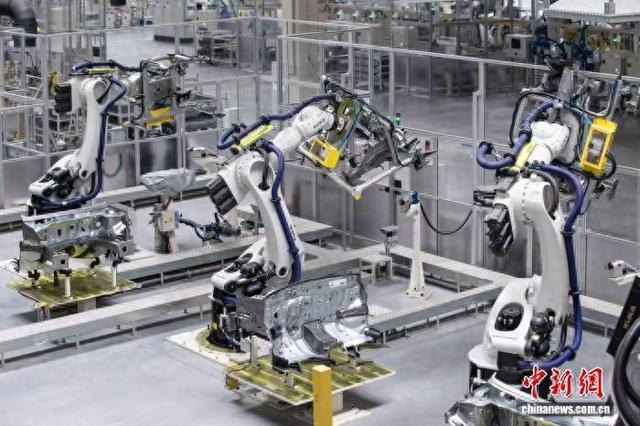
Core Insights - Chengdu is focusing on the development of 17 key industrial chains to transform industrial advantages into development momentum [1] - The city aims to achieve double-digit growth in 10 key industrial chains by 2025, increasing the number of billion-level industrial chains to 13 and national-level industrial clusters to 17, ranking first among sub-provincial cities [3] Group 1: Key Industrial Chains Development - Chengdu's modern industrial system is structured as "9+9+10," with significant achievements in key industrial chain construction, placing multiple sectors in the national top tier [1] - The city has seen breakthroughs in strong chain reinforcement, brand building, and integration of technology and production, with three companies listed in Fortune's "China's Top 50 Tech Companies" [3] - The artificial intelligence sector is projected to exceed 150 billion yuan by 2025, with a year-on-year growth of over 39%, and Chenghua District has become the only national-level full industrial chain cluster for embodied intelligent robots in the West [3] Group 2: Future Plans and Initiatives - For the 14th Five-Year Plan, Chengdu has outlined eight key work focuses for industrial chain construction, including nurturing market entities and enhancing project construction [4] - The city plans to implement actions to increase product variety, improve quality, and create brands, aiming to cultivate over 100 "Chengdu Industrial Boutique" products [4] - Chengdu will explore scene innovation to address the initial purchase and use barriers of new technologies and products, while also enhancing cross-industry collaboration and optimizing the industrial ecosystem [4][5]
维信诺:合肥建曙的股权结构发生变动
Xin Lang Cai Jing· 2026-02-24 07:49
Group 1 - The core point of the article is that Hefei Jianxu Investment Co., Ltd., a major shareholder of Visionox, has undergone a change in its equity structure, which has been officially registered [1] - Hefei Shushan Investment Holding Co., Ltd. has signed a share transfer agreement to acquire 100% equity of Hefei Jianxu from Hefei Shushan Construction, with the transfer being conducted at zero consideration [1] - Following the completion of this share transfer, Hefei Shushan Investment will directly hold 100% of Hefei Jianxu's equity, changing the controlling shareholder from Hefei Shushan Construction to Hefei Shushan Investment, while the actual controller of Hefei Jianxu remains unchanged [1]
成都市重点产业链图谱
Xin Lang Cai Jing· 2026-02-23 20:39
Core Insights - Chengdu has established 13 trillion-level industrial chains, with a target of achieving double-digit revenue growth in 10 chains by 2025, solidifying its position as a national advanced manufacturing base [1] - The modernization of industrial chains is crucial for high-quality development and urban modernization, with a goal to form more trillion-level and trillion-level industrial clusters by 2025 [1] Artificial Intelligence - The core industry scale of artificial intelligence in Chengdu is expected to exceed 150 billion yuan by 2025, with a year-on-year growth of over 39% and an average growth rate of 35% over the past three years [2] Integrated Circuits - Chengdu aims to build a national integrated circuit industry strategic backup base, with over 400 companies in the sector, including major players like BYD Semiconductor [2] New Display Technology - The display industry in Chengdu is projected to generate revenue of 107.9 billion yuan in 2025, with a year-on-year growth of 17.2% [3] Software and Information Services - Chengdu's software and information services sector is expected to achieve a revenue of 840.18 billion yuan by 2025, reflecting a year-on-year growth of 10.2% [3] Low-altitude Economy - The low-altitude equipment manufacturing sector has over 200 companies, with a total industry scale exceeding 33 billion yuan [3] Aerospace - Chengdu is recognized as a key city for aerospace industry development, with multiple national-level designations and a focus on building a modern aerospace industry cluster [4] Rail Transit - Chengdu is the only city in China with rail transit as its leading industry, with over 300 companies in the full industry chain and an annual production capacity of 1,500 vehicles [4] Intelligent Connected Vehicles - The automotive industry is the second-largest pillar in Chengdu, with a projected production of 932,000 vehicles and a revenue of 161.67 billion yuan by 2025, including a significant increase in new energy vehicles [5] Biomedicine - The biomedicine sector is expected to achieve a revenue of 76.37 billion yuan by 2025, with the addition of new top pharmaceutical companies and "little giant" enterprises [5] Advanced Energy - The advanced energy industry is projected to generate 188.42 billion yuan in revenue by 2025, with a year-on-year growth of 11.2% [6] New Materials - The new materials industry is expected to achieve a revenue of 247.66 billion yuan by 2025, reflecting a year-on-year growth of 10.9% [6] Cultural Tourism (Digital Cultural Creation) - The digital cultural creation sector is projected to generate a total revenue of 413.97 billion yuan by 2025, with a year-on-year growth of 8.3% [6] Platform Economy - The platform economy aims to exceed 770 billion yuan in online retail sales by 2026, with a growth rate of over 5% [7] Modern Logistics - The modern logistics sector is targeting a scale of 152.9 billion yuan by 2026, with a year-on-year growth of 5.5% [7] Green Food Processing - Chengdu's green food industry is expected to exceed 160 billion yuan in scale by 2025, ranking fourth among sub-provincial cities [7] Communication and Quantum Technology - By 2025, Chengdu will have 94 companies in communication and quantum technology, generating a revenue of 75.08 billion yuan, focusing on key areas such as next-generation communication and quantum computing [8]
国际标准研制数量翻番 山东标准国际化工作实现“质效双升”
Qi Lu Wan Bao· 2026-02-13 09:29
Core Insights - Shandong Province is making significant progress in international standardization, with 58 international standards in fields such as smart home appliances, smart cities, and new materials set to be established by 2025, representing a 100% increase from 2024 [1] Group 1: International Standards Development - The province has led the creation of the world's first international standard for quantum dot light conversion films, which are essential materials for new display technologies, enhancing color vibrancy and reducing energy consumption [2] - An international standard for data protection in additive manufacturing (commonly known as 3D printing) has been established, marking the first global guidelines for data protection levels in this sector [2] - Shandong has achieved a breakthrough in international standards for the poultry slaughtering sector, marking its first entry into international standards in animal husbandry [2] Group 2: International Collaboration and Events - The Qingdao International Standardization Conference was successfully held, attracting representatives from seven national standardization organizations and 380 international guests to discuss cooperation in artificial intelligence, low-altitude economy, and green low-carbon transformation [2] - The province hosted the first Shanghai Cooperation Organization standardization cooperation meeting and the 2025 Sino-German Standardization Cooperation Committee meeting, promoting regional economic development through standard cooperation [2] - The release of the "Qingdao Initiative" for strengthening standardization cooperation among Shanghai Cooperation Organization member states aims to foster research collaboration in artificial intelligence and quantum technology [2] Group 3: Future Directions - The Shandong Provincial Market Supervision Administration plans to continue guiding local enterprises in advancing international standard development, enhancing international standardization exchanges, and accelerating the opening of standard systems to improve industrial competitiveness and contribute to global high-quality development [3]