产业链生态

Search documents
成都“新春第一会”聚焦产业链 当地人工智能产业规模已达1500亿元
Zhong Guo Jing Ying Bao· 2026-02-26 05:45
Core Insights - Chengdu is focusing on the high-quality development of 17 key industrial chains, aiming to transform industrial advantages into development momentum under the theme "Chain Drives the Future" [1] - By 2025, Chengdu's GDP is projected to reach 2.48 trillion yuan, with a growth rate of 5.8%, leading among the top ten cities and 15 sub-provincial cities in China [1] Industrial Chain Development - Chengdu has achieved significant progress in industrial chain construction, with 13 industrial chains expected to reach a scale of over 100 billion yuan by 2025 [2] - The city is accelerating the establishment of a "9+9+10" modern industrial system, which includes 9 major characteristic industries, 9 strategic emerging industries, and 10 future industry segments [2] - Chengdu has two trillion-level industrial clusters and 14 hundred-billion-level parks, ranking first among sub-provincial cities in terms of national advanced manufacturing clusters and characteristic industrial clusters for small and medium enterprises [2] Innovation and Industry Highlights - The artificial intelligence industry in Chengdu is projected to exceed 150 billion yuan by 2025, with a year-on-year growth of over 39% [3] - The digital cultural and creative industry is expected to achieve total revenue of 413.97 billion yuan in 2025, with an 8.3% year-on-year growth, placing it among the top in the nation [3] - The aerospace industry has over 1,000 enterprises, with a scale nearing 140 billion yuan, showcasing significant achievements such as the launch of the world's first AI intelligent satellite constellation [3] Ecosystem and Future Outlook - The completeness of the industrial chain ecosystem is crucial for innovation, enabling faster problem-solving and collaboration among enterprises [4] - Chengdu has outlined eight key focus areas for industrial chain construction in 2026, including nurturing enterprises, targeted investment, and enhancing product quality and brand creation [5]
去年德国对华投资同比增长超过55%、英国增长15.9%、瑞士增长66.8%——欧洲企业既“向东看”又“向东投”(国际视点)
Ren Min Ri Bao· 2026-02-02 22:26
Group 1 - Since 2025, trade and investment between China and Europe have shown stable and healthy development, with European companies increasingly investing in China, such as a 15.9% increase in UK investments and a 66.8% increase from Switzerland [1] - In 2025, Germany's new investments in China are expected to reach approximately 7 billion euros, a growth of over 55% compared to 2024, marking the highest level since 2021 [1] - About 25% of European companies in China are shifting more production processes to China, highlighting the country's importance in their global strategies [1][2] Group 2 - High-end manufacturing and technology-intensive industries have become the main sectors for European investments in China, with 80% of European pharmaceutical companies planning to expand their production in the Chinese market [2] - The comprehensive advantages of China, including cost-effectiveness and a complete industrial ecosystem, are attracting European companies to invest, as seen in BASF's significant investment in its Zhanjiang integrated base [2] - European companies are increasingly viewing China not just as a sales market but as a competitive export base, with Bosch planning to invest approximately 10 billion RMB in Suzhou for advanced manufacturing [3] Group 3 - The EU manufacturing sector's direct investment in China has been steadily increasing, with greenfield investments reaching a record high of 3.6 billion euros in Q2 2024 [4] - A survey indicates that 93% of German companies in China plan to continue deepening their market presence, with 53% intending to increase investments [4] - China's efforts to create a stable and transparent business environment have encouraged European companies to invest, as demonstrated by Danfoss's new production base in Zhejiang [4] Group 4 - The deep integration of Chinese and European industries benefits both sides and provides certainty in an uncertain global economy, with 68% of surveyed German companies engaging in overseas business cooperation with Chinese firms [5] - Schneider Electric is enhancing collaboration with Chinese battery manufacturers and EV charging infrastructure suppliers, indicating a broad space for cooperation in technology innovation and green transformation [5]
政策与生态共振 助力深圳“强芯”
Shen Zhen Shang Bao· 2026-01-01 22:00
Core Insights - Shenzhen is accelerating the construction of a complete semiconductor industry chain, from chip design to manufacturing and ecological applications, to promote high-quality development in the semiconductor industry [1] Group 1: Industry Development - As of the end of 2024, Shenzhen will have a total of 727 integrated circuit companies, including 456 design companies, 8 manufacturing companies, 82 packaging and testing companies, 133 equipment and component companies, and 48 materials companies [1] - By the first half of 2025, the scale of Shenzhen's integrated circuit industry is expected to reach 142.4 billion yuan, representing a year-on-year growth of 16.9% [1] Group 2: Policy Initiatives - Following the release of the "Shenzhen Action Plan for Cultivating and Developing the Semiconductor and Integrated Circuit Industry Cluster (2022-2025)," Shenzhen issued further measures in July 2025 to promote high-quality development in the semiconductor and integrated circuit industry [1] - The new measures focus on breakthroughs in high-end chip products, strengthening chip design support, accelerating the promotion of EDA tools, and overcoming challenges in core equipment and supporting components [1] Group 3: Recommendations for Growth - Suggestions include enhancing support for small and medium-sized high-tech enterprises to identify potential future leaders in the industry [2] - Emphasis on strengthening application scenarios to drive progress in both hardware and software, with increased support for upstream industries like core EDA design software and advanced packaging [2] - A dual approach is recommended for hardware and ecosystem development, including guiding funds to promote hardware companies' ecological transformation and establishing special subsidies for software companies to adapt to domestic architectures [2]
宁德举办锂电新能源产业专题推介会,签约项目总投资74.7亿元
Zhong Guo Xin Wen Wang· 2025-12-29 00:15
Core Insights - The Ningde City Lithium Battery New Energy Industry Promotion Conference was held to showcase the city's industrial development advantages and attract projects to enhance the competitiveness and resilience of the lithium battery new energy industry [1][2] - Ningde's lithium battery industry is in a golden development period, with significant investments and a complete industrial chain ecosystem being established [1] Group 1: Industry Development - Ningde has attracted over 200 supporting enterprises, creating a cluster in lithium battery new energy, new energy vehicles, stainless steel new materials, and copper materials, with a projected total output value of nearly 600 billion yuan by 2025 [1] - The production capacity of CATL's manufacturing base in Ningde has reached 330 GWh, with an additional 170 GWh capacity under construction and planned, connecting over 90 upstream and downstream enterprises [1] Group 2: Investment and Projects - During the promotion conference, 10 projects were signed with a total investment of 7.47 billion yuan, expected to generate an output value of 12.14 billion yuan upon reaching full production [2] - CATL plans to increase investments in energy storage, power batteries, and recycling businesses, encouraging partners to establish key links in the industrial chain in Ningde [2] Group 3: Government Initiatives - Ningde City is focusing on integrating innovation, industry, finance, and talent to enhance the quality and efficiency of key industrial chains [2] - The promotion conference aimed to showcase the vitality and advantages of Ningde's lithium battery new energy industry, facilitating collaboration between government and enterprises [2]

手握超9亿吨石灰石资源!上峰水泥表示不盲目扩张水泥主业 打造产业投资“第二曲线”
Zhong Guo Zheng Quan Bao· 2025-12-18 03:32
Core Viewpoint - The company has achieved industry-leading ROE for five consecutive years through operational efficiency rather than scale expansion, positioning its cement business as a cash flow fortress while strategically investing in new sectors like semiconductors [1][4]. Group 1: Cement Business Performance - The company has maintained an average ROE of 17.83% over the past five years, with sales gross margin consistently ranking among the top in the industry [3]. - The company controls over 900 million tons of limestone resources, ensuring cost efficiency and a robust national layout that enhances risk resilience [3]. - In 2024, the company's operating cash flow is projected to reach 1.039 billion yuan, with a year-on-year growth of 23.99% in the first half of 2025 [3]. Group 2: Strategic Investment in Semiconductors - The company has invested over 2 billion yuan in the semiconductor sector, focusing on creating a chain ecosystem that includes chip design, manufacturing, and testing [6]. - The company’s equity investment business contributed over 22% to net profit in 2024, with cumulative profits of 530 million yuan over five years [6]. - Recent investments include successful listings of companies in the semiconductor field, indicating a shift from financial investment to deeper industrial collaboration [7]. Group 3: Future Growth Strategy - The company aims to develop a synergistic model comprising traditional building materials, equity investment, and new material growth businesses, referred to as the "three driving forces" [9]. - The strategic plan includes enhancing operational efficiency in the cement business while preparing to invest over 3 billion yuan in equity assets [9]. - The company is transitioning from being an "efficiency champion" in a cyclical industry to an "industry enabler" focused on high-quality transformation [9].


扫地机鼻祖,被谁卷死了?
创业邦· 2025-12-17 03:18
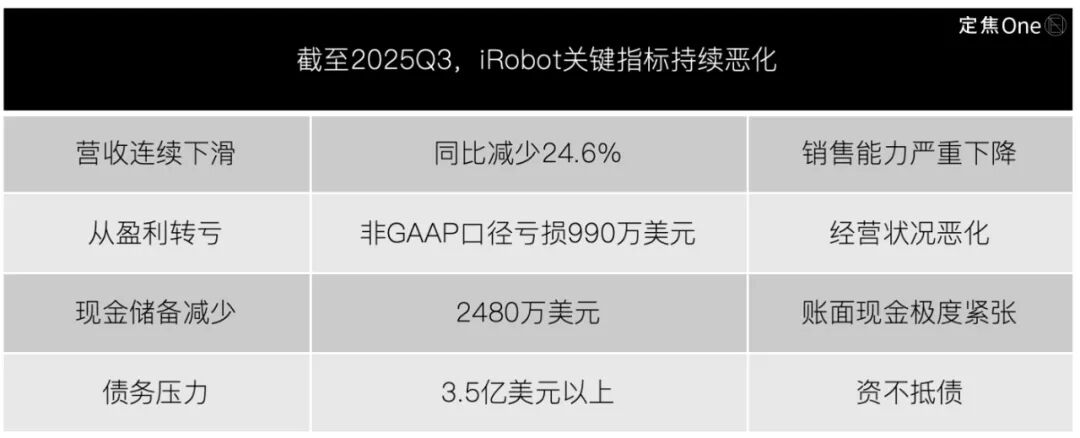
Core Viewpoint - The article discusses the downfall of iRobot, a pioneer in the robotic vacuum industry, which has filed for Chapter 11 bankruptcy protection and is being acquired by its Chinese manufacturing partner, Shenzhen Sanchuan Robotics, due to overwhelming debt and declining market share [4][5][16]. Financial Performance - iRobot's revenue has continuously declined, with a year-on-year decrease of 24.6% [6]. - The company has shifted from profitability to a non-GAAP loss of $9.9 million, indicating deteriorating operational conditions [6]. - Cash reserves have dwindled to $24.8 million, highlighting severe financial strain [6]. - Total debt exceeds $350 million, leading to insolvency [6][14]. Market Position and Competition - iRobot's global market share has plummeted to 7.9% by Q2 2025, ranking fifth, as it faces fierce competition from Chinese brands like Roborock and Ecovacs [20]. - In North America, iRobot's revenue from robotic vacuum products fell by 33% year-on-year in Q3 2025, marking a significant loss in its primary market [21]. - The company has lost substantial market share to Chinese brands, which have effectively captured the market through advanced product features and competitive pricing [22][24]. Supply Chain Dynamics - iRobot's reliance on Shenzhen Sanchuan as its sole manufacturer has created significant supply chain risks, especially as the company faced financial difficulties [10][14]. - The relationship between iRobot and Sanchuan has evolved from a partnership to one where Sanchuan has become the largest creditor, leading to a "debt-for-equity" acquisition [13][16]. - iRobot's inability to manage its supply chain effectively has contributed to its downfall, as it failed to adapt to market changes and technological advancements [39][42]. Technological Disparities - iRobot's commitment to visual navigation technology has hindered its competitiveness against Chinese brands that have adopted laser radar technology, which has become standard in the market [35][36]. - The slower innovation cycle of iRobot, taking 2-3 years for product iterations compared to 6-8 months for Chinese brands, has further exacerbated its market position [40]. Industry Implications - The decline of iRobot reflects a broader shift in the global supply chain dynamics, where control and innovation are increasingly in the hands of Chinese companies [43]. - The article suggests that the traditional model of brand dominance is being replaced by a new order where supply chain efficiency and responsiveness are critical for success in the smart hardware sector [43].

扫地机鼻祖,被谁卷死了?
3 6 Ke· 2025-12-17 01:00
Core Viewpoint - iRobot, a pioneer in the robotic vacuum industry, has filed for Chapter 11 bankruptcy protection and will be fully acquired by its largest Chinese manufacturer, Shenzhen Sanchuan Robotics, due to overwhelming debt and declining market share [1][2][5]. Financial Situation - iRobot's revenue has continuously declined, with a year-on-year decrease of 24.6% [2]. - The company reported a non-GAAP loss of $9.9 million, indicating worsening operational conditions [2]. - Cash reserves have dwindled to $24.8 million, highlighting severe financial strain [2][5]. - Total debt exceeds $350 million, with over 70% of this owed to Shenzhen Sanchuan [5][6]. Market Position - iRobot's global market share has plummeted to 7.9% by Q3 2025, ranking fifth in the market [10]. - The company has lost significant ground in its core North American market, where revenue from robotic vacuum products fell by 33% [10][13]. - Competitors, particularly Chinese brands like Roborock and Ecovacs, have rapidly gained market share, effectively pushing iRobot out of the leading tier [10][12][14]. Competitive Dynamics - iRobot's decline is attributed to its inability to compete with Chinese brands that offer advanced features and better pricing [8][18]. - The shift in technology preference from camera-based navigation to laser radar (Lidar) has left iRobot at a disadvantage, as it continued to rely on its older technology [18][19]. - Chinese brands have established a more efficient supply chain and product development cycle, allowing them to respond quickly to market demands [21][24]. Supply Chain and Manufacturing - iRobot's reliance on Shenzhen Sanchuan as its sole manufacturer has created significant risks, culminating in the latter becoming its largest creditor [3][4]. - The relationship between iRobot and Sanchuan has evolved from a partnership to one where Sanchuan now controls iRobot due to its debt acquisition [7][18]. - iRobot's attempts to negotiate new funding or debt relief were unsuccessful, leading to the decision to file for bankruptcy protection [6][24].
全球每7块屏有1块来自这里,广州黄埔凭什么稳坐显示产业第一梯队
3 6 Ke· 2025-12-16 08:01
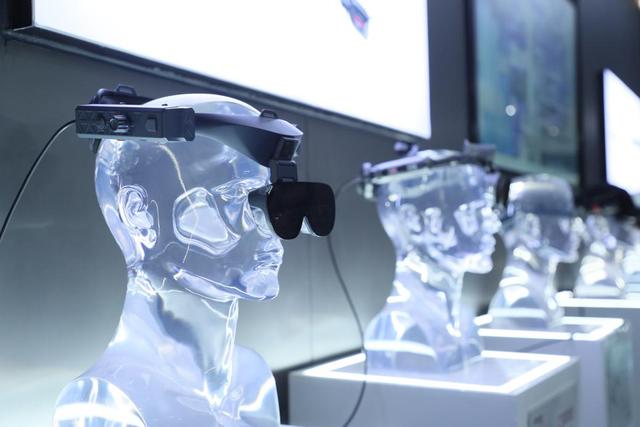
Core Insights - Guangzhou Huangpu is emerging as a hub for innovative industries, particularly in the AR optical module sector, with companies like Nika Optics leading the way in developing advanced technologies such as ultra-thin holographic waveguide lenses [1][5][7] - The new display industry in Huangpu is projected to exceed 150 billion yuan in output by 2024, accounting for over 75% of Guangzhou's total, with a reported output of 110 billion yuan from January to October 2025 [1][12] Group 1: Industry Development - Huangpu has transformed into a key area for the optical industry, showcasing intense competition and technological advancements over the past two decades [2] - The district has attracted major projects, including LG Display, which laid the foundation for the display industry, and has since seen the establishment of significant production lines like TCL Huaxing [3][12] - The complete industrial ecosystem in Huangpu includes upstream materials, midstream panels/modules, and downstream applications, making it a core growth area for the new display industry [3][12] Group 2: Technological Innovations - Nika Optics has achieved 100% domestic production of holographic photoresist materials, overcoming previous foreign dependencies, and plans to launch a 0.4mm version of its lens [5][7] - Guandong Technology is recognized for its comprehensive capabilities in both array and holographic waveguide technologies, capturing a 35% market share in the domestic industrial AR sector by 2024 [9] - Guangna Siwei has introduced the world's first mass-produced carbon-silicon etched waveguide product, which is only 0.7mm thick and weighs 4 grams, aiming to become a core supplier in the AR industry [9][14] Group 3: Ecosystem and Support - Huangpu's complete supply chain and supportive industrial policies have attracted companies like Nika Optics, which benefits from local resources and investment [7][13] - The establishment of national innovation centers in Huangpu has facilitated breakthroughs in core materials and equipment, enhancing the region's competitive edge [14][15] - Financial support initiatives, including a 10 billion yuan investment fund for the ultra-high-definition video industry, have been implemented to bolster the growth of the display sector [16][17]
上峰水泥董事长俞锋: 传统主业筑基 打造产业投资“第二曲线”
Zhong Guo Zheng Quan Bao· 2025-12-14 21:29
Core Insights - The core viewpoint of the article emphasizes that Shangfeng Cement (000672) has achieved industry-leading ROE for five consecutive years, not through scale expansion but via a profound efficiency revolution [1][2]. Group 1: Main Business Foundation - Shangfeng Cement has established a competitive advantage in the mature cement industry, achieving an average ROE of 17.83% over the past five years and maintaining high sales gross margins [2][3]. - The company has implemented refined operational measures that have resulted in superior profitability and cash generation compared to peers, with key metrics like net profit margin and per capita operating profit consistently ranking in the top three of the industry [2]. Group 2: Strategic Transformation - The company views its cement business as a "cash flow fortress," focusing on optimizing resource allocation and enhancing product structure rather than blind expansion [3][4]. - In 2024, the company is projected to generate a net operating cash flow of 1.039 billion yuan, with a year-on-year growth of 23.99% in the first half of 2025, ensuring over 1 billion yuan in annual cash flow [3]. Group 3: Investment in Semiconductor Industry - Shangfeng Cement has made significant investments in the semiconductor sector, with over 2 billion yuan invested in nearly 30 projects, including 20 semiconductor companies [4][5]. - The company aims to create a chain ecosystem in the semiconductor field, covering key areas such as chip design, manufacturing, and packaging, with a focus on long-term strategic penetration rather than financial speculation [4][6]. Group 4: Future Growth Strategy - The company is restructuring its internal governance and strategic planning to create a "second growth curve," aiming for a collaborative development model involving traditional building materials, equity investment, and new material growth [7]. - The strategic plan includes continuing to enhance efficiency in the cement business while aiming to reserve over 3 billion yuan in equity assets for investment, with a goal to develop new growth businesses in semiconductor materials within five years [7].
2025 年新一线城市名单发布,城市格局再掀波澜
Sou Hu Cai Jing· 2025-05-28 08:17
Core Insights - The "2025 New First-tier Cities Charm Ranking" has been released, highlighting the latest urban development landscape in China, with first-tier cities remaining dominated by Shanghai, Beijing, Shenzhen, and Guangzhou, while new first-tier cities include Chengdu, Hangzhou, Chongqing, Wuhan, Suzhou, Xi'an, Nanjing, Changsha, Zhengzhou, Tianjin, Hefei, Qingdao, Dongguan, Ningbo, and Foshan [1] Group 1: Chengdu - Chengdu retains its position as the top new first-tier city for the 11th consecutive year, showcasing strong comprehensive strength and a diversified industrial development [1] - The electronic information industry in Chengdu has surpassed 1 trillion yuan, with a significant number of high-tech enterprises, totaling 14,500 [1] - Chengdu ranks among the top twenty global aviation metropolises, leading in foreign trade and foreign direct investment in the central and western regions [1] Group 2: Hangzhou - Hangzhou, known as the "National Digital Economy First City," has a GDP growth of 5.2% in Q1, driven by its digital economy and new energy industries [2] - Key industries such as computer communication, automotive manufacturing, and electrical machinery have seen substantial growth rates of 20.9%, 16.5%, and 8.7% respectively [2] - Hangzhou is a strong competitor for the title of "China's Fifth City," bolstered by the presence of major internet companies like Alibaba [2] Group 3: Foshan - Foshan has made a strong comeback to the new first-tier city list, with a manufacturing sector that accounts for over 50% of its economy [2] - The city's GDP is projected to exceed 1.3 trillion yuan in 2024, with a year-on-year growth of 6.2% [2] - Foshan is actively promoting industrial intelligent transformation and benefits from the infrastructure connectivity of the Guangdong-Hong Kong-Macau Greater Bay Area [2] Group 4: Hefei - Hefei has significantly improved its ranking, achieving a GDP growth rate of 6.1% in 2024, with industrial value-added growth of 14.8% [3] - The city is rapidly developing emerging industries such as automotive, energy storage, and new-generation information technology [3] - Hefei's ranking has risen by four places to 11th, marking its highest position in the past decade [3] Group 5: Ranking Indicators - The ranking's indicator system includes commercial resource aggregation, urban hub characteristics, urban activity levels, new economic competitiveness, and future plasticity [5] - Commercial resource aggregation is assessed through brand preference, commercial core index, and commercial support maturity [5] - Urban hub characteristics are measured by transportation connectivity, intercity mobility, industrial collaboration, and regional commercial resource centrality [5] Group 6: Urban Activity and New Economic Competitiveness - Urban activity levels reflect consumer, leisure, and nightlife vibrancy, with significant increases in cultural tourism consumption in mid-sized cities [6] - New economic competitiveness is driven by enterprise leadership, new consumption indices, and industrial chain ecosystem indices, with cities like Suzhou, Hefei, and Chongqing showing notable improvements [6] Group 7: Regional Distribution - Eastern cities dominate the new first-tier city list, with Qingdao and Dongguan maintaining strong positions due to their industrial advantages [7] - Central and western cities like Chengdu, Chongqing, and Wuhan leverage resource aggregation effects to solidify their standings [7] - The competition among new first-tier cities will influence talent flow and resource allocation, impacting the evolution of China's urban development landscape [7]