元气森林汽水

Search documents
好特卖全国多地关店,部分城市新加盟叫停
新浪财经· 2025-12-16 10:30
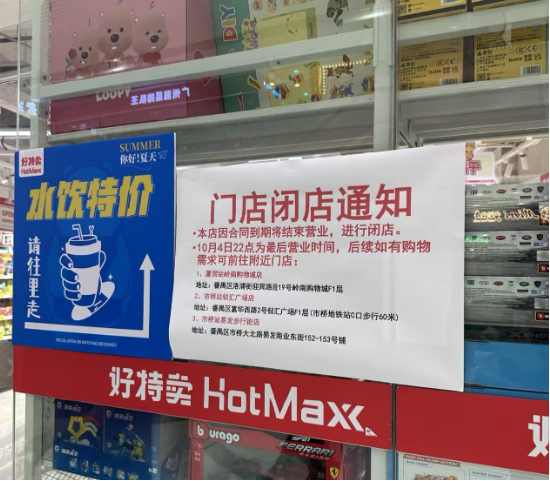
Core Viewpoint - The article highlights the recent trend of store closures by the discount retail brand "好特卖" (Hao Te Mai) in major cities, attributing this to issues such as high rental costs, lease expirations, and poor performance of certain stores [2][5][9]. Expansion and Franchise Model - In April 2023, 好特卖 transitioned to a franchise model, aiming to open around 600 new stores within the year, but the actual number of new openings has significantly decreased to just a few dozen [3][10]. - The company had over 500 stores across 32 cities at the time of the franchise launch, with plans to double its store count and achieve a gross merchandise volume (GMV) exceeding 4 billion yuan [8][10]. - The franchise investment for opening a store is approximately 800,000 to 900,000 yuan, including various fees and costs [10][12]. Store Closures and Reasons - The closures are primarily due to three reasons: high rental costs, lease expirations, and underperforming stores [9][10]. - Many of the closed stores were early direct-operated outlets that could not meet current operational needs, leading to a systematic optimization and closure process [9][10]. Market Position and Consumer Base - 好特卖 has positioned itself as a low-cost retail option, attracting young consumers with competitive pricing on various products [14]. - Data indicates that 65.5% of the consumers of discount food products are aged 19-35, highlighting the brand's appeal to younger demographics [14]. Quality Control Issues - The brand faces significant quality control challenges, with numerous complaints regarding expired or substandard products, leading to administrative penalties for mislabeling and selling expired goods [15][19]. - The proportion of near-expiry products has decreased from nearly 100% at the start to between 5% and 30% currently, as the company seeks to diversify its product offerings [19].


好特卖全国多地关店,部分城市新加盟叫停
Xin Lang Cai Jing· 2025-12-16 09:54
Core Insights - The company is closing stores in major cities such as Guangzhou, Changsha, Hangzhou, and Beijing due to issues related to rental costs, lease expirations, and poor performance of some locations [2][3][19] - Over the past year, the company's expansion has significantly slowed down, with plans to open around 600 new stores in 2023 being drastically reduced to only a few dozen [2][18] - Founded in 2020, the company has raised five rounds of funding from various investors and initially experienced rapid growth, becoming a prominent player in the discount retail sector [2][18] Store Closures - The closures are primarily attributed to three factors: high rental costs, lease expirations, and underperforming stores [19] - Many of the closed stores were early direct-operated locations that no longer met operational needs, prompting a systematic optimization process [19] - The company is also adjusting its strategy to focus on relocating stores to better positions and controlling costs [19] Franchise Model Shift - In April 2023, the company transitioned to a franchise model, which initially led to rapid growth, doubling the number of stores and achieving a gross merchandise volume (GMV) exceeding 4 billion yuan [6][18] - However, the expansion strategy has shifted significantly, with a focus now on supporting existing franchisees rather than aggressively recruiting new ones [22] - The average investment to open a franchise store is around 800,000 to 900,000 yuan, including various fees and costs [20] Sales Performance - The average daily sales per store can exceed 10,000 yuan, with some locations in Beijing achieving monthly sales of 440,000 yuan [22] - The company is now prioritizing the development of existing franchisees who typically own multiple stores, rather than pursuing new franchise opportunities [22] Quality Control Issues - The company has faced criticism regarding product quality, with numerous complaints about expired or substandard items [23][25] - It has been penalized multiple times for issues related to labeling and selling expired products, with fines ranging from 5,000 to 50,000 yuan [25] - The proportion of near-expiry products has decreased from nearly 100% at the start to between 5% and 30% currently, as the company diversifies its product offerings [25]