品控问题

Search documents
70亿营收跻身乳企前十,认养一头牛如何穿越品控暗礁?
Guo Ji Jin Rong Bao· 2026-01-26 06:55
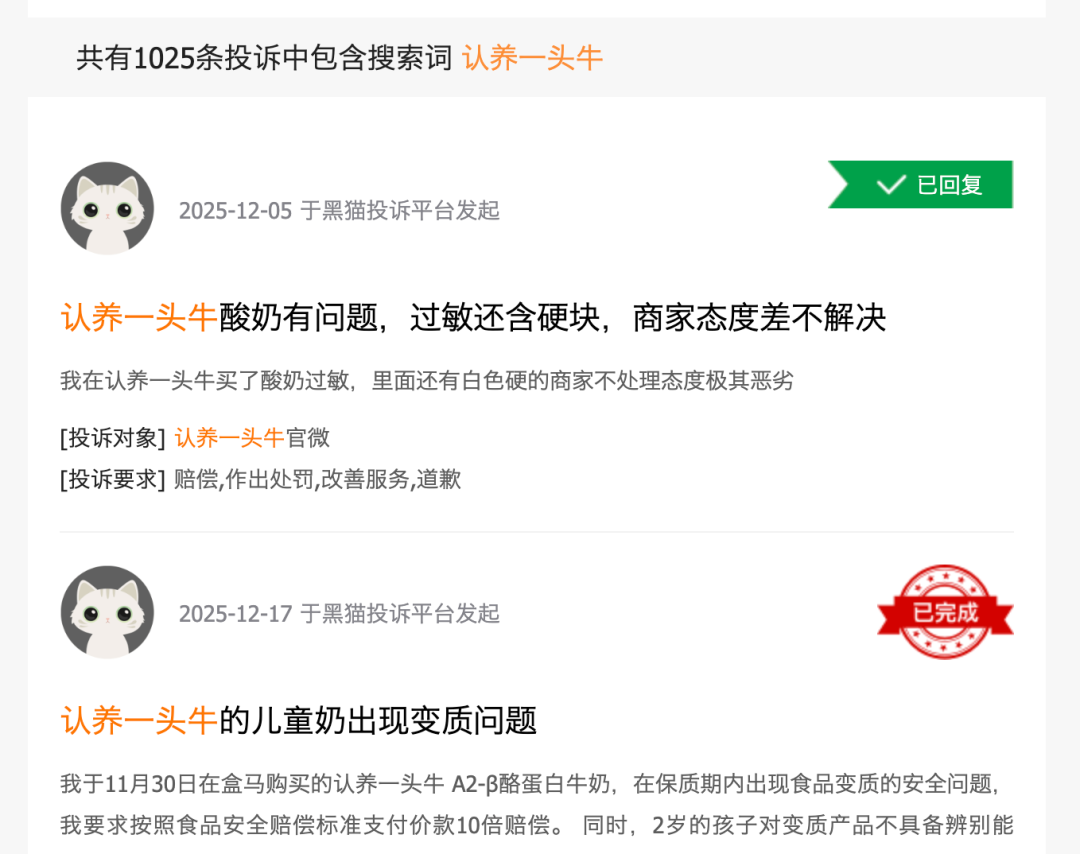
Core Insights - The company "Renyang Yitou Niu" projects revenue exceeding 7 billion yuan in 2025, representing a growth of approximately 40% from over 5 billion yuan in the previous year, showcasing impressive performance for a brand established less than a decade ago [1] - The company has positioned itself among the top ten in the national dairy industry, despite the current oversupply phase affecting overall industry performance [1] - The appointment of actress Zhao Liying as the brand's first spokesperson indicates the company's ambition to transition from an e-commerce-driven brand to a national brand [1] Financial Performance - The marketing expenses of the company increased significantly from 71 million yuan in 2019 to 414 million yuan in 2021, with a compound annual growth rate of 140%, which has contributed to revenue growth from less than 900 million yuan to over 2.5 billion yuan during the same period [6] - The company aims for 70 billion yuan in revenue, marking a new milestone and presenting new challenges [6] Product Quality and Safety Concerns - Food safety and quality control issues have emerged as potential obstacles for the company's growth, with numerous complaints regarding product quality, including spoilage and packaging issues [2] - The company has faced criticism for previously relying on third-party production before establishing its own milk sources, which has raised concerns about product authenticity [4] - Recent consumer feedback highlighted issues with product expiration dates, indicating a need for improved quality control measures [4] Market Position and Strategy - The company has established ten modern dairy farms in regions such as Hebei, Heilongjiang, and Inner Mongolia, achieving a self-sufficiency rate of over 95% for its milk sources [4] - The company has successfully dominated the e-commerce milk sales rankings during major shopping events, such as "Double Eleven," through substantial advertising investments [5] - In addition to traditional dairy products, the company is expanding into the competitive infant formula market, which demands higher quality control standards [7]

有机辅食一哥的IPO困局:伪洋营销、代工迷雾、品控警钟
3 6 Ke· 2026-01-21 02:59
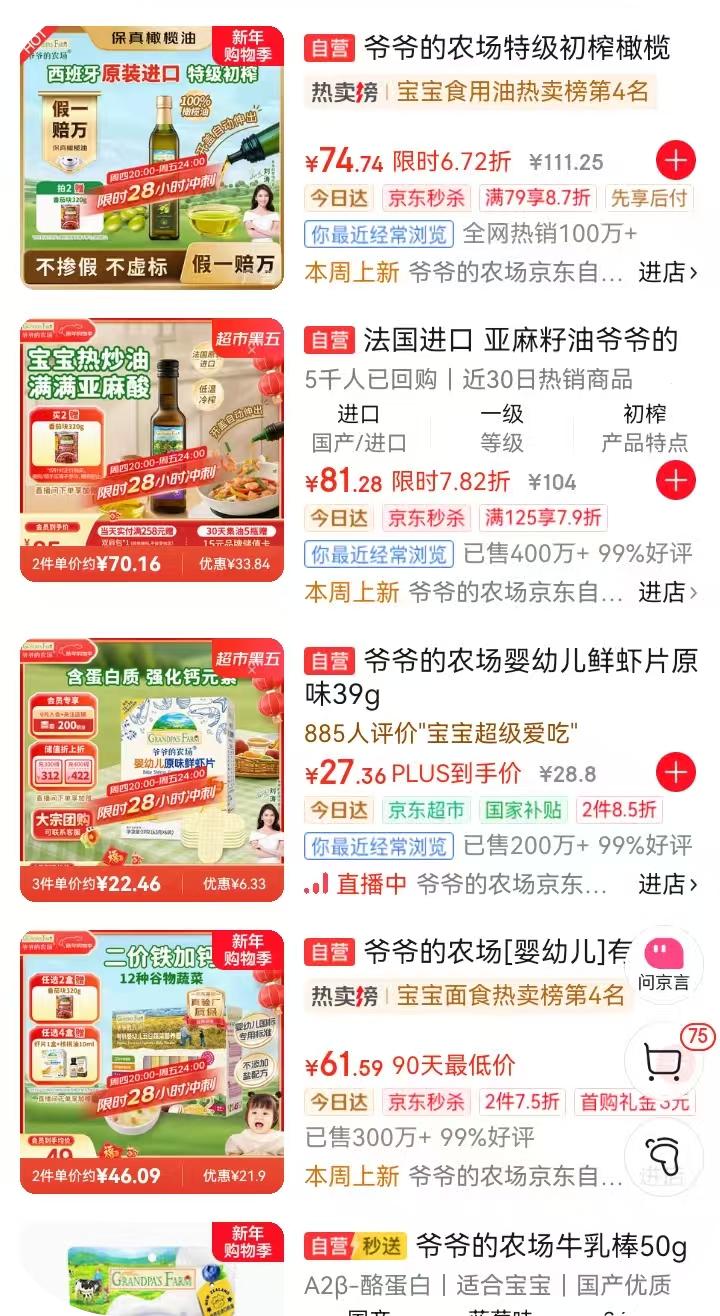
Core Viewpoint - The infant food brand "Grandpa's Farm" has submitted an IPO application to the Hong Kong Stock Exchange, aiming to strengthen its advantages in product research and development, supply chain upgrades, brand influence, and channel expansion [1]. Industry Position and Market Growth - Grandpa's Farm is recognized as a leading player in the organic infant food sector, holding the largest market share and achieving a compound annual growth rate of 42.6% over the past three years [1]. - The company has a revenue forecast of 6.22 billion yuan for 2023, 8.75 billion yuan for 2024, and 7.8 billion yuan for the first three quarters of 2025, capturing 23.2% of the organic infant food market [12]. Marketing Strategy - The brand has positioned itself as a "European infant food" brand, leveraging perceptions of higher safety and quality associated with European standards to attract consumers [3][11]. - Pricing strategies align with consumer psychology, where higher prices are perceived as indicators of safety and health, thus allowing Grandpa's Farm to command premium pricing in the market [3][11]. Product Pricing - The average selling price of Grandpa's Farm products is reported to be 30.8 yuan per item, with specific products priced significantly higher than similar offerings from competitors [4][11]. Quality Control Concerns - The company faces scrutiny regarding quality control, particularly concerning its reliance on OEM manufacturers for production, which raises questions about product safety and consistency [1][13]. - Reports indicate that some products have exceeded sodium content limits and have faced issues with ingredient quality, leading to consumer trust erosion [21][22]. Production and Supply Chain Issues - Concerns have been raised about the capabilities of the OEM manufacturers used by Grandpa's Farm, with some companies lacking adequate production capacity and transparency [15][19]. - The reliance on third-party manufacturers for production has led to significant price discrepancies between Grandpa's Farm products and those of its OEM partners [15]. Consumer Trust and Brand Integrity - The brand's growth is closely tied to consumer trust, which is jeopardized by repeated quality issues and safety concerns, highlighting the importance of actual product quality over marketing claims [22].
好特卖全国多地关店,部分城市新加盟叫停
Xin Lang Cai Jing· 2025-12-16 09:54
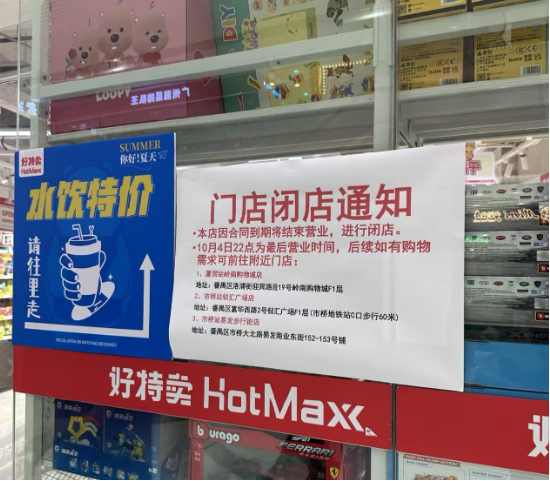
Core Insights - The company is closing stores in major cities such as Guangzhou, Changsha, Hangzhou, and Beijing due to issues related to rental costs, lease expirations, and poor performance of some locations [2][3][19] - Over the past year, the company's expansion has significantly slowed down, with plans to open around 600 new stores in 2023 being drastically reduced to only a few dozen [2][18] - Founded in 2020, the company has raised five rounds of funding from various investors and initially experienced rapid growth, becoming a prominent player in the discount retail sector [2][18] Store Closures - The closures are primarily attributed to three factors: high rental costs, lease expirations, and underperforming stores [19] - Many of the closed stores were early direct-operated locations that no longer met operational needs, prompting a systematic optimization process [19] - The company is also adjusting its strategy to focus on relocating stores to better positions and controlling costs [19] Franchise Model Shift - In April 2023, the company transitioned to a franchise model, which initially led to rapid growth, doubling the number of stores and achieving a gross merchandise volume (GMV) exceeding 4 billion yuan [6][18] - However, the expansion strategy has shifted significantly, with a focus now on supporting existing franchisees rather than aggressively recruiting new ones [22] - The average investment to open a franchise store is around 800,000 to 900,000 yuan, including various fees and costs [20] Sales Performance - The average daily sales per store can exceed 10,000 yuan, with some locations in Beijing achieving monthly sales of 440,000 yuan [22] - The company is now prioritizing the development of existing franchisees who typically own multiple stores, rather than pursuing new franchise opportunities [22] Quality Control Issues - The company has faced criticism regarding product quality, with numerous complaints about expired or substandard items [23][25] - It has been penalized multiple times for issues related to labeling and selling expired products, with fines ranging from 5,000 to 50,000 yuan [25] - The proportion of near-expiry products has decreased from nearly 100% at the start to between 5% and 30% currently, as the company diversifies its product offerings [25]
突发!山姆爆雷,3亿中产天塌了!
Xin Lang Cai Jing· 2025-10-23 11:26
Core Insights - The article highlights the growing concerns regarding product safety and quality control at Sam's Club, particularly affecting middle-class families who have relied on the brand for trusted products [1][10][25] Group 1: Product Safety Issues - Recent administrative penalties from the Shanghai Market Supervision Administration revealed that a FILA children's scooter failed safety standards, raising alarms among parents [2][6] - The problematic batch of scooters included 64 units, with 61 already sold, indicating that over 95% of the defective products had reached consumers [6] - Another product, a Lenzing Tencel children's three-piece set, also failed to meet national standards for color fastness, posing potential risks for infants [7][9] Group 2: Consumer Trust Erosion - The frequency of quality control issues has led to a significant erosion of consumer trust, particularly among middle-class families who previously viewed Sam's Club as a reliable source [10][18][25] - Instances of foreign objects found in food products and complaints about poor customer service have further fueled dissatisfaction [13][24] - The shift from high-end to more generic products has been noted by long-time members, contributing to a sense of betrayal [21][24] Group 3: Business Performance and Strategy - Sam's Club has experienced rapid growth, with a reported 30.1% increase in net sales year-over-year and membership numbers exceeding 9 million [19][21] - The new CEO's strategy focuses on supply chain efficiency and cost control, which may compromise product quality in favor of rapid expansion [21][24] - The imbalance between scale and quality has resulted in systemic risks, as the company struggles to maintain its quality control standards amid aggressive growth [24][30] Group 4: Market Dynamics - The changing landscape of retail, with increased competition from e-commerce and local membership stores, has provided consumers with more options, reducing their reliance on Sam's Club [29][30] - The emotional connection that middle-class families had with the brand is being tested, as safety concerns for children's products become paramount [28][30] - The article suggests that the initial reasons for paying the membership fee are being questioned, as consumers weigh the value of quality against the risks of compromised safety [31]


刺痛家长!山姆FILA滑板车被检出窒息风险,98件儿童床品复检仍不合格
Guo Ji Jin Rong Bao· 2025-10-20 13:57
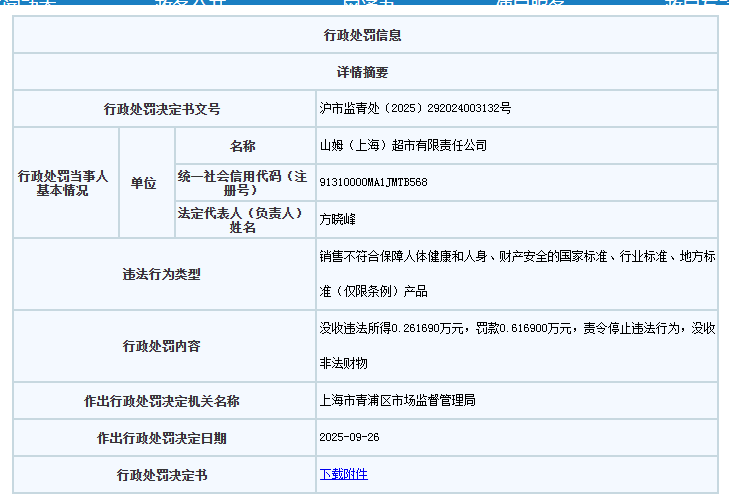
Core Viewpoint - Sam's Club (Shanghai) faced administrative penalties due to quality issues with two children's products, raising concerns about its product safety standards and brand reputation in the market [1][4]. Group 1: Administrative Penalties - On September 26, 2025, the Shanghai Qingpu District Market Supervision Administration issued penalties against Sam's Club for selling products that did not meet national safety standards, including a fine of 616,900 yuan and confiscation of illegal gains totaling 261,690 yuan [2]. - The first incident involved a FILA scooter that failed safety tests, with 61 out of 64 units sold, totaling a value of 12,338 yuan [1][4]. - The second incident involved a Lenzing Tencel children's bedding set, which had colorfastness issues, leading to the sale of 12 out of 98 units, with a total value of 22,530.2 yuan [3][4]. Group 2: Brand Reputation and Consumer Trust - The penalties contrast sharply with Sam's Club's established image as a "high-quality membership supermarket," raising questions about its quality control systems [4][5]. - The company has over 9 million paid members in China, generating significant revenue, which increases consumer expectations for product quality and safety [4][5]. - Recent quality control issues, including food safety concerns, have eroded consumer trust and brand reputation, highlighting the pressures on Sam's supply chain and internal management processes [6][7].
英氏控股IPO:业绩增长疲态尽显用近4成收入营销、研发费用率<1% 除米粉外辅食全靠代工、频因品控问题遭控诉
Xin Lang Zheng Quan· 2025-08-12 08:32
Core Viewpoint - Ying's Holdings Group Co., Ltd. has submitted an IPO application to the Beijing Stock Exchange, aiming to raise 334 million yuan for various projects, despite showing signs of declining performance in recent years [1][3]. Financial Performance - Ying's Holdings reported revenue of 1.296 billion yuan in 2022, 1.758 billion yuan in 2023, and 1.974 billion yuan in 2024, with year-on-year growth rates of 37.35%, 35.67%, and 12.29% respectively [3]. - The company's net profit attributable to shareholders was 117 million yuan in 2022, 220 million yuan in 2023, and 211 million yuan in 2024, with growth rates of 64.91%, 87.67%, and a decline of 4.36% [3]. - In the first quarter of 2025, the company achieved a revenue of 540 million yuan, a year-on-year increase of 12.29%, and a net profit of 79 million yuan, up 4.73% [3]. Business Segmentation - In 2024, the revenue from infant complementary food reached 1.524 billion yuan, growing by 5.48% and accounting for 77% of total revenue [5]. - Revenue from infant hygiene products was 340 million yuan, up 31.28%, making up 17% of total revenue [5]. - Revenue from children's food was 95 million yuan, showing a significant increase of 159.7%, representing 5% of total revenue [5]. Production and Quality Control - Ying's Holdings relies heavily on contract manufacturing for its products, with only rice flour produced in-house, leading to potential quality control issues [2][10]. - The company has faced consumer complaints regarding product quality, with issues reported on platforms like Black Cat Complaints and Xiaohongshu [2][10]. - The production capacity utilization rates for rice flour, diapers, and other products were 72.53%, 85.06%, and 85.73% respectively, indicating a reliance on external manufacturers for most products [11]. Marketing and R&D Expenditure - The company allocated nearly 40% of its revenue to marketing, with sales expenses increasing significantly from 454 million yuan in 2022 to 721 million yuan in 2024 [8]. - In contrast, R&D expenses were relatively low, at 6 million yuan, 9 million yuan, and 17 million yuan for the years 2022 to 2024, with R&D expense ratios of 0.43%, 0.52%, and 0.87% respectively [8].

百果园关店近千家,创始人谈教育消费者引热议
Sou Hu Cai Jing· 2025-08-12 04:57
Group 1 - The chairman of Baiguoyuan Group, Yu Huiyong, sparked controversy by stating that the company focuses on educating consumers rather than catering to their preferences, which led to public backlash and trending topics on social media [1] - Baiguoyuan is the largest fruit chain in China, with over 6,000 stores at its peak, 99% of which are franchise stores. However, the stock price plummeted to 0.823 HKD per share after its IPO due to stock unlocks [1] - Industry analyst Zhu Danpeng expressed a pessimistic view on Baiguoyuan's future, citing declining business and deteriorating product freshness [1] Group 2 - Quality control remains a significant challenge for Baiguoyuan, particularly due to the short shelf life of fruits, which can negatively impact the company's reputation if franchise stores sell spoiled products [2] - Baiguoyuan reported a loss of 386 million CNY for the full year of 2024, marking its first loss since 2019, and saw a net reduction of 966 retail stores, leaving 5,127 stores by the end of 2024 [2] - The number of franchise stores decreased from 6,081 to 5,116, averaging nearly 5 store closures per day [2] Group 3 - Complaints regarding Baiguoyuan, particularly related to food safety, have been frequent, with 1,769 complaints reported in recent years and 3,091 complaints on the Black Cat complaint platform [4] - The competitive fruit market offers consumers many choices, leading to low customer loyalty towards Baiguoyuan, which emphasizes the need for the company to improve product quality and service rather than adopting a didactic approach [4] - Despite a 24% increase in stock price this year, Baiguoyuan faces ongoing challenges in stock performance and business results, necessitating a strategic shift to focus on consumer needs [4]

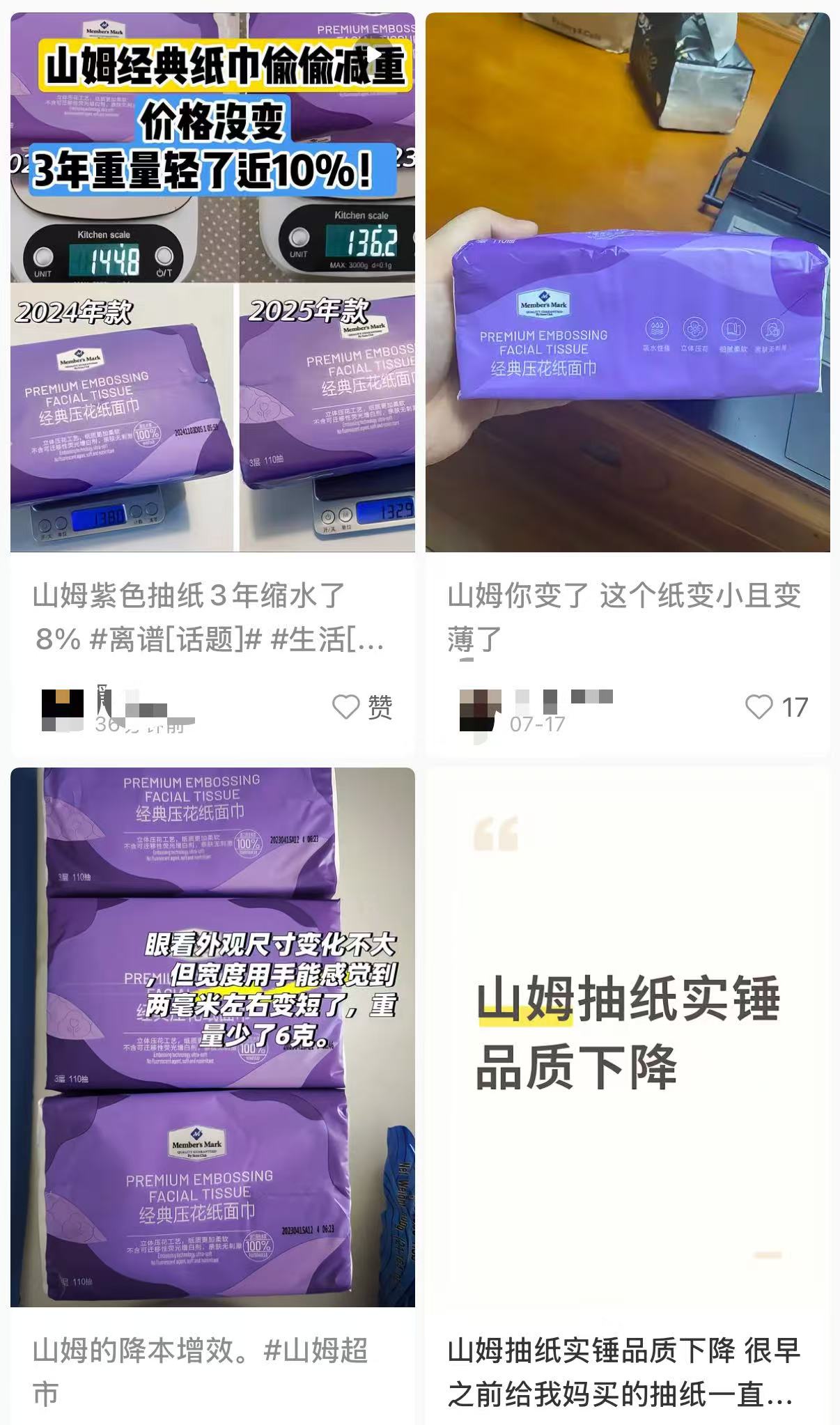
网友反映山姆抽纸偷偷减肥,紫色抽纸3年缩水8%
Qi Lu Wan Bao· 2025-07-28 09:32
Core Viewpoint - Consumers have reported a decline in the quality of Sam's Club purple tissue paper, noting that while the price has remained unchanged, the weight of the product has decreased significantly over the years, raising concerns about product quality and transparency [1]. Product Quality Concerns - A consumer weighed the purple tissue paper from 2024 and 2025, finding the weight dropped from 138g per pack to 132.9g per pack, indicating a reduction in quality [1]. - Another consumer provided weight records for the same product from 2022 and 2023, showing weights of 144.8g per pack and 136.2g per pack, respectively, highlighting a consistent trend of decreasing weight [1]. - Over the past three years, the weight of the purple tissue paper has decreased from 144.8g in 2022 to 132.9g in 2023, representing a decline of approximately 8.2% [1]. Broader Product Issues - Comments from consumers indicate that other products from Sam's Club, such as blue small pack tissues, facial towels, and cling film, have also been reported to have quality issues and weight reductions [1]. - Consumers expressed frustration over the perceived decline in product quality, with some questioning the company's quality control measures and demanding explanations [1].