光学测序仪StandardMPS

Search documents
华大智造战略“换道”:5000万美元剥离美国子公司CGI,轻资产模式深耕北美市场
2 1 Shi Ji Jing Ji Bao Dao· 2026-02-25 08:33
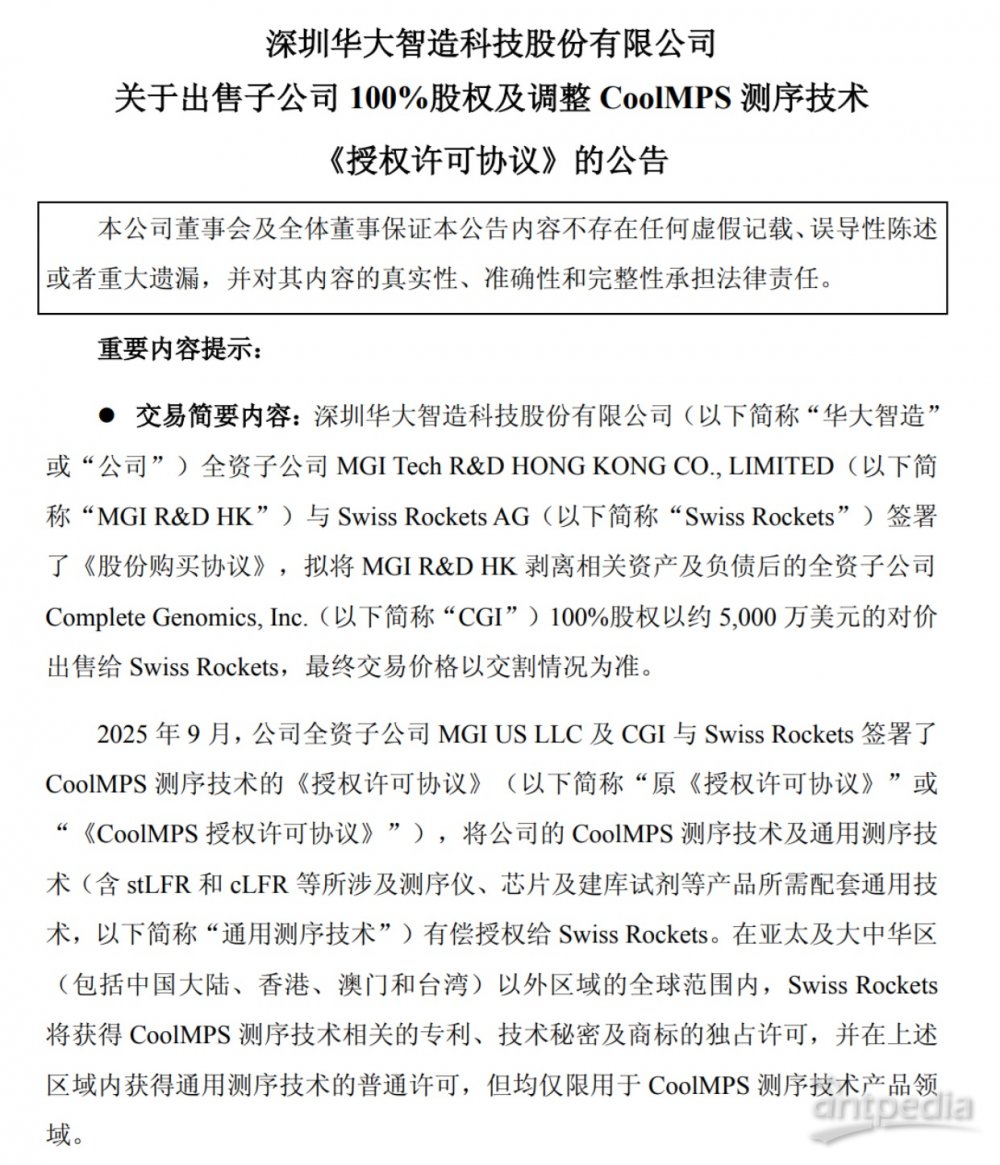
Core Viewpoint - BGI Genomics is undergoing a significant adjustment in its globalization strategy, marked by the sale of its U.S. subsidiary Complete Genomics (CGI) for $50 million to Swiss Rockets, alongside a core technology licensing agreement for its optical sequencing technology StandardMPS in North America [1][4]. Group 1: Strategic Shift - The divestiture of CGI is seen as a strategic "change of course" rather than a mere asset disposal, allowing BGI to alleviate ongoing losses and optimize its asset structure while retaining future strategic development space in North America [1][4]. - The transaction combines equity divestiture with core technology licensing, providing immediate cash flow and reducing operational uncertainties by transforming volatile business operations into structured, guaranteed licensing income [4][5]. Group 2: Financial Implications - BGI anticipates that the $50 million from the sale will significantly improve cash flow and reduce operational losses, with projections indicating a narrowing of net losses for 2025 compared to 2024 [1][5]. - The company expects to receive at least $120 million in licensing fees from Swiss Rockets, including an upfront payment of $20 million and potential milestone payments and sales shares [4][5]. Group 3: Market Context - The North American gene sequencing market is projected to reach approximately $6.87 billion in 2023, with a compound annual growth rate (CAGR) of 15.2% expected from 2024 to 2030, dominated by major players Illumina and Thermo Fisher Scientific [6]. - BGI's decision to shift focus from direct market entry to technology licensing is a response to the high compliance costs and competitive pressures in the North American market [6][8]. Group 4: Future Outlook - The transaction is part of a broader trend in the global gene sequencing industry, which is expected to exceed $25 billion by 2025 and $50 billion by 2030, with significant growth in the Chinese market [8]. - BGI's strategy aligns with national policies promoting the domestic production of high-throughput gene sequencing technologies, aiming to enhance its market position while mitigating risks associated with international operations [8][9].


全球化战略“换道”:华大智造剥离美国子公司CGI
2 1 Shi Ji Jing Ji Bao Dao· 2026-02-25 07:55
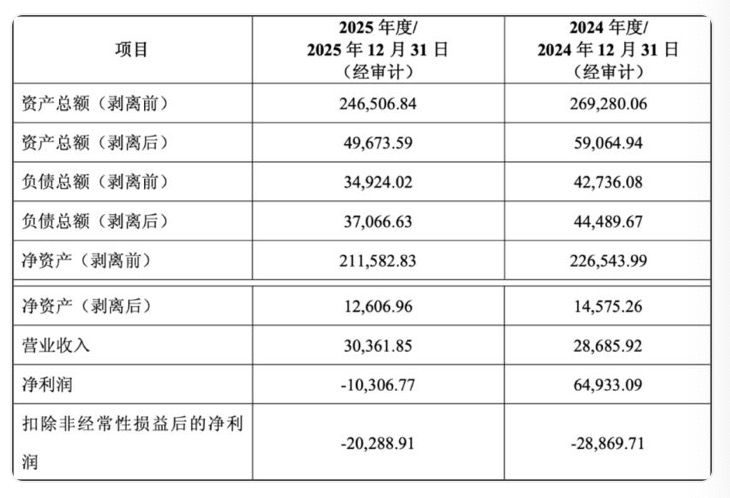
Core Viewpoint - BGI Genomics is adjusting its global strategy by divesting its U.S. subsidiary Complete Genomics (CGI) for $50 million and granting exclusive licensing of its core technology to Swiss Rockets, marking a shift from product export to technology output [1][3][10] Financial Summary - The sale of CGI is expected to provide significant direct revenue and improve cash flow for BGI Genomics [2] - BGI Genomics anticipates a net loss of 221 million to 273 million yuan in 2025, a substantial reduction of 54.56% to 63.22% compared to 2024 [1] - The financial situation of CGI shows a total asset reduction from approximately 246.5 million yuan to 49.7 million yuan post-divestiture, with net assets dropping from 211.6 million yuan to 12.6 million yuan [5] Strategic Shift - The transaction is viewed as a strategic "change of path," allowing BGI Genomics to alleviate ongoing losses and leverage Swiss Rockets' local resources for compliant operations in North America [3][6] - The deal transforms volatile business operations into structured, guaranteed licensing income, reducing operational uncertainty while retaining strategic development space in North America [3][4] Market Context - The North American gene sequencing market is projected to grow at a compound annual growth rate (CAGR) of 15.2% from 2024 to 2030, with major players like Illumina and Thermo Fisher Scientific dominating the market [6] - The global gene sequencing market is expected to exceed $25 billion by 2025, with a CAGR of over 14% anticipated through 2030 [8] Regulatory Environment - The transaction is subject to shareholder approval and regulatory reviews, introducing uncertainties regarding its completion and potential revenue [10] - BGI Genomics' strategy aligns with national policies promoting the domestic development of high-throughput gene sequencing technologies [9]