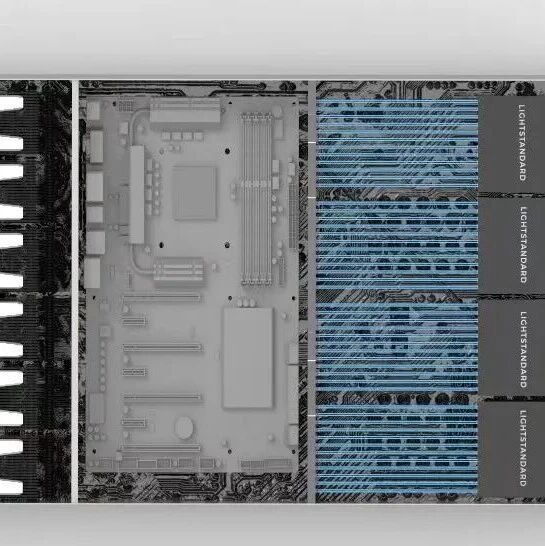
光计算产品

Search documents
迎上市热潮,AI产业链相关企业缘何择沪而“栖”?
Zhong Guo Xin Wen Wang· 2026-01-09 06:09
Core Insights - The article discusses the recent surge in AI-related companies listing in Shanghai, highlighting the city's appeal as a hub for talent and innovation in the AI industry [1][3]. Talent Ecosystem - Shanghai is recognized as one of the most attractive cities for international talent in China, drawing many young entrepreneurs in the tech sector [1]. - Shanghai Yiyu Technology, established in 2022, has a team of 385 members with an average age of 29, and over 70% of its revenue comes from international markets [1]. - Shanghai Tensu Zhixin Semiconductor Co., which went public on January 8, 2023, also cites the concentration of top chip design talent in Shanghai as a key reason for its location choice [1]. Scene Implementation - Shanghai hosts over 1,200 integrated circuit companies, accounting for approximately 40% of China's related industry talent, with more than 40 companies listed across various capital markets [3]. - Mu Xi Integrated Circuit (Shanghai) Co., founded in 2020, is set to list on the Shanghai Stock Exchange's Sci-Tech Innovation Board in December 2025 [3]. - The open and fair environment in Shanghai allows technology-focused companies to concentrate on innovation and quickly iterate their products [3]. Cutting-edge Innovation - Data from the Shanghai Municipal Economic and Information Commission indicates that the AI industry in Shanghai is thriving, with 394 large-scale enterprises generating revenue of 435.492 billion yuan (approximately 61.5 billion USD) in the first three quarters of 2025, marking a year-on-year growth of 39.6% [4]. - The demand for computing power is rapidly increasing, and Shanghai is solidifying its technological foundation for industrial innovation, with AI chip companies like Xizhi Technology emerging [4]. - Xizhi Technology's CEO believes that optical computing could provide a differentiated path for domestic computing power, akin to the transition from fuel vehicles to electric vehicles [5][6].
震惊沙特的玻璃光计算来了,比Groq更好的AI推理“最终解”?
投中网· 2026-01-04 06:35
Core Viewpoint - The article discusses the potential disruption in the global AI computing landscape due to the advancements made by Guangbenwei Technology, which is set to launch the world's first commercially viable optical computing chip with a 128×128 matrix scale in 2024, utilizing glass instead of silicon as the substrate, thereby addressing the limitations of traditional computing methods [2][4][6]. Group 1: Company Overview - Guangbenwei Technology has completed five rounds of financing within three years, attracting investments from top venture capitalists, domestic internet giants, and state-owned funds from Shanghai and Suzhou [2]. - The company showcased its optical computing products at the Saudi Industrial Transformation Exhibition, receiving high praise from Saudi officials and extensive media coverage [2]. Group 2: Technological Advancements - The new optical computing chip is expected to achieve "thousand POPS-level computing power and thousand TOPS/W energy efficiency," significantly surpassing current GPU and TPU capabilities [2][4]. - Guangbenwei Technology's optical computing products are primarily designed for AI inference scenarios, which are projected to account for 75% of total AI computing by 2030, with a market size of $255 billion [3]. Group 3: Performance Metrics - The 200mm×200mm glass optical computing chip is anticipated to deliver a computing power of 2600 POPS, which is 1400 times that of Google's TPU and 1300 times that of NVIDIA's H200 [6][9]. - The energy efficiency of the glass optical computing chip is expected to exceed 1000 TOPS/W, over 200 times that of TPU, due to its unique material properties [9][11]. Group 4: Market Implications - The shift to glass as a substrate for optical computing chips is seen as a revolutionary step that could redefine the AI computing landscape, moving towards a "full optical era" and potentially disrupting the dominance of companies like NVIDIA [4][15]. - Guangbenwei Technology aims to establish a full-stack optical computing solution that caters to various user needs, from small-scale applications to large data centers, positioning itself as a key player in the upcoming technological revolution [16].