全光计算

Search documents
震惊沙特的玻璃光计算来了,比Groq更好的AI推理“最终解”?
投中网· 2026-01-04 06:35
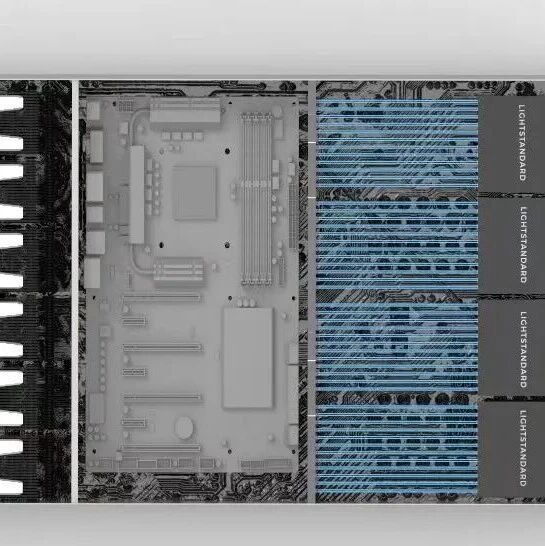
Core Viewpoint - The article discusses the potential disruption in the global AI computing landscape due to the advancements made by Guangbenwei Technology, which is set to launch the world's first commercially viable optical computing chip with a 128×128 matrix scale in 2024, utilizing glass instead of silicon as the substrate, thereby addressing the limitations of traditional computing methods [2][4][6]. Group 1: Company Overview - Guangbenwei Technology has completed five rounds of financing within three years, attracting investments from top venture capitalists, domestic internet giants, and state-owned funds from Shanghai and Suzhou [2]. - The company showcased its optical computing products at the Saudi Industrial Transformation Exhibition, receiving high praise from Saudi officials and extensive media coverage [2]. Group 2: Technological Advancements - The new optical computing chip is expected to achieve "thousand POPS-level computing power and thousand TOPS/W energy efficiency," significantly surpassing current GPU and TPU capabilities [2][4]. - Guangbenwei Technology's optical computing products are primarily designed for AI inference scenarios, which are projected to account for 75% of total AI computing by 2030, with a market size of $255 billion [3]. Group 3: Performance Metrics - The 200mm×200mm glass optical computing chip is anticipated to deliver a computing power of 2600 POPS, which is 1400 times that of Google's TPU and 1300 times that of NVIDIA's H200 [6][9]. - The energy efficiency of the glass optical computing chip is expected to exceed 1000 TOPS/W, over 200 times that of TPU, due to its unique material properties [9][11]. Group 4: Market Implications - The shift to glass as a substrate for optical computing chips is seen as a revolutionary step that could redefine the AI computing landscape, moving towards a "full optical era" and potentially disrupting the dominance of companies like NVIDIA [4][15]. - Guangbenwei Technology aims to establish a full-stack optical computing solution that caters to various user needs, from small-scale applications to large data centers, positioning itself as a key player in the upcoming technological revolution [16].

今夜,利好刷屏!高盛唱多中国股市,再上涨38%?
2 1 Shi Ji Jing Ji Bao Dao· 2025-12-22 14:26
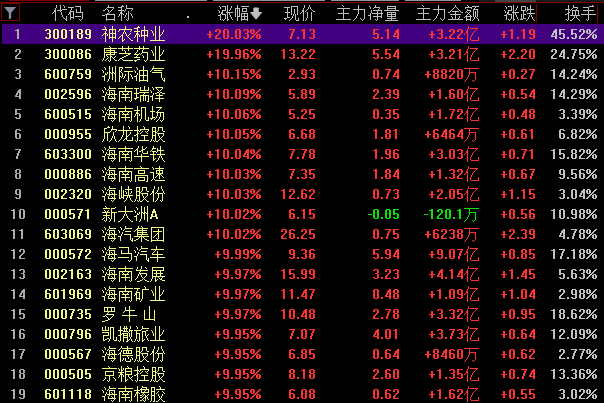
Group 1 - Hainan Free Trade Port officially implemented full island closure operations on December 18, marking a new stage of regional openness [1] - The tax-free product catalog ratio in Hainan has increased from 21% to 74%, covering approximately 6,600 items, which is expected to reduce import tax burdens by about 20% for related enterprises [2] - The duty-free sales in Sanya have exceeded 100 million yuan for three consecutive days since the closure, leading to a surge in the Hainan sector with around 20 stocks hitting the daily limit [2] Group 2 - New Yi Sheng's stock price reached a historical high of 466.66 yuan, achieving a tenfold increase from its lowest price of 46.56 yuan in April, with a market capitalization surpassing 460 billion yuan [3] - The optical communication industry is expected to see significant growth, with the global optical module market projected to exceed $37 billion by 2029, and demand for 800G optical modules expected to double by 2025 [5] - The stock market in China is experiencing a strong rebound, with Goldman Sachs predicting continued growth, estimating a 14% increase in corporate earnings next year and a potential 38% rise in the stock market by the end of 2027 [6][7] Group 3 - The demand for AI-driven optical fibers is expected to increase significantly, with prices for AI optical fibers being 5-10 times higher than traditional fibers [11] - The market is currently characterized by a focus on high-quality stocks, with a preference for growth logic as companies prepare for annual report forecasts in January [13]
《Science》发文!上海交大集成电路学院首次实现全光大规模语义生成芯片
仪器信息网· 2025-12-22 09:07
Core Viewpoint - Shanghai Jiao Tong University has developed the world's first all-optical computing chip, LightGen, which supports large-scale semantic media generation, overcoming the bottlenecks of computing power and energy efficiency. This achievement is published in the prestigious journal Science [1][10]. Research Background - The rapid evolution of deep neural networks and large-scale generative models has led to unprecedented advancements in AI, but the explosive growth in model size has created a significant gap in computing power and energy demand compared to traditional chip architectures [2]. Breakthrough in Research - The research team has introduced the LightGen chip, marking the first international achievement in large-scale all-optical generative AI chips. This chip integrates over one million optical neurons, achieves all-optical dimensional conversion, and addresses the recognized bottlenecks in training algorithms without ground truth [5]. Functionality of LightGen - LightGen has been experimentally validated for high-resolution (≥512×512) image semantic generation, 3D generation (NeRF), and video generation, among other large-scale generative tasks. It enables an end-to-end process where the chip can fully understand and manipulate semantics to generate new media data [7]. Performance Metrics - LightGen employs stringent performance evaluation standards, achieving comparable generative quality to leading electronic neural networks like Stable Diffusion and NeRF while significantly reducing system-wide time and energy consumption. Even with less advanced input devices, LightGen demonstrates a two to three orders of magnitude improvement in computing power and energy efficiency compared to top digital chips. Theoretically, with advanced input devices, it could achieve a seven orders of magnitude increase in computing power and an eight orders of magnitude increase in energy efficiency [9]. Implications for Future AI Development - The research emphasizes the necessity of developing chips capable of executing real-world tasks, particularly for large-scale generative models that are sensitive to latency and energy consumption. LightGen paves the way for next-generation computing chips, opening new research directions for faster and more energy-efficient generative intelligent computing [10].