养老院服务

Search documents
从负面印象到99%入住率,养老机构新媒体营销路径研究
Di Yi Cai Jing· 2025-08-25 11:37
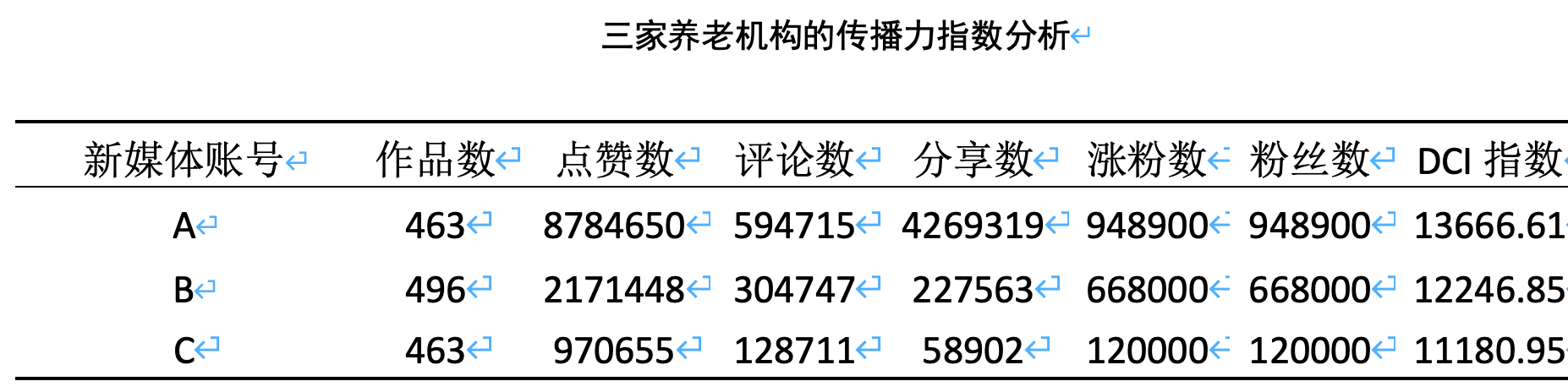
Core Insights - The article highlights the effective use of new media platforms, such as short videos, by nursing homes to enhance service quality, shape their brand identity, promote scientific aging concepts, and improve their image, leading to increased occupancy rates [1][2]. Industry Overview - By the end of 2024, the population aged 60 and above in China is projected to reach 310 million, accounting for 22% of the total population, indicating a growing trend towards institutional care due to aging and smaller family structures [1]. - Currently, there are over 400,000 nursing institutions in China, with most having an occupancy rate of only around 50% [1]. Case Studies of Nursing Homes - Three nursing homes (A in Tianjin, B in Henan, and C in Xinjiang) were analyzed for their new media marketing strategies, focusing on how these strategies align with service improvements to enhance user satisfaction and occupancy rates [2][3]. - Nursing home A utilizes humorous short videos to reshape its image and engage younger audiences, while nursing home B focuses on live broadcasts to showcase its services, achieving over 80 million views on specific content [3]. - Nursing home C, which initially struggled with a 40% occupancy rate, transformed its marketing approach and achieved a 99% occupancy rate by leveraging new media effectively [4]. Marketing Strategies - The nursing homes emphasize "IP" (intellectual property) branding, with directors as central figures to build trust and enhance service perception [8]. - Emotional resonance is a key factor in their marketing, with content that highlights daily interactions and care for residents, particularly those with Alzheimer's, generating significant engagement [9]. - Digital technology is employed to analyze user preferences and optimize marketing strategies, enhancing the overall user experience [10]. User Interaction and Conversion - The marketing process is structured in five stages: awareness, interest, connection, action, and experience, with each stage designed to foster user engagement and facilitate service purchases [11][12]. - Nursing homes have reported significant increases in user interaction and conversion rates through effective content strategies and real-time communication [12]. Recommendations for Improvement - Quality service should be the foundation of new media marketing, ensuring that promotional efforts reflect the actual service quality [13]. - Adoption of advanced technologies, such as AI, can enhance marketing effectiveness and streamline user interactions [13]. - A multi-dimensional data monitoring system is recommended to track engagement metrics and adjust strategies accordingly [13].

中国第一批养老经纪人,月入10万?
3 6 Ke· 2025-08-01 02:17
Core Insights - The Chinese government has officially recognized 17 new professions, including "Elderly Care Consultant," in response to the country's aging population, which has surpassed 14% of those aged 65 and older, marking a significant shift towards the elderly care industry as a promising sector [1][3]. Industry Overview - The elderly care industry is increasingly viewed as a "sunrise industry," with a growing number of professionals, referred to as "elderly brokers," emerging to provide consulting services for families seeking suitable elderly care facilities [1][3]. - The demand for elderly care services is rising, particularly among semi-dependent elderly individuals who can no longer rely on family members for care, leading to a notable increase in inquiries about suitable care homes [10][39]. Professional Insights - Young professionals, including those from diverse backgrounds, are entering the elderly care sector, driven by personal experiences and the recognition of the industry's growth potential [4][16][39]. - The role of elderly care consultants involves assessing the needs of elderly individuals and recommending appropriate care facilities, which requires a deep understanding of both the elderly's physical and emotional needs [6][10][20]. Market Dynamics - Despite the industry's potential, many elderly care facilities struggle with low occupancy rates, with average occupancy around 50% nationally, as many families prefer home care over institutional care [39][51]. - The financial viability of the elderly care sector remains a challenge, with most operators not yet profitable, indicating a need for a more sustainable business model in the future [39][51]. Future Outlook - The market for elderly care is expected to grow significantly in the next five to ten years as the demographic shifts continue, particularly with the retirement of the 70s and 80s generations who may have different expectations and financial capabilities for elderly care [39][53]. - There is a potential for the development of a more systematic and platform-based approach to elderly care services, similar to models seen in Japan, which could enhance the accessibility and efficiency of care options for families [51][53].