养老院

Search documents
年轻人为何向往养老院?
3 6 Ke· 2025-10-10 23:57
Core Viewpoint - A 27-year-old individual shared their experience of moving into a nursing home with their grandmother, sparking widespread discussion about the implications of such a choice for young people in contemporary society [1] Group 1: Economic Considerations - The monthly cost for the individual is 1,500 yuan, significantly lower than typical rental prices in major cities, which can exceed 1,000 yuan for a single room [6] - The nursing home offers a structured living environment with amenities such as meals and security, providing a cost-effective solution for young individuals with limited income [6][8] - The nursing home has set a unified rental price of 1,500 yuan for young residents, with additional utility costs, making it an attractive option for those seeking affordable housing [1] Group 2: Social Dynamics - The initiative of young people living in nursing homes can help bridge the generational gap, fostering intergenerational interactions that are increasingly rare in modern society [10] - Young residents can bring vitality and contemporary knowledge to the elderly, enhancing their social engagement and reducing feelings of isolation [13][14] - This model transforms nursing homes from mere end-of-life facilities into vibrant, multi-generational communities, promoting a shared living experience [15] Group 3: Business Model Innovation - The nursing home can utilize vacant rooms to generate revenue, alleviating financial pressures associated with high fixed costs and low occupancy rates [17] - By attracting young, stable, and educated individuals, the nursing home enhances its brand image and creates a positive community atmosphere [19] - This innovative approach to the nursing home business model can serve as a reference for others in the industry, highlighting the potential for a new market within the "silver economy" [21][20]
从负面印象到99%入住率,养老机构新媒体营销路径研究
Di Yi Cai Jing· 2025-08-25 11:37
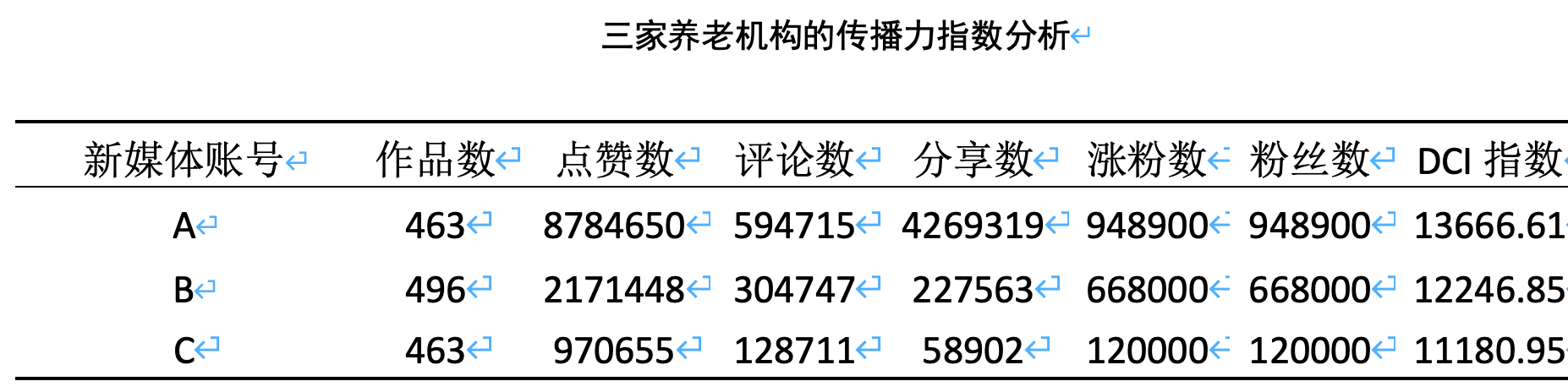
Core Insights - The article highlights the effective use of new media platforms, such as short videos, by nursing homes to enhance service quality, shape their brand identity, promote scientific aging concepts, and improve their image, leading to increased occupancy rates [1][2]. Industry Overview - By the end of 2024, the population aged 60 and above in China is projected to reach 310 million, accounting for 22% of the total population, indicating a growing trend towards institutional care due to aging and smaller family structures [1]. - Currently, there are over 400,000 nursing institutions in China, with most having an occupancy rate of only around 50% [1]. Case Studies of Nursing Homes - Three nursing homes (A in Tianjin, B in Henan, and C in Xinjiang) were analyzed for their new media marketing strategies, focusing on how these strategies align with service improvements to enhance user satisfaction and occupancy rates [2][3]. - Nursing home A utilizes humorous short videos to reshape its image and engage younger audiences, while nursing home B focuses on live broadcasts to showcase its services, achieving over 80 million views on specific content [3]. - Nursing home C, which initially struggled with a 40% occupancy rate, transformed its marketing approach and achieved a 99% occupancy rate by leveraging new media effectively [4]. Marketing Strategies - The nursing homes emphasize "IP" (intellectual property) branding, with directors as central figures to build trust and enhance service perception [8]. - Emotional resonance is a key factor in their marketing, with content that highlights daily interactions and care for residents, particularly those with Alzheimer's, generating significant engagement [9]. - Digital technology is employed to analyze user preferences and optimize marketing strategies, enhancing the overall user experience [10]. User Interaction and Conversion - The marketing process is structured in five stages: awareness, interest, connection, action, and experience, with each stage designed to foster user engagement and facilitate service purchases [11][12]. - Nursing homes have reported significant increases in user interaction and conversion rates through effective content strategies and real-time communication [12]. Recommendations for Improvement - Quality service should be the foundation of new media marketing, ensuring that promotional efforts reflect the actual service quality [13]. - Adoption of advanced technologies, such as AI, can enhance marketing effectiveness and streamline user interactions [13]. - A multi-dimensional data monitoring system is recommended to track engagement metrics and adjust strategies accordingly [13].

被台账埋葬的养老院
Hu Xiu· 2025-08-04 00:44
Core Viewpoint - The excessive burden of paperwork in nursing homes is consuming valuable service time, leading to a systemic drain on resources and staff morale, ultimately affecting the quality of care provided to the elderly [3][30]. Group 1: Impact on Caregivers - Nursing staff, particularly caregivers, are the most affected by the overwhelming paperwork, which has become a significant part of their daily responsibilities [4][6]. - A survey revealed that 44.53% of caregivers work 9 to 12 hours daily, with 14.84% exceeding 12 hours, primarily due to administrative tasks related to record-keeping [6][7]. Group 2: Administrative Burden - Each caregiver is required to fill out an average of 12 forms daily, leading to a total of 1,440 data entries per month, which includes basic health metrics and dietary records [5]. - Other departments, such as kitchens and medical staff, also face similar burdens, with kitchen staff spending 2.5 hours daily on paperwork and medical staff dedicating significant time to record-keeping instead of patient care [8][10]. Group 3: Regulatory Pressures - The frequency of administrative checks has increased, with some institutions facing 5 to 11 inspections per quarter, leading to a focus on compliance rather than care quality [20][16]. - Conflicting standards from various regulatory bodies create confusion and additional workload for nursing homes, forcing them to adapt to differing requirements [21][24]. Group 4: Need for Reform - There is a pressing need to streamline the documentation process and reduce the administrative burden on nursing homes to allow more focus on actual caregiving [31][35]. - Suggestions include simplifying regulations, improving data systems for seamless information flow, and reducing the frequency of inspections to enhance the quality of care for the elderly [32][36].