农家饭

Search documents
老牛湾村,民宿生意好(新春走基层·建设宜居宜业和美乡村)
Ren Min Ri Bao· 2026-02-15 23:13
Core Insights - The article highlights the successful transformation of Laoniuwan Village in Shanxi Province, where the local economy has improved significantly through the development of the homestay business, driven by tourism and environmental restoration efforts [1][2]. Group 1: Business Performance - The homestay business in Laoniuwan Village has become increasingly profitable, with each of the 40 guest rooms generating over 200,000 yuan in net profit annually [1]. - The village received nearly 200,000 tourists last year, contributing to an average annual disposable income of over 35,000 yuan per person for the villagers [2]. Group 2: Environmental and Infrastructure Development - The implementation of the "Three-North" Shelter Forest Program has improved the ecological environment, increasing vegetation coverage and attracting more visitors to the village [1]. - Recent infrastructure improvements include the construction of a sewage treatment plant, viewing platforms, and a visitor center, along with plans to install new energy charging stations to enhance tourist convenience [1]. Group 3: Challenges and Adaptations - Despite the success, the business faces challenges such as customer complaints, exemplified by a recent negative review regarding a caterpillar in a room, prompting the owner to enhance cleanliness and comfort standards [2]. - The village has standardized and branded over 200 homestays in the past two years, moving towards a more organized and collective development approach [2].
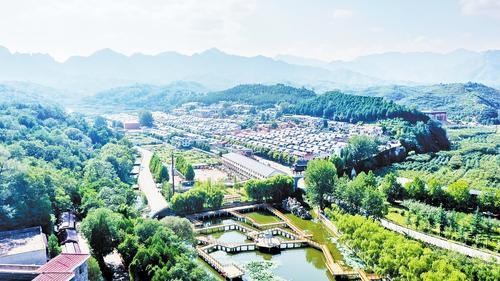
石头缝里种出绿色希望
Xin Lang Cai Jing· 2025-12-25 23:32
Core Viewpoint - The transformation of Qian Nanyu Village in Xingtai City, Hebei Province, showcases successful ecological restoration and tourism development, leading to significant economic benefits for the local community [3][5]. Environmental Restoration - Qian Nanyu Village has planted 3.67 million trees, achieving a forest coverage rate of 90.7% and a vegetation coverage rate of 94.6% [3]. - The village faced severe soil erosion and agricultural loss due to a major flood in 1963, prompting a long-term plan for land restoration and tree planting [3]. Economic Development - The village has cultivated over 300,000 fruit trees, including mulberries, cherries, peaches, grapes, apples, and kiwis, contributing to an average income of 11,600 yuan per person from fruit sales last year [4]. - The development of eco-tourism and agritourism has attracted visitors, with many villagers earning income from activities such as running farm stays and fruit picking [4][5]. - Approximately 80% of families in the village are involved in agritourism and related industries, generating a collective income of 180 million yuan and a net income exceeding 20 million yuan last year [5].