冷原子钟

Search documents
趋势研判!2026年全球时频测量行业产业链、市场规模、市场区域格局、竞争格局及发展趋势:需求持续释放,市场规模有望达到7.13亿美元[图]
Chan Ye Xin Xi Wang· 2026-02-09 01:27
Core Viewpoint - The quantum time-frequency measurement industry is experiencing significant growth driven by the increasing demand for high-precision time synchronization across various sectors, with a projected market size of $640 million in 2024 and expected growth to $713 million by 2026 [1][3]. Group 1: Industry Definition and Applications - Time-frequency measurement refers to the communication technology that determines time or frequency values, involving both "moment" and "time interval" concepts [2]. - Quantum time-frequency measurement utilizes the high stability and precision of quantum states for high-accuracy time synchronization, applicable in military and civilian sectors, including satellite navigation, digital communication, defense, and power grid synchronization [2][3]. Group 2: Industry Development Status - The demand for quantum time-frequency measurement is continuously increasing, with market sizes projected at $640 million in 2024, $677 million in 2025, and $713 million in 2026 [3][4]. - The expansion of high-end sector demands is promoting the use of time-frequency measurement devices in critical national economic areas, indicating a broad development space for the industry [3]. Group 3: Market Regional Distribution - North America has developed its quantum clock technology earlier and holds over 40% of the global time-frequency measurement market share in 2024, while Europe and China each account for 22%, and the Asia-Pacific region (excluding China) approximately 9% [4][5]. Group 4: Industry Chain - The upstream of the time-frequency measurement industry includes basic materials (high-purity quartz, rubidium, cesium, special metals), core atomic clock systems, chips, and precision components, characterized by high specialization and significant industry barriers [6]. - The midstream involves the production of time-frequency measurement devices and system integration, while the downstream applications span research experiments, satellite navigation, digital communication, defense, power grid synchronization, and industrial control [6]. Group 5: Industry Development Environment - Related Policies - Major countries globally have prioritized quantum time-frequency technology as a strategic focus, with supportive policies and funding driving market expansion. China has issued several policies reflecting its strong emphasis on quantum technology, including the "Quantum Technology Development Plan (2021-2035)" and the "2024 State Council Government Work Report" [8]. Group 6: Industry Competitive Landscape - The global time-frequency measurement industry is relatively concentrated, with a competitive landscape dominated by Europe and the U.S., while Chinese companies are making significant advancements. Key players include AccuBeat, Oscilloquartz S.A., Ixblue, and several Chinese firms like Beijing Kewei Quantum Technology [10][11]. Group 7: Industry Development Trends - The time-frequency measurement field is crucial for precision in aerospace, global navigation satellite systems (GNSS), and other applications requiring nanosecond to picosecond accuracy, with quantum time-frequency measurement devices becoming essential for system reliability [12]. - The technology is expected to continue rapid development and innovation, indicating a promising future for the industry [12].


科研技术世界前列却80%依赖进口,中科院教授终破高端时频仪器海外垄断|硬氪专访
3 6 Ke· 2025-08-14 02:27
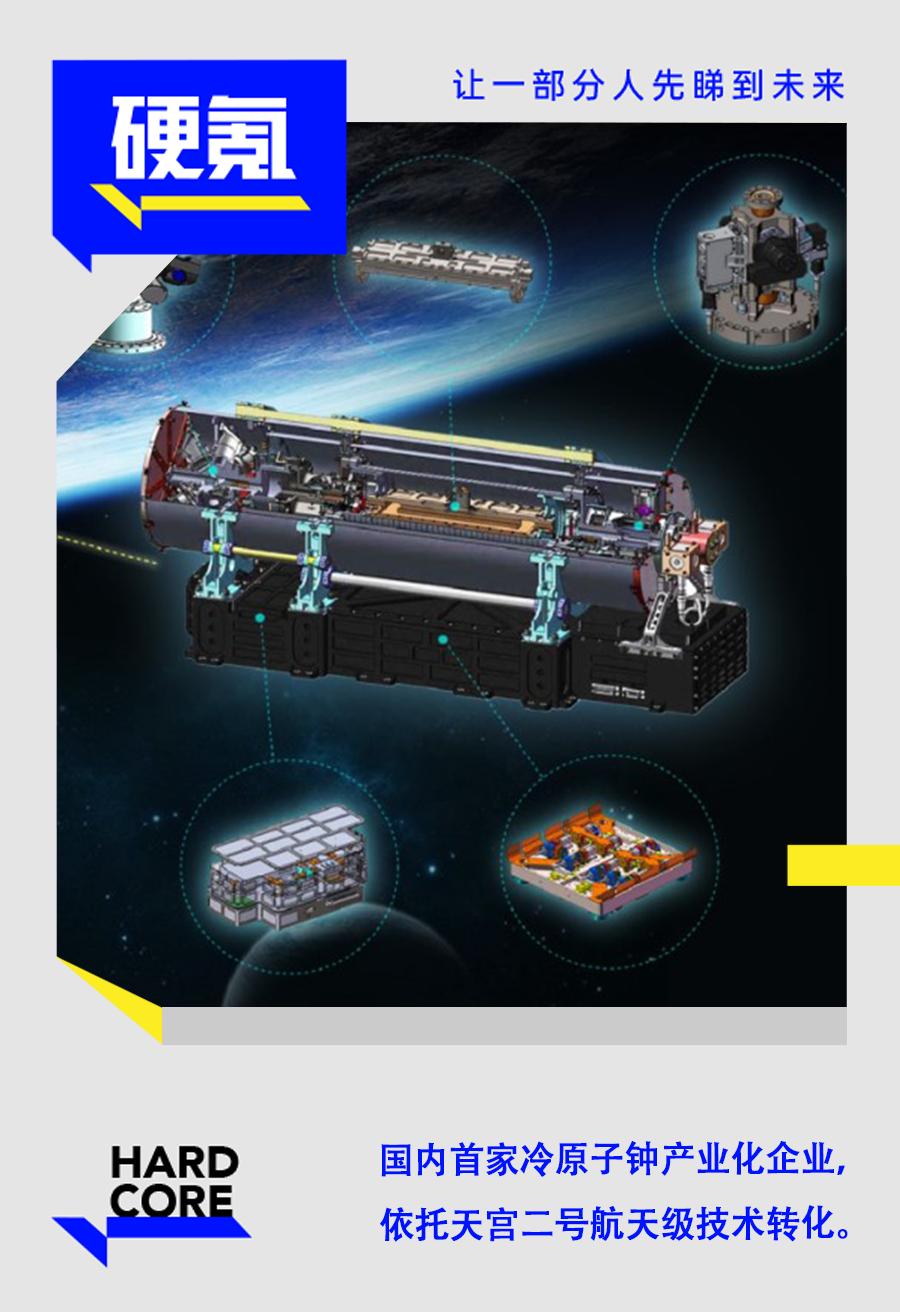
Core Insights - The article discusses the challenges and advancements in the commercialization of high-end atomic clocks in China, highlighting the dependency on imports and the efforts of a domestic company, Kess Technology, to overcome these barriers [3][6][12]. Company Overview - Kess Technology was founded in 2020 by Qu Qiuzhi, who has extensive experience in developing cold atomic clocks for major national projects [4][9]. - The company has established the first commercial production line for cold atomic clocks and beam chip atomic clocks, surpassing imported competitors by two orders of magnitude in performance [6][12]. Industry Challenges - The atomic clock industry in China faces significant challenges, including reliance on imported components, engineering difficulties, and high production costs [3][11]. - The article emphasizes the "valley of death" in industrialization, where advanced technology fails to transition into mass production due to various constraints [11][12]. Technological Innovations - Kess Technology has developed a novel laser cooling technology that enhances the environmental adaptability of atomic clocks, allowing for mass production and reducing costs [12][13]. - The first generation of commercial cold atomic clocks achieves a precision of 6E-15, significantly better than imported cesium and hydrogen atomic clocks [13][14]. Market Potential - The demand for atomic clocks spans over 160 industries, with applications in 5G/6G communications, AI computing, and deep-sea exploration, indicating a growing market opportunity [10][14]. - Kess Technology aims to position atomic clocks as essential infrastructure rather than luxury items, facilitating broader commercial applications [14][15]. Future Plans - The company plans to scale production to 100 units of commercial cold atomic clocks and 50,000 units of beam chip clocks by 2026, with further miniaturization and cost reduction efforts in the pipeline [16][17]. - Kess Technology envisions expanding its technology to other quantum precision measurement fields, establishing a flexible manufacturing platform for future innovations [15][17].
"最懂科学家创业的孵化器"迎来收获期
Xin Lang Cai Jing· 2025-08-12 11:32
Core Viewpoint - Hangzhou Optics Precision Machinery Research Institute (Hangzhou Optics Institute) is emerging as a leading research transformation base for Chinese optoelectronic scientists, having incubated over 60 companies with a total valuation exceeding 25 billion yuan, and more than 20 companies have completed financing with average valuation growth of 3-25 times [1][3] Group 1: Company Incubation and Achievements - Hangzhou Optics Institute was established in 2020, focusing on the industrialization of scientific achievements in the optoelectronic field, aiming to be the "most understanding incubator for scientists' entrepreneurship" [1] - The institute has introduced nearly 40 national leading talents and over 130 PhDs in the optoelectronic field, accelerating the industrialization of scientific achievements [3] - Three companies incubated by the institute are preparing to enter the IPO stage [1] Group 2: Specific Company Developments - Huijia Gallium Technology Co., Ltd. is developing gallium oxide single crystals, a fourth-generation semiconductor material, with significant potential in electric vehicle charging, 5G communication, and smart grids. The company is constructing a production line expected to achieve an annual output of 10,000 pieces [3] - Kess Technology (Hangzhou) Co., Ltd. specializes in cold atomic clocks, which have the highest precision in the world. The company has successfully reduced the size of the clock for specific market applications [3][4] - Hangzhou Light Technology Co., Ltd. focuses on developing new intelligent remote sensing LiDAR using single-photon technology, with applications in low-carbon environmental monitoring and emergency management [6] Group 3: Support and Policies - The rapid industrialization of scientific achievements is supported by precise "seed selection" and policy backing, with only about 10 out of 300 projects selected for incubation [6][7] - Fuyang District has implemented policies to encourage scientific achievement transformation, including financial support and talent policies, with top teams eligible for up to 100 million yuan in funding [7] - The institute provides comprehensive support in planning, market expansion, financing, legal, and financial aspects, fostering collaboration among companies to focus on high-quality technology and services [7]