铷原子钟

Search documents
趋势研判!2026年全球时频测量行业产业链、市场规模、市场区域格局、竞争格局及发展趋势:需求持续释放,市场规模有望达到7.13亿美元[图]
Chan Ye Xin Xi Wang· 2026-02-09 01:27
Core Viewpoint - The quantum time-frequency measurement industry is experiencing significant growth driven by the increasing demand for high-precision time synchronization across various sectors, with a projected market size of $640 million in 2024 and expected growth to $713 million by 2026 [1][3]. Group 1: Industry Definition and Applications - Time-frequency measurement refers to the communication technology that determines time or frequency values, involving both "moment" and "time interval" concepts [2]. - Quantum time-frequency measurement utilizes the high stability and precision of quantum states for high-accuracy time synchronization, applicable in military and civilian sectors, including satellite navigation, digital communication, defense, and power grid synchronization [2][3]. Group 2: Industry Development Status - The demand for quantum time-frequency measurement is continuously increasing, with market sizes projected at $640 million in 2024, $677 million in 2025, and $713 million in 2026 [3][4]. - The expansion of high-end sector demands is promoting the use of time-frequency measurement devices in critical national economic areas, indicating a broad development space for the industry [3]. Group 3: Market Regional Distribution - North America has developed its quantum clock technology earlier and holds over 40% of the global time-frequency measurement market share in 2024, while Europe and China each account for 22%, and the Asia-Pacific region (excluding China) approximately 9% [4][5]. Group 4: Industry Chain - The upstream of the time-frequency measurement industry includes basic materials (high-purity quartz, rubidium, cesium, special metals), core atomic clock systems, chips, and precision components, characterized by high specialization and significant industry barriers [6]. - The midstream involves the production of time-frequency measurement devices and system integration, while the downstream applications span research experiments, satellite navigation, digital communication, defense, power grid synchronization, and industrial control [6]. Group 5: Industry Development Environment - Related Policies - Major countries globally have prioritized quantum time-frequency technology as a strategic focus, with supportive policies and funding driving market expansion. China has issued several policies reflecting its strong emphasis on quantum technology, including the "Quantum Technology Development Plan (2021-2035)" and the "2024 State Council Government Work Report" [8]. Group 6: Industry Competitive Landscape - The global time-frequency measurement industry is relatively concentrated, with a competitive landscape dominated by Europe and the U.S., while Chinese companies are making significant advancements. Key players include AccuBeat, Oscilloquartz S.A., Ixblue, and several Chinese firms like Beijing Kewei Quantum Technology [10][11]. Group 7: Industry Development Trends - The time-frequency measurement field is crucial for precision in aerospace, global navigation satellite systems (GNSS), and other applications requiring nanosecond to picosecond accuracy, with quantum time-frequency measurement devices becoming essential for system reliability [12]. - The technology is expected to continue rapid development and innovation, indicating a promising future for the industry [12].


中国发现“无价之宝”,每吨估价46亿,日本破防:怎么又是中国的
Sou Hu Cai Jing· 2025-12-25 07:05
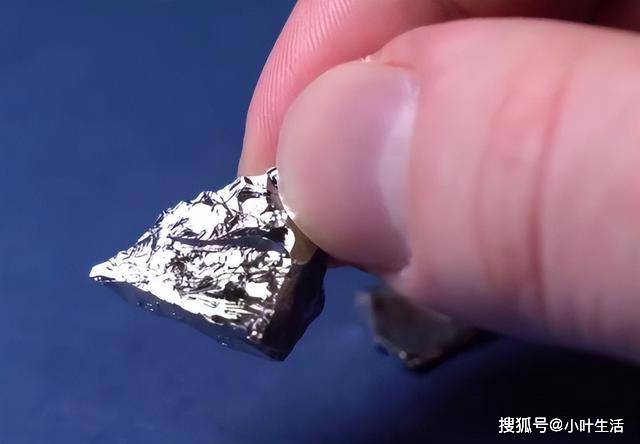
Core Viewpoint - China has made significant discoveries in rare metal resources, particularly in rubidium and rhenium, enhancing its position in the global market and reducing reliance on imports [1][17]. Group 1: Rubidium Discovery - China has discovered a super-large independent rubidium mine with a reserve of 175,000 tons, which is unprecedented globally [1][4]. - Rubidium is crucial in high-tech, medical, and renewable energy sectors, previously difficult to extract and costly [3][6]. - The global demand for rubidium is increasing, with annual production only around 4-5 tons, leading to a significant supply gap [8]. Group 2: Global Market Impact - With the new rubidium mine, China can potentially meet global demand for over a thousand years, shifting from a passive to an active role in the market [8][9]. - The estimated value of rubidium is around 4.6 billion per ton, reflecting its scarcity and importance in high-tech applications [8][9]. - Japan, heavily reliant on imported rubidium, faces increased pressure and potential supply chain instability due to China's resource advantage [9][11]. Group 3: Rhenium Discovery - China has also discovered rhenium, a rarer metal than rubidium, with a reserve of 176 tons, ranking fourth globally [13][14]. - Rhenium is essential for aerospace applications, particularly in turbine blades, enhancing performance and longevity [13][14]. - China has developed its own extraction and application technologies for rhenium, breaking the previous technological monopoly held by developed countries [14][15]. Group 4: Sustainable Development - The development of both rubidium and rhenium resources emphasizes efficiency, technology, and environmental protection [15][16]. - China is implementing strict emission monitoring during the extraction processes to ensure sustainable development [16]. - The focus on self-sufficiency in these rare metals supports the growth of high-tech, renewable energy, and aerospace industries [17][18].
天奥电子: 2025年半年度报告
Zheng Quan Zhi Xing· 2025-08-19 16:34
Core Viewpoint - Chengdu Tian'ao Electronics Co., Ltd. reported a significant decline in revenue and net profit for the first half of 2025, attributed to project progress impacts and increased market competition [2][10]. Company Overview and Financial Indicators - The company operates in the high-tech sector, focusing on the research, design, production, and sales of time frequency and BeiDou satellite application products, achieving international advanced levels in atomic clocks and time synchronization equipment [3][4]. - The company’s revenue for the reporting period was approximately 317.64 million yuan, a decrease of 16.09% compared to the previous year [11]. - The net profit attributable to shareholders was approximately 8.31 million yuan, down 46.25% year-on-year [10][11]. - The company plans not to distribute cash dividends or issue bonus shares [1]. Business Operations - The main products include frequency series products and time synchronization series products, which are used in aerospace, satellite navigation, military communication, and defense equipment [3][4]. - The company employs a "standard products + customized products" business model to cater to diverse customer needs, enhancing both scale and customization [4]. - The company has seen growth in production orders but faced challenges in product delivery due to project progress [10]. Performance Drivers - National development plans and policies support the growth of the time frequency and BeiDou satellite application industries, providing a favorable environment for the company's operations [5]. - The demand for time frequency products is driven by traditional industries and new infrastructure projects, including 5G/6G communication and satellite internet [5][6]. Core Competitiveness - The company has established itself as a leading manufacturer of atomic clocks and military-grade time synchronization devices, with a strong focus on technological innovation and market expansion [8][9]. - The company holds 129 valid patents, including 85 invention patents, and has established a robust innovation system [8][10]. - The management team possesses extensive experience in the defense technology and time frequency sectors, ensuring a deep understanding of industry dynamics [9]. Financial Data Analysis - The company’s operating costs decreased by 15.23% to approximately 241.16 million yuan, indicating effective cost control measures [11]. - The company’s cash flow from operating activities faced pressure, with accounts receivable increasing by 10.17% year-on-year [10][11]. - Research and development expenses amounted to approximately 15.42 million yuan, reflecting a commitment to innovation despite a decrease from the previous year [11].