科技成果产业化

Search documents
开门红 | 河南省科学院副院长邱士可一行莅临光力科技交流座谈
Xin Lang Cai Jing· 2026-02-27 10:37
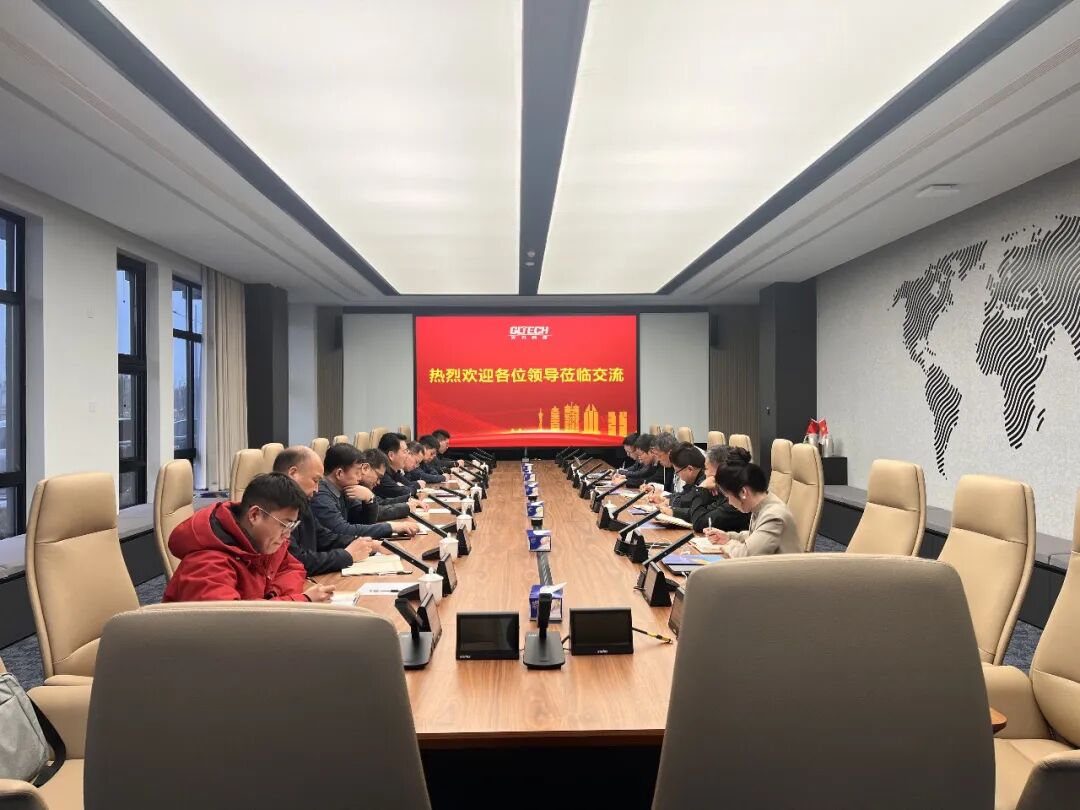
Core Viewpoint - The meeting between Henan Academy of Sciences and Guangli Technology Co., Ltd. marks a significant collaboration aimed at promoting innovation and technology transfer, injecting positive momentum into the company's development for the new year [2][4] Group 1: Collaboration and Innovation - The meeting is the first major interaction for Guangli Technology since the start of the new year, emphasizing the importance of collaboration between research institutions and enterprises [2][4] - Both parties discussed complementary advantages in research and industry, focusing on the industrialization of scientific achievements [2][4] Group 2: Institutional Strengths - Henan Academy of Sciences has 51 research institutes and over 3,000 scientific and technical personnel, with strengths in semiconductor, laser manufacturing, and artificial intelligence [2][4] - Guangli Technology has deep technical accumulation and industrial practice in intelligent manufacturing and precision measurement and control [2][4] Group 3: Future Cooperation - Both parties agreed on high compatibility in talent cultivation, platform construction, project cooperation, and industrial promotion, indicating promising future collaboration opportunities [2][4] - The meeting laid a solid foundation for further in-depth connections and is seen as a crucial start for Guangli Technology to enhance its core competitiveness and support the high-quality development of high-end equipment and intelligent manufacturing in Henan [2][4]


加快成果转化应用,国资央企推动产业链、创新链深度对接
Xin Hua Cai Jing· 2026-02-17 07:22
Group 1 - The core viewpoint is that the State-owned Assets Supervision and Administration Commission (SASAC) is promoting the integration of technological innovation and industrial innovation to enhance the development of new productive forces [1] - SASAC supports central enterprises in establishing 97 original technology sources and has set up several joint enterprise funds, resulting in over 1,000 outstanding achievements being included in the central enterprises' technology achievement recommendation directory [1] - More than 6,000 enterprises have implemented these achievements, with 50 projects driving over 2,000 innovative entities, leading to 126 achievements being tested for the first time and over 400 achievements being applied at a scale of more than 100 units [1] Group 2 - The next steps for state-owned central enterprises will focus on deepening the integration of technological and industrial innovation, emphasizing three areas: increasing efforts in technology research, enhancing forward-looking layouts in industries, and accelerating the precise matching of technology transfer [2] - There will be a push to build a smart service platform for the industrialization of achievements and to continue developing pilot capabilities and service openness [2]
加快成果转化应用!国资央企推动产业链、创新链深度对接
Xin Hua She· 2026-02-17 02:32
Group 1 - The core viewpoint of the articles emphasizes the integration of technological innovation and industrial innovation, driven by the State-owned Assets Supervision and Administration Commission (SASAC) to enhance the development of new productive forces [1][2] - SASAC has supported central enterprises in establishing 97 original technology sources and has launched several joint enterprise funds, resulting in over 1,000 outstanding achievements being included in the technology achievement recommendation directory [1] - More than 6,000 enterprises have implemented these achievements, with 50 projects in the technology application expansion project leading to over 2,000 innovative entities, achieving 126 first trials and over 400 large-scale applications [1] Group 2 - The next steps for state-owned enterprises will focus on deepening the integration of technological and industrial innovation, with three main areas of work: enhancing technological breakthroughs, strengthening forward-looking layouts in industries, and accelerating the transformation of achievements into productive forces [2] - SASAC is promoting the establishment of a smart service platform for the industrialization of achievements and is continuously advancing pilot reforms to empower technological achievements [1][2]
科创赋能产业腾飞
Xin Lang Cai Jing· 2026-02-15 22:17
Core Viewpoint - Jiamusi City is focusing on the "3510" overall work layout and aims to achieve breakthroughs in technology-driven productivity by 2025, enhancing innovation capabilities and expanding characteristic industrial clusters to inject strong momentum into high-quality economic and social development [4] Group 1: Innovation Platform Development - Jiamusi City is implementing a core strategy of "national platform landing + provincial platform expansion," aiming to integrate quality innovation resources and achieve leapfrog development in high-end platform construction [5] - By the end of 2025, the number of national and provincial technology innovation platforms in the city is expected to increase to 90, a net increase of 10 platforms, representing a growth of 12.5% [5] - 309 enterprises have completed evaluations as technology-based small and medium-sized enterprises, with an entry rate of 99.68%, ranking second in the province [5] Group 2: Technology and Results Transformation - Jiamusi City is focusing on key industries such as intelligent agricultural machinery and new materials, promoting collaborative breakthroughs in key technologies with a total investment of 290 million yuan [6] - The city has seen a 30.6% year-on-year increase in the added value of high-tech manufacturing, ranking among the top in the province [7] - 404 technology contracts were registered in 2025, with a transaction value of 740 million yuan, reflecting a year-on-year growth of 25.6% [7] Group 3: Investment and Ecosystem Development - Jiamusi City has conducted eight investment promotion activities, establishing cooperation intentions with over 20 universities and enterprises, and signing four projects [8] - The city is deepening international technology exchange cooperation, expanding its "circle of friends" in technology [8] - The establishment of over 200 technology special commissioner expert teams is aimed at providing scientific planting guidance, with an expected average yield increase of 5.85% for major grain crops [8]
创新奇智港交所上市并签署战略合作协议
Jing Ji Guan Cha Wang· 2026-02-14 07:51
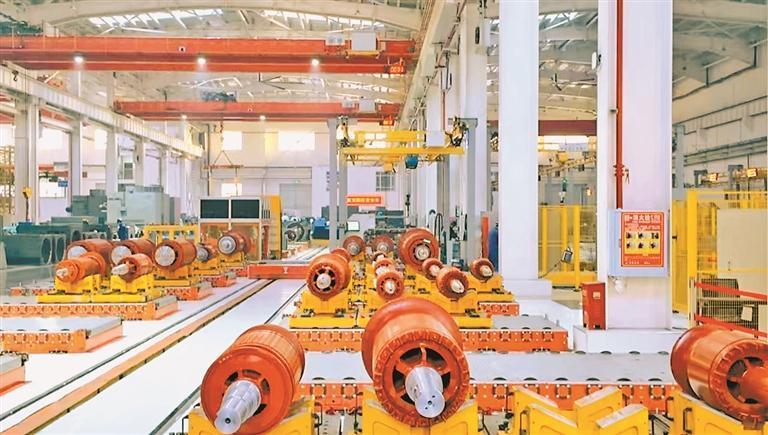
Recent Events - Innovation Works (stock code: 02121.HK) officially listed on the Hong Kong Stock Exchange on January 27, 2026, becoming the first stock in the "AI + Manufacturing" sector, marking a significant step in its capital market journey [1] Company Project Advancement - On January 28, 2026, Innovation Works signed a strategic cooperation agreement with the Hainan Research Institute of Shanghai Jiao Tong University, focusing on underwater intelligent operation equipment and marine environmental perception, aiming to promote the integration of industry, academia, and research, as well as the industrialization of technological achievements [2]
创新奇智与上海交大海南研究院签署战略合作协议
Zhi Tong Cai Jing· 2026-01-30 11:22
Core Viewpoint - The company has signed a strategic cooperation agreement with Shanghai Jiao Tong University Hainan Research Institute to advance collaboration in technology and projects, particularly in marine technology and robotics [1][2] Group 1: Strategic Cooperation - The agreement aims to leverage the core research capabilities of Shanghai Jiao Tong University in deep-sea technology and marine equipment, alongside the company's expertise in artificial intelligence and industrial large model technology [1] - The collaboration will focus on areas such as underwater intelligent operation equipment, underwater multi-axis robotic arms, underwater target recognition and tracking, integrated unmanned equipment for air-sea-submarine operations, marine environmental perception, and optimization of marine equipment structural design [1] Group 2: Benefits of Collaboration - The partnership is expected to enhance the integration of industry, academia, and research, promoting resource sharing and mutual benefits under the principles of leveraging advantages, integrating resources, and joint efforts [2] - The collaboration will also include talent cultivation, achievement transformation, and resource sharing, which will facilitate the industrialization of technological achievements [2]
创新奇智(02121)与上海交大海南研究院签署战略合作协议
智通财经网· 2026-01-30 11:17
Group 1 - The core viewpoint of the news is the strategic cooperation agreement signed between the company and Shanghai Jiao Tong University Hainan Research Institute to advance technology and project collaboration in marine technology and artificial intelligence [1][2] - The collaboration will focus on the development of underwater intelligent operational equipment, underwater multi-axis robotic arms, underwater target recognition and tracking, integrated unmanned equipment for air-sea-submarine operations, marine environmental perception, and optimization of marine equipment structural design [1] - The partnership aims to establish a joint laboratory for intelligent marine technology equipment research, promote talent cultivation, result transformation, and resource sharing, thereby enhancing the integration of industry, academia, and research [2] Group 2 - The board believes that Shanghai Jiao Tong University Hainan Research Institute possesses high-quality educational resources, research teams, and core technological competencies in marine technology, robotics, and artificial intelligence [2] - The company has established market channels, practical resources, and technical application scenarios in underwater special robots and artificial intelligence, which complements the research institute's strengths [2] - The strategic partnership is expected to deepen the integration of industry and academia, promote resource sharing, and drive the industrialization of technological achievements based on the principles of leveraging advantages, integrating resources, and mutual benefit [2]
东华气相合成法石墨烯“进军”京津冀
Zhong Guo Hua Gong Bao· 2026-01-27 02:39
Core Viewpoint - The opening ceremony of the Jizhou Graphene New Materials Industrial Park in Hengshui, Hebei Province marks a significant development in the graphene industry, with a focus on expanding business opportunities in the Beijing-Tianjin-Hebei region through the partnership between Anhui New Materials Company and local enterprises [1] Group 1: Company Developments - Anhui New Materials Company, a subsidiary of China Chemical Engineering Donghua Engineering Technology Co., Ltd., has signed cooperation agreements to enhance its operations in the graphene sector [1] - The company’s gas-phase synthesis graphene production project is included in the first batch of the Central Enterprise Technology Achievement Application Expansion Project, aiming to streamline the entire industrial chain from technological achievements to market applications [1] Group 2: Industry Impact - The gas-phase synthesis graphene production project has already led to the development of downstream products such as heavy-duty anti-corrosion coatings and high-conductivity aluminum materials, indicating a successful transition from technology to practical applications [1] - The project is gradually establishing a new model for the industrialization of technological achievements within the graphene industry [1]

常熟镁铝轻合金材料概念验证中心揭牌
Xin Hua Ri Bao· 2026-01-15 22:13
Core Insights - The establishment of the Changshu Magnesium-Aluminum Lightweight Alloy Material Verification Center and the Changshu Green Environmental New Material Achievement Transformation Alliance aims to create a comprehensive service platform for the industrialization of laboratory results [1] Group 1: Center and Alliance Establishment - The verification center is supported by the Shanghai Jiao Tong University’s Materials School, focusing on the critical validation phase of new materials from the lab to the market [1] - The center aims to facilitate the transition of scientific achievements from the laboratory to the market by building a collaborative platform between industry, academia, and research [1] Group 2: Service System and Investment Model - A full-chain service system has been established, including technology validation, market assessment, resource docking, and incubation [1] - The center collaborates with various investment institutions to create a relay development model that includes verification funding, seed investment, and growth-stage follow-up investment [1] Group 3: Industry Application - The Deputy General Manager of Jiangsu Chang Aluminum Industry Co., Ltd. emphasized that the center and alliance will serve as an efficient technical connection bridge between enterprises and universities [1] - The company plans to actively participate in collaborative projects to promote breakthroughs in the application of magnesium-aluminum lightweight alloy materials in fields such as new energy vehicle battery casings and thermal management systems [1]
出台“中试十四条” 北京提速科技成果产业化
Bei Jing Shang Bao· 2026-01-05 11:40
Core Viewpoint - Beijing has launched a series of measures to enhance its pilot testing service capabilities, aiming to promote the integration of technological innovation and industrial innovation, with a target of establishing 10 national-level pilot testing platforms and 50 municipal-level platforms by 2030 [1][4]. Group 1: Pilot Testing Platforms - The pilot testing platforms are crucial for transitioning new products from the trial production stage to the manufacturing process, serving as a key link in the industrialization of technological achievements [1][3]. - Beijing has identified 146 pilot testing platforms, primarily concentrated in the fields of pharmaceuticals, new materials, and intelligent equipment, accounting for nearly 70% of the total [1][3]. - The city aims to support leading enterprises and research institutions in building collaborative pilot testing production lines that meet national and local strategic needs [3][4]. Group 2: Support Measures - The measures include financial support for new projects, with up to 35% of total investment or a maximum of 100 million yuan in subsidies for qualifying projects [5]. - For projects in emerging industries like new-generation information technology and intelligent connected vehicles, subsidies can reach 25% of total investment, capped at 50 million yuan [5]. - The initiative also encourages the establishment of a regional pilot testing industry alliance in the Beijing-Tianjin-Hebei area to facilitate technology transfer and application scenario demonstrations [4][6]. Group 3: Talent Development - The measures emphasize the importance of building a skilled workforce by promoting collaboration between universities and pilot testing platforms to cultivate professionals who understand products, manufacturing, testing, and safety [4][5]. - The city plans to support the development of a talent pool capable of addressing complex engineering challenges, thereby enhancing the overall innovation capacity [4][7]. Group 4: Financial and Operational Support - Financial institutions are encouraged to develop innovative insurance products for pilot testing-related risks and to enhance credit support for technology transfer projects [6]. - The city will streamline project management and approval processes to accelerate the establishment and operation of pilot testing projects [6][7]. - An upgraded industrial map will be created to consolidate resources and facilitate connections between technology achievements and financial support [6].