冷鲜分割肉

Search documents
牛肉涨价,第一批“倒下”的会是谁?
Tai Mei Ti A P P· 2026-01-08 03:06
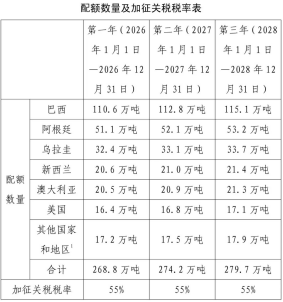
Core Viewpoint - The Chinese Ministry of Commerce has announced a safeguard measure for imported beef, implementing country-specific quotas and an additional 55% tariff on imports exceeding these quotas starting January 1, 2026, for a duration of three years [1][2]. Group 1: Import Quotas and Tariffs - The new regulation signifies the end of unlimited supply for imported beef, which currently accounts for 30% of China's beef consumption, leading to a more complex and stratified beef market [2]. - The quota distribution for 2026 includes Brazil at 1.106 million tons, Argentina at 511,000 tons, Uruguay at 324,000 tons, and Australia and New Zealand at approximately 200,000 tons each, totaling about 2.688 million tons [3][4]. Group 2: Market Reactions and Price Changes - Following the announcement, traders have begun stockpiling beef, resulting in price increases of 2-3 yuan per pound for imported beef in Shanghai [3]. - The quota for imported beef is expected to be exhausted by mid-2026, as the import volume has already exceeded the total quota for that year [5]. Group 3: Impact on the Restaurant Industry - The increase in beef prices will challenge restaurants that rely heavily on beef as a core ingredient, forcing them to reconsider their cost structures and sourcing strategies [6]. - The shift in supply dynamics may lead to a market segmentation where price-sensitive restaurants may opt for alternative proteins, while premium brands focus on high-quality beef supply chains [8]. Group 4: Long-term Industry Adjustments - The safeguard measures are seen as an opportunity for domestic beef producers to enhance their capabilities and innovate, as reliance on imports becomes less viable [9]. - Companies are expected to adapt by improving supply chain resilience and focusing on product innovation to meet changing consumer demands for quality and sustainability [10]. Group 5: Future Market Dynamics - The next three years will likely see a more layered and complex beef consumption landscape, influenced by consumer acceptance, corporate adaptability, and industry upgrades [11].