冻花红(冻海棠果)

Search documents
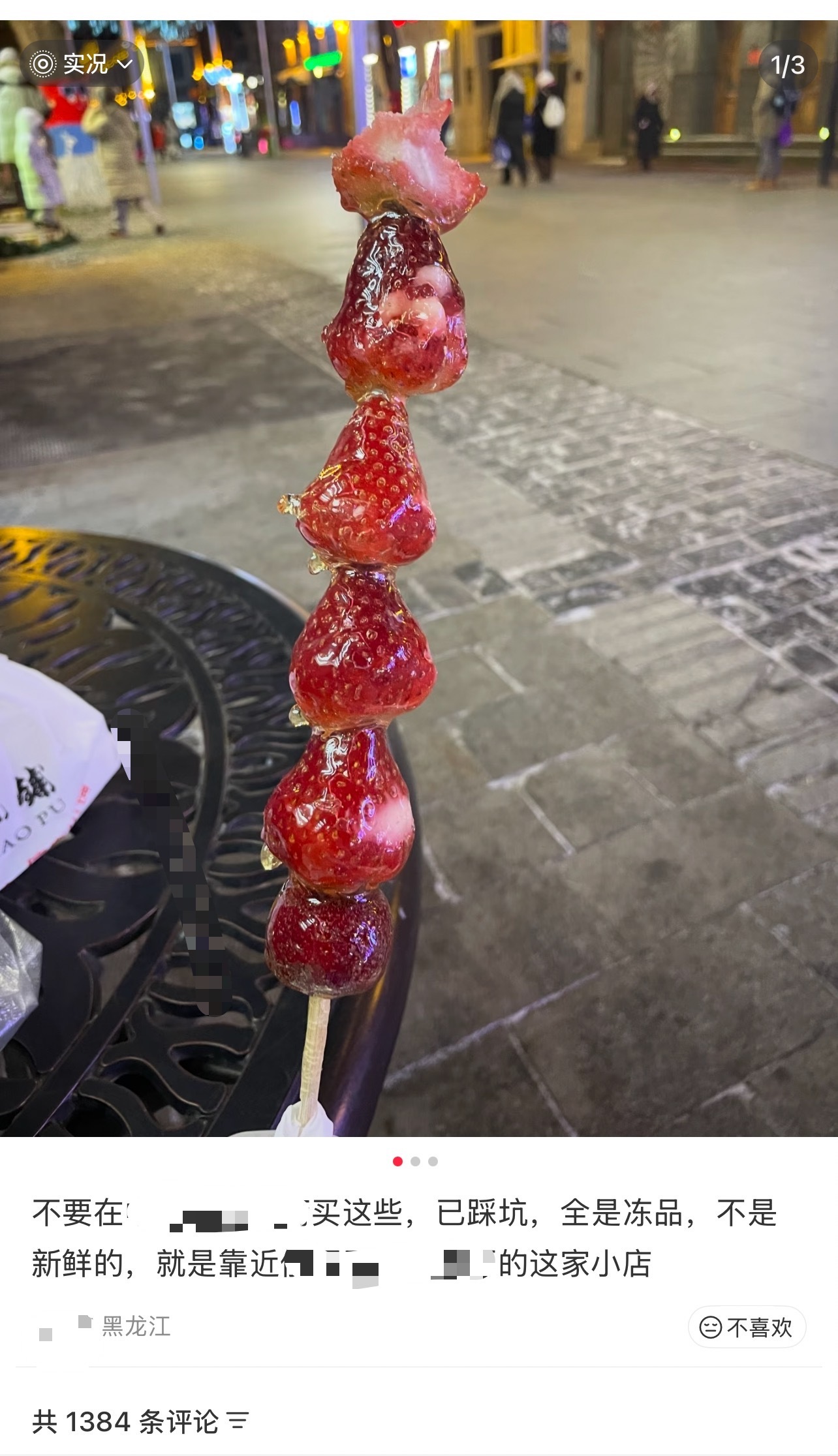
“冰”糖葫芦、“冰糖”葫芦?网友热议东北“冻货”正宗吃法
Xin Lang Cai Jing· 2026-01-30 23:52
Core Viewpoint - The article discusses the unique food culture in Northeast China, particularly focusing on the winter delicacies like "frozen" snacks, which have sparked interesting discussions among netizens about regional differences in food perception and preparation [1][9]. Group 1: Northeast Food Culture - Many southern netizens shared their experiences of buying "sugar-coated hawthorn" and "frozen pears" in Harbin, expressing disappointment over their freshness, leading to a humorous discussion about regional food differences [1][6]. - In Northeast China, "frozen" sugar-coated hawthorn is considered a common snack, utilizing the natural freezing effect of the cold climate to create a unique texture that resembles ice sand [9][11]. - The traditional sugar-coated hawthorn, known as "tanghulu," varies in name and preparation across different regions, with the Northeast's version being particularly notable for its icy texture [12][14]. Group 2: Frozen Fruits and Snacks - The article highlights the "frozen fruit trio" commonly enjoyed in Northeast winters, which includes frozen pears, frozen persimmons, and frozen hawthorn fruits, enhancing sweetness and extending shelf life [18][20]. - Frozen fruits are not eaten directly; they require a thawing process, referred to as "huān" in Northeast dialect, which results in a crispy ice shell that enhances the eating experience [20]. - The article describes how frozen pears serve as a traditional New Year delicacy, providing a refreshing taste after heavy meals, and emphasizes the unique preparation methods for other frozen fruits like persimmons and hawthorn [20][21]. Group 3: Variety of Frozen Products - Besides frozen fruits, the Northeast region offers a wide array of frozen products, including frozen vegetables, dried goods, tofu, chicken, and fish, which are popular among locals and tourists alike [24][21]. - The availability of these diverse frozen goods reflects the region's adaptation to its cold climate, making it a significant aspect of local culinary culture [24][21].