加拿大一枝黄花

Search documents
持之以恒地铲除加拿大一枝黄花
Zhong Guo Huan Jing Bao· 2025-12-15 00:38
Core Viewpoint - The invasive species Canadian goldenrod poses significant threats to biodiversity and agricultural productivity in China, necessitating urgent management and control measures [1][2]. Group 1: Invasive Characteristics - Canadian goldenrod, introduced in 1935, has rapidly spread across various regions in China, becoming a common invasive weed [1]. - It can produce between 3,000 to over 20,000 seeds per plant, with a germination rate exceeding 60%, allowing for rapid propagation [1]. - The plant's extensive underground rhizome system can spread laterally at a rate of 0.5 to 1 meter per year, contributing to its aggressive growth [1]. Group 2: Ecological and Economic Impact - The invasion of Canadian goldenrod threatens native plant species, disrupts ecological balance, and can lead to the extinction of various local flora [2]. - In agricultural settings, it can cause crop yield reductions of over 30%, adversely affecting the quality and economic viability of agricultural products [2]. - The plant's pollen can trigger allergic reactions in humans, further complicating its impact on urban environments [2]. Group 3: Control Measures - Four primary methods for controlling Canadian goldenrod include manual removal, mechanical eradication, chemical treatment, and biological control [3]. - Early detection and removal during the flowering period are crucial for effective management [3]. - A multi-departmental approach is recommended for coordinated control efforts, including public engagement and monitoring [4].
警惕“加拿大一枝黄花”入侵本土生态
Ke Ji Ri Bao· 2025-12-06 03:49
Core Viewpoint - The emergence of the invasive species "Canadian goldenrod" in Shanghai's Pudong New Area has prompted urgent cleanup actions due to its rapid spread and ecological threat [1][3]. Group 1: Invasive Species Characteristics - "Canadian goldenrod," introduced to China in the 1930s as an ornamental plant, has now spread to over 20 provinces, extending its range to northern and northeastern regions [1]. - This species can produce over 20,000 seeds per plant during its flowering period from July to November, with seeds capable of being dispersed over several kilometers [1]. - It can also reproduce asexually through underground rhizomes, leading to explosive growth patterns, described as "one flower blooms and hundreds die" due to its aggressive nature [1]. Group 2: Ecological Impact - The plant alters soil pH by secreting acidic substances, leading to soil compaction and acidification, which threatens native plant species and disrupts biodiversity [2]. - The invasive species can dominate ecosystems, creating monocultures that severely impact the structure of local ecosystems [2]. Group 3: Control Measures - Experts recommend immediate removal of suspected plants, with professional cleanup required before seed maturity, including mechanical removal of underground rhizomes and soil deep plowing [2]. - Continuous monitoring for over three years post-removal is necessary to prevent regrowth [2]. - Public awareness and participation are crucial for early detection and control of invasive species, emphasizing the need for community involvement in ecological protection [3].
看到立即上报!上海发现“加拿大一枝黄花”
Yang Shi Xin Wen Ke Hu Duan· 2025-12-03 23:02
Core Viewpoint - The discovery of "Canadian Goldenrod," an invasive species, in Shanghai highlights its rapid growth and potential ecological damage, prompting immediate cleanup efforts by local authorities [1][3]. Group 1: Invasive Species Characteristics - "Canadian Goldenrod" can release over 20,000 seeds from a single plant, showcasing its strong propagation ability [1]. - Originally from North America, it was introduced to China in 1935 as an ornamental plant and became a significant weed by the 1980s [1]. - The plant's flowering and fruiting period is from July to November, and it can thrive in various environments, including slopes, forests, and wetlands [3]. Group 2: Ecological Impact - The plant's aggressive growth can lead to soil degradation, as it competes for water and sunlight, potentially causing other plants to die off [4]. - Its extensive root system can compact the soil, leading to reduced soil quality and increased acidity, which can further harm local ecosystems [4]. - The plant's pollen can trigger allergic reactions, with severe cases resulting in symptoms like hives [3]. Group 3: Cleanup Efforts - Local authorities have initiated cleanup operations, utilizing bulldozers to remove the roots and rework the soil in affected areas [3]. - Approximately 20 acres of "Canadian Goldenrod" have been cleared after a day of intensive work [4]. - Residents are advised to report sightings of the plant to local departments to prevent further spread [4].


多地街头贩卖“野生鳖” 专家急呼:不能吃!放生危害更大!
Yang Shi Xin Wen· 2025-07-21 14:34
Core Viewpoint - The sale of "wild turtles" in various locations has raised concerns, as these turtles are primarily identified as Florida softshell turtles, an invasive species that poses ecological threats and is unsuitable for consumption or release into the wild [1][4][19] Group 1: Identification and Characteristics of Florida Softshell Turtle - Florida softshell turtles, also known as pearl turtles, have a smooth, oval shape, medium-sized head, and robust limbs with webbed feet [5] - They are native to the United States and primarily feed on soft-bodied animals, crustaceans, and fish, exhibiting rapid growth and strong adaptability [7] Group 2: Ecological Impact - Upon being released into Chinese waters, Florida softshell turtles can aggressively compete for territory, threatening native turtle populations and overall biodiversity, earning them the title of "freshwater tyrants" [8] - The article highlights other invasive species that pose similar ecological risks, such as Canadian goldenrod, smooth cordgrass, and apple snails, which disrupt local ecosystems and agricultural practices [9][11][13][14][15] Group 3: Recommendations and Actions - The article emphasizes that releasing animals into the wild does not equate to doing good; instead, it can have detrimental effects on ecosystems [17] - It advises the public to report the sale of such animals and to engage in responsible wildlife management practices, including only releasing native species and supporting conservation efforts [17][19]

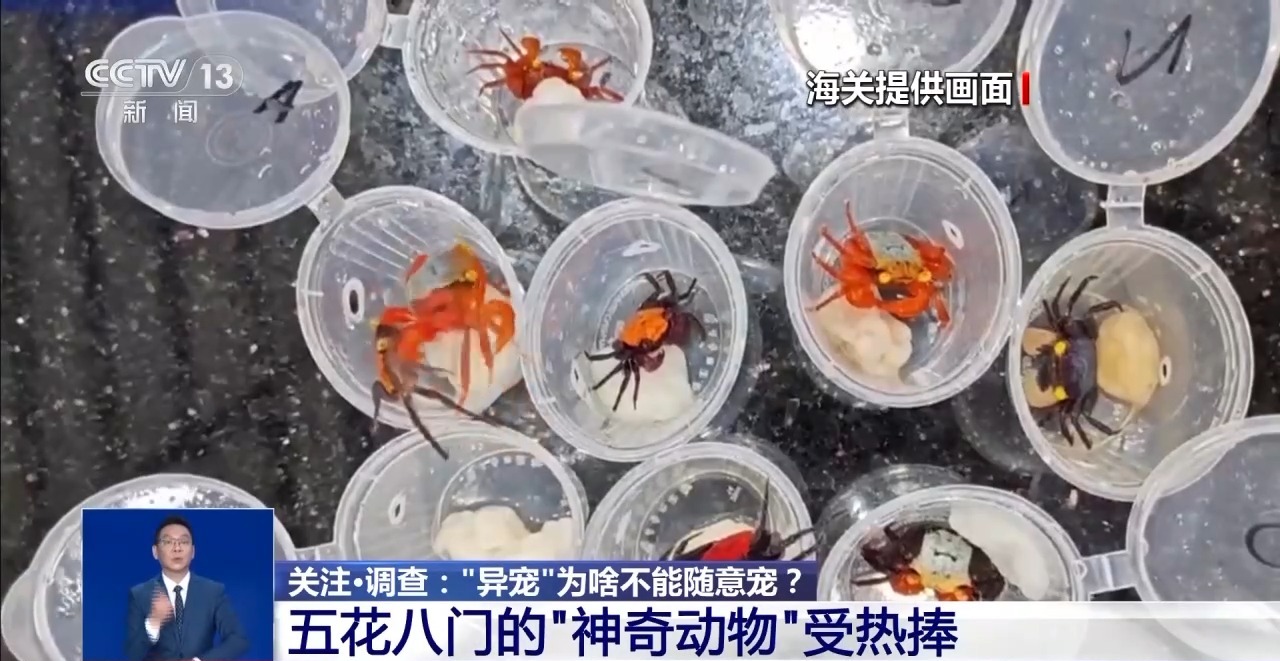
@铲屎官们 养“异宠”或危害国家安全 这些行为违法了
Yang Shi Xin Wen Ke Hu Duan· 2025-06-05 23:30
Group 1 - The popularity of "exotic pets" in China is rising, with over 17 million people reportedly keeping them, which includes non-traditional animals like snakes, lizards, and spiders [1] - There are significant safety concerns associated with the ownership and importation of exotic pets, particularly regarding the potential ecological impact of invasive species [7][21] - Illegal importation of exotic species is occurring, with recent incidents involving travelers attempting to smuggle various foreign animals into the country [3][8] Group 2 - The introduction of foreign species can lead to severe ecological consequences, including threats to native species and agricultural production [19][23] - Specific examples of harmful invasive species include the "Canadian goldenrod" and "muti-flowered cordgrass," which have shown strong reproductive capabilities and can outcompete native flora [28][31] - The Chinese government is taking measures to combat the spread of invasive species, including a national survey every ten years and the implementation of control plans for specific invasive plants [33]