动作类游戏

Search documents
2025 Q1–Q3 全球手游买量风向与策略洞察
XMP· 2026-01-04 05:33
Summary of Key Points Core Insights - The casual gaming sector is leading global downloads, with hyper-casual games showing significant growth in the first three quarters of 2025, followed by puzzle and action games [4][27]. - A combination of video and playable ads is emerging as a strong strategy, enhancing user engagement and interaction [5]. - South America is the most active region for ad spending, leading globally in the number of ad materials, with video ads making up nearly 85% of the total [6][42]. - Meta continues to dominate mobile game advertising budgets, with significant spending in both casual and hardcore gaming categories [7][50]. - AI technology is being leveraged to enhance user interaction through engaging video ads and digital personas, improving retention and conversion rates [8]. Global Mobile Gaming Overview - The global mobile game downloads are projected to reach 38.9 billion in the first three quarters of 2025, marking a 7.4% year-over-year increase. Android remains the dominant platform with an 80.8% share, while iOS accounts for 19.2% [20]. - The global mobile gaming revenue is expected to hit $82.5 billion (approximately 583.14 billion yuan), reflecting a 13.2% year-over-year growth, with iOS contributing 39.6% and Android 60.4% [20]. - In terms of monetization, 32.2% of revenue comes from ad-based income (IAA), while 67.8% is generated from in-app purchases (IAP) [20]. Game Category Competition Analysis - Hyper-casual games lead in downloads with 5.7 billion, followed by puzzle games at 4.5 billion and action games at 3.3 billion in the first three quarters of 2025 [22]. - In terms of revenue, shooting and puzzle games perform well under ad-driven models, with IAA contributing significantly to their income [27]. - The puzzle game segment saw a steady increase in active games, peaking at 8,300 in July 2025, indicating strong market vitality [63]. Advertising Material Trends - Video ads dominate mobile game advertising, accounting for approximately 81% of total ad materials, while playable ads are gaining traction [37]. - South America leads in ad material volume, with video ads being the preferred format, while Europe shows a higher adoption of playable ads [42]. - Meta remains the top channel for ad spending across various game categories, showcasing its continued dominance in mobile game advertising [50]. Case Studies - "Screwdom 3D" has successfully combined IAP and IAA monetization strategies, achieving over 31.9 million downloads and $91.6 million in revenue, with the U.S. and Japan as key markets [105]. - "Word Search Explorer" effectively integrates word puzzle gameplay with scenic exploration, achieving significant growth in the U.S. and Latin American markets [120]. - "Match Villains" utilizes a narrative-driven approach in its advertising, leading to substantial engagement and growth in the U.S. market [134].


伽马数据:2024年韩国游戏市场规模预计为25.19兆韩元 同比增长9.7%
智通财经网· 2025-08-04 08:55
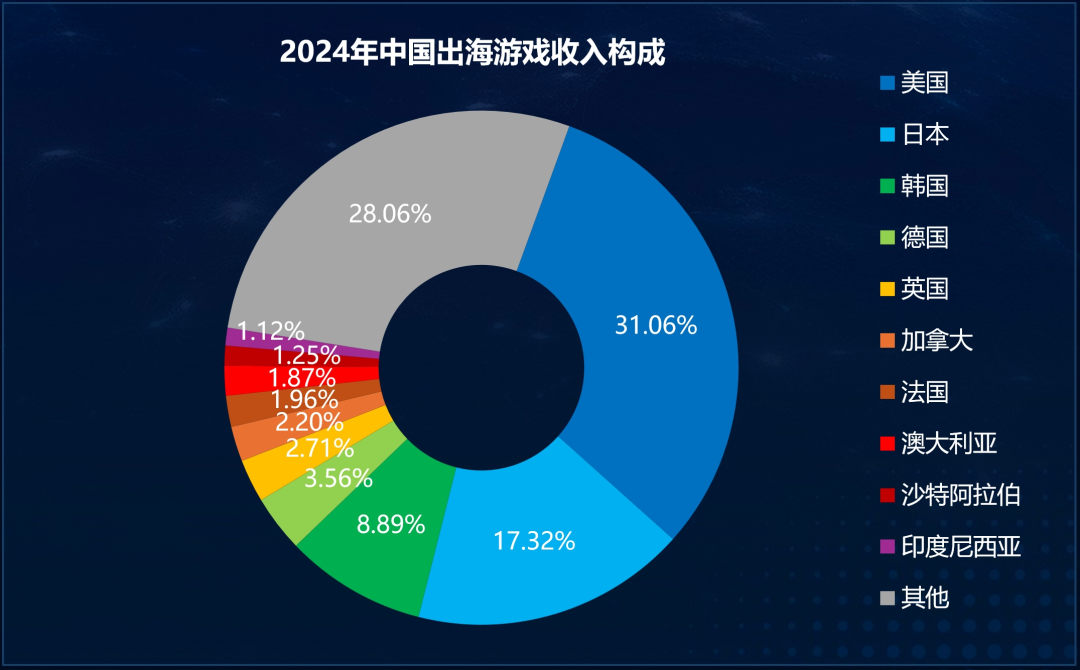
Core Insights - The report highlights that South Korea is the fourth largest gaming market globally and the third largest market for Chinese game developers expanding overseas [1][3][23] - The South Korean gaming market is projected to reach 25.19 trillion KRW in 2024, reflecting a year-on-year growth of 9.7% [5][23] - Mobile games dominate the market with a 59% share, followed by PC games at 26% [7][23] Market Overview - South Korea holds a 7.8% share of the global gaming market, supported by high internet and mobile device penetration [3] - The gaming environment in South Korea is robust, with significant audiences for game streaming, social gaming, and cloud gaming [3] Market Segmentation - RPG games account for 52% of the mobile gaming revenue, while strategy games are experiencing rapid growth [9] - The mobile gaming sector is a key focus for Chinese developers due to its substantial market size [7] Consumer Behavior - 47% of mobile game users complete their first in-game purchase within 30 days of logging in, with 12% making a purchase on the first day [11] - South Korean consumers exhibit a high frequency of credit card usage, averaging 137.5 times per year, facilitating digital payments for in-game purchases [11] Market Entry Barriers - Entering the South Korean gaming market involves high barriers related to language, culture, localization, and legal regulations [12] - Cultural sensitivity is crucial, particularly regarding historical events and local customs, which must be carefully navigated in game content [13] Regulatory Environment - The South Korean government enforces strict regulations on game content, including age ratings and the disclosure of in-game item probabilities [14] - The revised Game Industry Promotion Act mandates real-name age verification for games rated for ages 19 and above [14] Localization and Quality Assurance - Effective localization and quality assurance (QA) are essential for successful game launches and ongoing operations in South Korea [18] - The GRAC (Game Rating and Administration Committee) requires direct rating for adult products, while non-adult products can use international age rating systems [18] Distribution Channels - The main distribution channels in South Korea include international platforms like Google Play and Apple App Store, as well as the local One Store [19] - Google Play holds over half of the market share, while One Store attracts developers with lower revenue-sharing rates [19] Marketing Strategies - Brand and reputation marketing are critical for the success of new games, with users often relying on recommendations from friends or gaming influencers [21] - A diverse media strategy is essential for reaching the target audience effectively [21] Strategic Importance - South Korea serves as a crucial market for Chinese game developers due to its cultural similarities and strong gaming infrastructure [23] - The country has a history of influential gaming IPs that have shaped the gaming landscape in Asia and beyond [23]