
医疗护理员培训

Search documents
“红烛”精神育匠才 仁心护佑暖绿城
Xin Lang Cai Jing· 2026-01-21 22:37
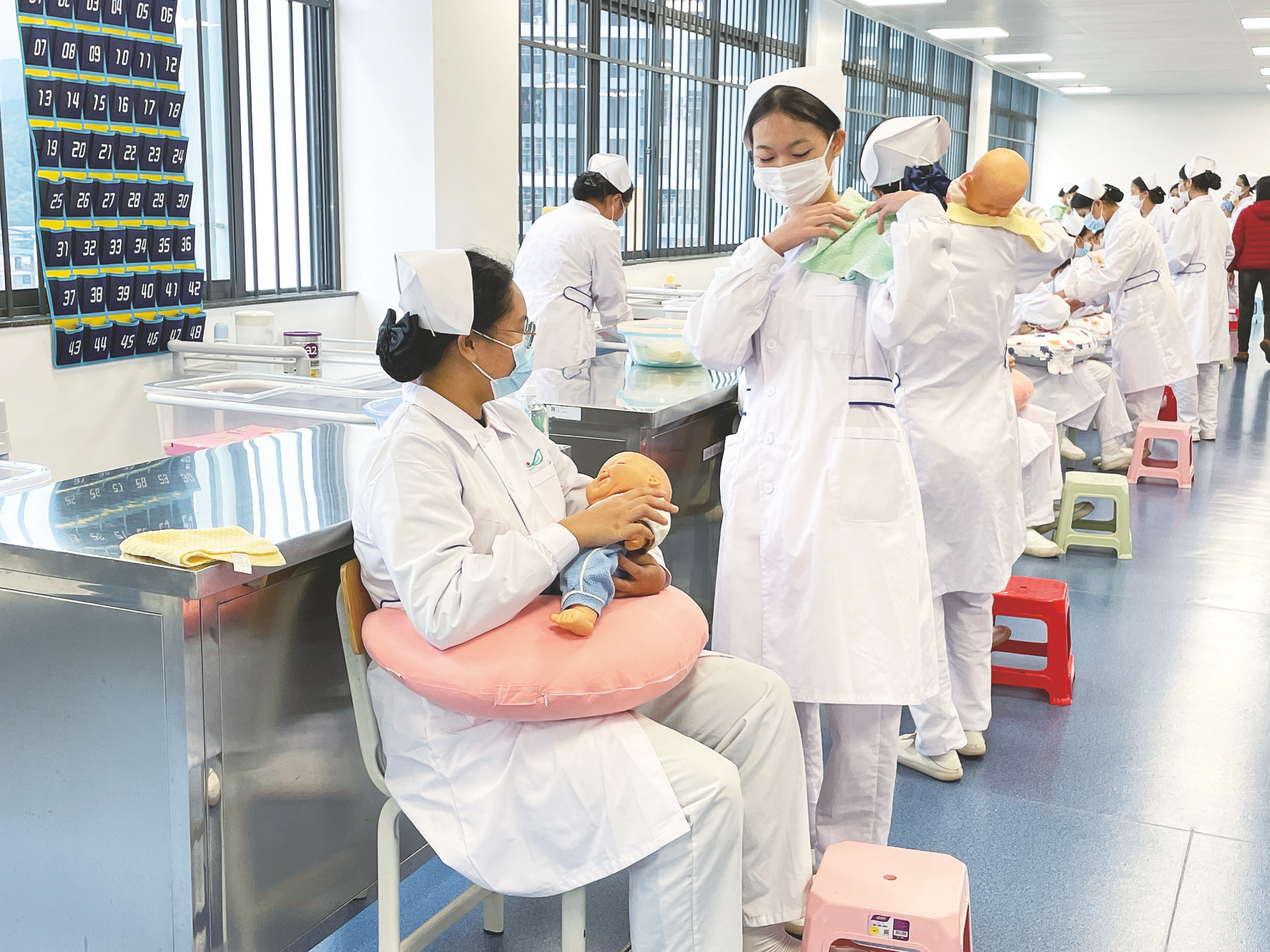
Core Viewpoint - Nanning Health School is enhancing practical skills of students through training programs for infant caregivers, addressing community health knowledge needs, and promoting high-quality vocational education [4][6]. Group 1: Educational Development - Nanning Health School has been committed to cultivating high-quality medical personnel for over 50 years, integrating party building into its development strategy and focusing on health and social service [4][5]. - The school has established a "recruitment, training, evaluation, and employment" integrated service platform for medical caregivers, successfully supplying skilled professionals to local healthcare institutions [4][8]. Group 2: Party Building and Educational Integration - The school emphasizes the "red candle spirit" in its educational approach, promoting moral education and integrating party building with teaching and talent cultivation [5][10]. - A three-dimensional curriculum system has been developed, focusing on theoretical foundation, skill enhancement, and practical empowerment, ensuring students are job-ready upon graduation [11]. Group 3: Community Engagement and Practical Training - The school has extended its professional training to community settings, providing practical skills to residents and enhancing social service capabilities [6][7]. - Collaborations with local hospitals and enterprises have been established to create clinical practice opportunities for students, ensuring they gain hands-on experience [8][11]. Group 4: Employment and Industry Collaboration - The establishment of a medical caregiver service alliance has addressed industry challenges such as talent shortages and employment difficulties, with over 8,427 individuals successfully employed through this initiative [8][9]. - The alliance has trained 17,000 individuals, showcasing a model that can be replicated in other regions, contributing to the development of the healthcare workforce [9][10]. Group 5: Training Quality and Outcomes - The school has implemented a comprehensive training system for medical caregivers, achieving a certification rate of 92% through rigorous skill assessments [11]. - Continuous professional development for instructors ensures high training quality, with numerous successful outcomes in vocational skill competitions and student placements in higher education [10][11].

国家级培训基地落地江苏
Xin Hua Ri Bao· 2026-01-20 22:03
Core Viewpoint - Jiangsu Cancer Hospital has launched its first training program for medical caregivers, aiming to enhance the quality of care for cancer patients by transitioning from basic life support to specialized auxiliary nursing [1][2]. Group 1: Training Program Details - The training program combines online and offline methods, incorporating virtual simulation teaching to provide a flexible learning environment for students [2]. - Experienced nursing staff from various specialties, including thoracic surgery, thyroid, breast, and internal medicine, will serve as instructors to ensure comprehensive skill acquisition [2]. - The program aims to develop "all-round" medical caregivers who can meet diverse clinical needs by mastering various specialized care skills [2]. Group 2: Implementation and Impact - The training program is part of Jiangsu Cancer Hospital's initiative to promote "no accompanying care" services, with a model that pairs one caregiver with multiple patients in designated wards [2][3]. - Initial results from the pilot program in the ICU show that trained medical caregivers have effectively reduced the incidence of complications such as pressure ulcers and infections by taking over all daily care tasks [2]. - The hospital plans to expand the training program gradually, starting with its own patients and eventually extending to a broader range of services as the caregiver team grows [3].