千纸鹤PulpCrane平台

Search documents
3D+AI赋能全球航线枢纽 “蓝色动能”连刷世界纪录
Yang Guang Wang· 2025-11-18 09:42
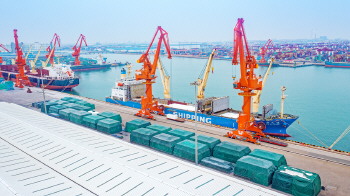
Core Insights - The Qingdao Port has established the world's first fully automated bulk cargo pulp terminal, achieving record unloading efficiency and a 22.5% year-on-year increase in pulp throughput in the first half of 2025 [1][2] - The terminal utilizes advanced AI technology for real-time cargo tracking and has improved operational efficiency by over 20% through optimized unloading sequences [2] - The port's digital transformation is enabling it to evolve from a mere unloading hub to a comprehensive supply chain service provider, significantly reducing international logistics processing time from weeks to hours [2][3] Group 1 - The Qingdao Port's automated terminal operates efficiently with minimal human intervention, showcasing advanced machinery and smart transportation vehicles [1] - The terminal's "PulpCrane" platform integrates logistics, trade, and finance, serving 45 upstream and downstream pulp manufacturers and traders, enhancing competitiveness through real-time data synchronization [2] - The port has implemented a direct transport model that reduces logistics costs and time, allowing for seamless connections between shipping and rail transport [3] Group 2 - The port's strategy includes proactive engagement with global pulp production capacities and tailored solutions for shipping companies, fostering a supply chain ecosystem [3] - The integration of closed-loop transportation lines in the port area facilitates direct supply to paper manufacturing enterprises, promoting a "port-industry-city" development model [3][4] - The technological advancements at the Qingdao Port are transforming it into a smart hub that empowers the entire industry chain, driving growth and innovation in the region [4]

行进的海岸线丨3D+AI赋能全球航线枢纽 “蓝色动能”连刷世界纪录
Yang Guang Wang· 2025-11-17 10:08
Core Insights - The article highlights the advancements and operational efficiency of the fully automated pulp terminal at Qingdao Port, which has set multiple records in unloading efficiency and is transforming the port into a comprehensive supply chain service provider [1][4]. Group 1: Operational Efficiency - Qingdao Port's automated pulp terminal achieved a 22.5% year-on-year increase in pulp throughput in the first half of 2025, showcasing its capability to handle large volumes of imported pulp efficiently [1]. - The terminal has set a new world record for pulp unloading, achieving a throughput of 51,676 tons in a 24-hour period, marking the fourth time this record has been broken [2]. - The implementation of AI and 3D technology has improved operational efficiency by over 20% by optimizing unloading sequences through dynamic electronic ship mapping [2][3]. Group 2: Technological Integration - The "PulpCrane" platform integrates logistics, trade, and finance, serving 45 upstream and downstream pulp manufacturers and traders, facilitating end-to-end online processing for booking, customs clearance, and settlement [3]. - The digital transformation at Qingdao Port has reduced the international logistics process from weeks to hours, effectively creating a "green channel" for pulp shipments [3]. Group 3: Supply Chain Development - The port is evolving from a mere unloading hub to a comprehensive supply chain service provider, enhancing its competitive edge through real-time data synchronization and streamlined operations [3][6]. - The "dock direct loading—railway direct dispatch—port area direct access" model has enabled seamless connections in pulp transportation, significantly reducing logistics costs and improving delivery times [3][6]. Group 4: Economic Impact - The integration of the port with local industries has fostered a "port-industry-city" development model, driving collaboration among the paper, packaging, and printing sectors, and contributing to the green and high-quality development of Shandong [6]. - The port's strategic initiatives are positioning it as a growth engine for the regional economy, focusing on global pulp capacity and establishing connections with foreign pulp mills and shipping companies [4].


全球最大纸浆进口港吞吐量大涨
Qi Lu Wan Bao· 2025-08-11 21:31
Group 1 - The core viewpoint highlights that Qingdao Port, as the world's largest pulp import port, achieved a 22.5% year-on-year increase in pulp throughput in the first half of 2025, accounting for over 30% of the national import volume, maintaining its leading position among coastal ports in China [2] - Qingdao Port has established the world's first fully automated pulp terminal, introducing AI dynamic layer cutting electronic ship chart technology and the "Beichen" collaborative operation system, which has significantly improved operational efficiency [2] - The "Thousand Paper Cranes PulpCrane" platform integrates logistics, trade, and financial resources, providing a one-stop service for 45 pulp mills and traders, reducing supply chain costs by 15% [2] Group 2 - Leveraging the advantages of sea-rail intermodal transport, Qingdao Port has pioneered a "direct loading at the terminal - direct dispatch by rail - direct access to the port area" model, which accelerates the logistics process and enhances capital turnover efficiency [3] - By optimizing intermediate links, the procurement costs for inland paper mills have decreased, leading to more stable supplies of essential products such as paper and packaging for residents [3] - As a key hub, Qingdao Port aims to continuously strengthen its global pulp hub advantage, further reducing logistics costs and increasing efficiency to better serve national and public needs [3]